ROME, Italy – Pope Leo XIV began a three-week summer retreat on Sunday after concluding an eventful first half of 2026 marked by significant interventions on international affairs, artificial intelligence, migration and internal Catholic Church governance.
The American-born pontiff will remain at the Vatican’s historic summer residence in Castel Gandolfo, south of Rome, until July 27, with public audiences suspended during the break. The Vatican confirmed that Leo will stay in the Apostolic Palace overlooking Lake Albano, restoring the traditional papal residence after years in which it served as a museum during Pope Francis’ pontificate.
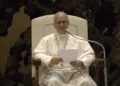
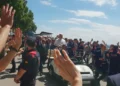
Greeting residents from the palace balcony after arriving in the hilltop town, Leo said he hoped to spend the coming weeks resting, praying, reading and enjoying sports, drawing laughter from the gathered crowd.

The retreat follows a period in which Vatican observers say Leo has rapidly established himself as both an influential international voice and a decisive leader within the Catholic Church.
Castel Gandolfo Returns as the Pope’s Summer Residence
The Vatican said security considerations influenced the decision to house Leo in the Apostolic Palace rather than the smaller villa on the estate where he had previously spent time during breaks from Rome. The move also allows a streamlined Vatican administration to operate alongside the pope while he remains away from the Holy See.
Pope Francis chose not to spend summers at Castel Gandolfo during his 12-year papacy and instead converted the palace into a public museum. Leo’s return to the historic residence marks the revival of a long-standing papal tradition.
The pope had already spent several weeks at Castel Gandolfo during the previous summer after his election on May 8, 2025, saying at the time that he hoped to restore both “body and spirit” while adjusting to the demands of the papacy.
A More Prominent Voice in Global Affairs
Recent months have seen Leo take an increasingly active role on international issues, particularly migration, war and emerging technologies.
According to Austen Ivereigh, biographer of Pope Francis, many observers initially expected Leo to focus primarily on Church governance rather than global diplomacy.
Instead, Ivereigh said the pope has quickly emerged as a prominent international statesman despite acknowledging early in his papacy that leading the Holy See as a head of state presented a significant learning curve.
Leo has used several high-profile appearances to emphasize humanitarian concerns, particularly the treatment of migrants and refugees.
Migration Visits Carried Symbolic International Message
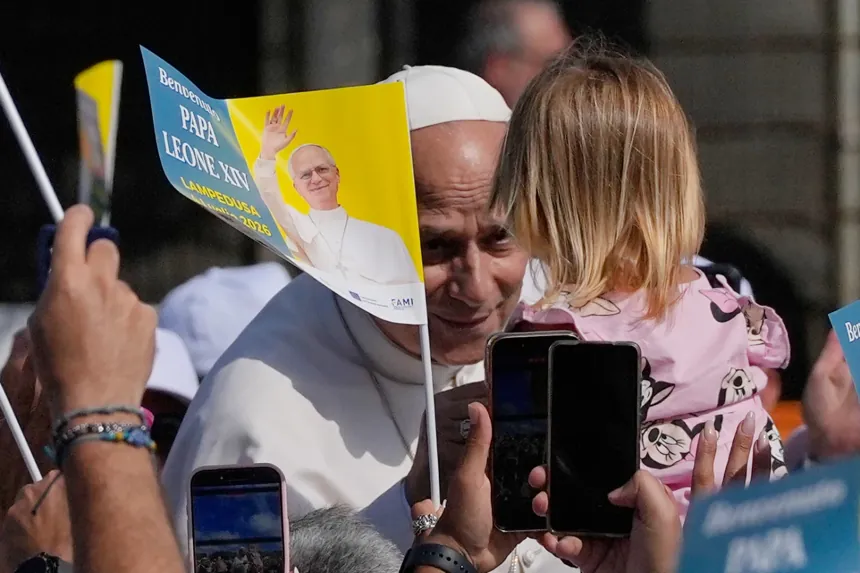
On July 4, coinciding with the 250th anniversary of U.S. Independence, Leo visited the Mediterranean island of Lampedusa, where he prayed at a cemetery honoring migrants who died attempting to reach Europe.
The visit followed an earlier stop in Spain’s Canary Islands, where the pope delivered remarks from a dock associated with difficult conditions experienced by migrants during previous waves of arrivals.
In both locations, Leo urged European nations to uphold the dignity of migrants. Speaking on Saturday, he also reminded Americans that the United States was founded by immigrants and said Christians have a responsibility to welcome, protect and integrate people seeking refuge from hardship.
The Chicago-born pontiff has previously criticized the Trump administration’s immigration policies. His decision to spend Independence Day in Lampedusa added further symbolism to his message on migration.
Leo has also opposed the U.S.-Israel war in Iran, and public exchanges earlier this year between the pope and President Donald Trump elevated his profile within international debates over conflict and diplomacy.
Ivereigh said Leo’s January address to the Holy See diplomatic corps, in which he criticized nations for using force to impose their will and warned that such actions undermine the post-World War II international legal order, marked an important turning point in his international leadership.
Artificial Intelligence Encyclical Expanded Beyond Technology
Leo further strengthened his global profile with the release of his first encyclical, Magnifica Humanitas (“Magnificent Humanity”), published in late May.
The document called for stronger international regulation of artificial intelligence, particularly regarding increasingly sophisticated military technologies.
Leo wrote that irreversible decisions involving lethal force should not be delegated to AI systems, placing the Vatican at odds with efforts by the Trump administration to reduce regulatory oversight of artificial intelligence development.
Beyond technology policy, the encyclical included a historic acknowledgment of the Vatican’s role in enabling slavery during the 15th century.
While previous popes apologized for Christians’ participation in the trans-Atlantic slave trade, Leo became the first pope to publicly acknowledge and apologize for papal documents that granted European rulers authority to subjugate and enslave non-Christians.
Calling the Church’s historical record a “wound in Christian memory,” Leo asked forgiveness “in the name of the church,” a step that has renewed discussion about possible reparations for descendants of enslaved people.
Vatican Takes Firm Action Against Traditionalist Group
Leo also demonstrated a more assertive governing style inside the Catholic Church.
With the pope’s approval, the Vatican declared the traditionalist Society of St. Pius X (SSPX) to be in schism after the group consecrated four bishops without papal authorization.
The Vatican excommunicated the bishops and priests involved and warned that lay Catholics affiliated with the movement could also face excommunication for participating in the schism.
The SSPX, which celebrates the traditional Latin Mass and opposes several modern reforms within the Catholic Church, has spent decades in negotiations with Rome aimed at restoring full communion.
Andrew Chesnut, a professor of religious studies at Virginia Commonwealth University, said the decision demonstrated that Leo’s willingness to engage in dialogue does not prevent him from taking decisive action when Church unity is at stake.
The Rev. Robert Gahl, an ethics expert at the Catholic University of America, said the decree underscored the pope’s responsibility as the central figure of Catholic unity.
According to Gahl, Leo has shown not only a measured and approachable leadership style but also the willingness to impose clear disciplinary measures when Church communion is violated.
Article Topics: Pope Leo XIV | Vatican | Catholic Church | Artificial Intelligence | Migration | Castel Gandolfo | Society of St. Pius X | Global Diplomacy
This report is based on reporting by The Associated Press.