The abrupt Trump Iran ceasefire reversal has recast the six-week confrontation not as a decisive military outcome, but as a test of diplomatic credibility under pressure. After publicly threatening Iran with devastating strikes tied to the Strait of Hormuz, President Donald Trump pivoted within hours toward a 14-day ceasefire framework, underscoring how military leverage gave way to urgent geopolitical risk management.
According to a report by The Associated Press, the ceasefire emerged through intensive backchannel diplomacy led by Pakistan, with quiet involvement from China as regional and global stakeholders sought to prevent further disruption to one of the world’s most strategically vital maritime corridors. The speed of the shift highlighted less a military conclusion than the rising cost of diplomatic isolation had the conflict expanded.
The White House framed the pause as evidence that its war aims had already been met, with Trump asserting that military objectives had been exceeded and that a pathway toward longer-term peace was already taking shape. Yet within less than a day, divergent interpretations of the truce’s scope exposed the first signs of diplomatic strain.

What emerged instead was not clarity, but a widening credibility gap between the parties expected to sustain the ceasefire.
Ceasefire Terms Fracture Under Immediate Regional Pressure
The first stress point appeared over Lebanon. Iranian officials maintained that the ceasefire framework required an end to Israeli military operations there, while Israeli Prime Minister Benjamin Netanyahu and Trump publicly rejected that interpretation, insisting the arrangement applied only to the U.S.-Iran track.
That contradiction immediately raised the risk that the truce could become a temporary tactical pause rather than the foundation of a broader de-escalation process.
The disagreement is strategically significant because ceasefires in multi-front regional conflicts rarely survive when parallel theaters remain active. By leaving Lebanon unresolved, negotiators may have reduced immediate maritime risk while preserving a separate escalation channel capable of reigniting the broader confrontation.
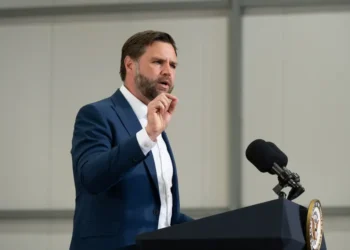
Vice President JD Vance sought to minimize the tension, arguing that early implementation problems were expected. His remarks suggested Washington is prioritizing diplomatic momentum over textual precision in the short term.




Strategic Stakes Shift to the Strait of Hormuz
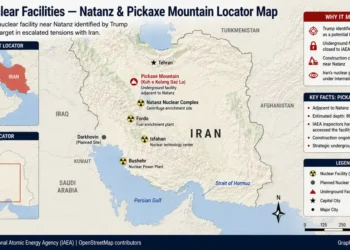
The real diplomatic test now centers on the Strait of Hormuz, through which roughly one-fifth of global oil shipments transit. Washington’s insistence on the immediate reopening of the waterway has transformed maritime access into the central benchmark of ceasefire compliance.
This makes the agreement less about battlefield disengagement and more about restoring global energy confidence.
The proposed mechanism allowing Iran and Oman to levy transit fees introduces an additional layer of diplomatic sensitivity. While regional officials described the arrangement as a reconstruction-linked revenue measure, the White House signaled resistance to any long-term restrictions or toll structures that could normalize Iranian leverage over shipping.
That divergence matters because maritime commerce, not territorial control, now appears to be the practical center of negotiations.
Military Leverage Gives Way to Diplomatic Cost Calculus
Behind the policy shift lies a deeper strategic recognition: controlling Hormuz militarily may have been operationally feasible, but politically unsustainable.
Defense analysts cited in the original reporting warned that securing the maritime corridor over time could have required a prolonged territorial suppression mission along Iran’s southern coastline, potentially involving tens of thousands of U.S. troops. Such a commitment would have contradicted Trump’s long-standing political promise to avoid another open-ended Middle East deployment.
The diplomatic reversal therefore reflects institutional risk management as much as statecraft.
Rather than testing whether Iran could be coerced into unconditional compliance, Washington appears to have recalibrated around the costs of sustaining escalation beyond the initial campaign phase. The lesson is less about restraint by preference and more about the structural limits of translating short-term military dominance into durable regional order.
Pakistan Mediation Elevates a New Diplomatic Axis
The selection of Islamabad as the venue for follow-up negotiations is itself geopolitically consequential. Pakistan’s emergence as the primary intermediary introduces a new regional diplomatic axis at a moment when traditional Gulf-led channels appeared insufficient to secure immediate movement.
Vance is expected to lead the U.S. delegation, joined by special envoy Steve Witkoff and Jared Kushner, signaling that the White House wants political loyalty and negotiating flexibility concentrated in a small, high-trust team.
This structure suggests the administration is treating the next phase not as routine diplomacy, but as a leader-driven crisis negotiation where message discipline is critical.
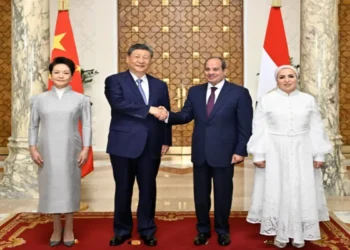
China’s reported quiet role further complicates the diplomatic picture. Beijing’s stake in uninterrupted energy flows gives it a strong incentive to preserve maritime stability, meaning the ceasefire now sits at the intersection of U.S.-Iran tensions and wider great-power economic competition.
Diplomacy Now Faces a Narrow Window of Credibility
The ceasefire’s survival will depend less on public declarations than on whether all sides can align operational expectations around Hormuz, Lebanon, and the sequencing of broader regional de-escalation.
The immediate diplomatic fallout from conflicting interpretations has already revealed how fragile the arrangement remains.
If the Pakistan talks produce a verifiable framework on shipping access and conflict containment, the 14-day pause may evolve into a durable strategic reset. If not, the current truce risks becoming a brief interruption before renewed confrontation spreads across multiple fronts.
For now, the central consequence of Trump’s reversal is clear: military pressure created urgency, but diplomacy now carries the burden of preventing a wider regional security breakdown.