Thailand and Cambodia on Saturday signed a new ceasefire agreement aimed at ending weeks of armed clashes along their disputed border, formalizing a halt to hostilities that took effect at noon local time. The accord expands on earlier truce efforts, setting out restrictions on military activity, airspace use and information warfare, while reopening pathways for de-escalation and cooperation.
The agreement was signed at a border checkpoint by Thailand’s Defence Minister Nattaphon Narkphanit and Cambodia’s Defence Minister Tea Seiha, following three days of talks between senior military officials under the framework of the General Border Committee.
Ceasefire terms and immediate measures
Under the terms of the agreement, both sides committed to an immediate cessation of hostilities, a freeze on further military movements and a ban on violations of each other’s airspace for military purposes. The deal also reiterates adherence to previous ceasefire arrangements reached earlier this year, which had failed to prevent renewed violence.

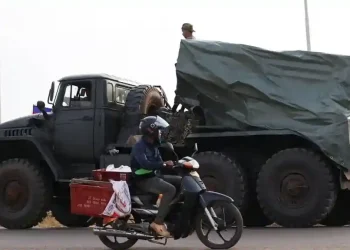
Cambodia’s defence ministry said Thailand carried out airstrikes during the latest round of fighting, including strikes on Cambodian territory earlier on Saturday. Thailand has not publicly detailed the scope of its aerial operations but has maintained that its actions were defensive.
The agreement includes 16 de-escalation measures, according to officials familiar with the text, though full details were not immediately released. Military commanders on both sides are expected to remain in contact to monitor compliance during the initial days of the truce.
Prisoners and confidence-building steps
One of the most sensitive provisions concerns the fate of Cambodian soldiers detained by Thailand during earlier clashes. The agreement states that Thailand will repatriate 18 Cambodian soldiers after the ceasefire has held for 72 hours, a key demand from Phnom Penh during negotiations.
Officials described the repatriation clause as an essential confidence-building measure intended to stabilize the ceasefire during its early phase, when past agreements have unraveled.
Background to the dispute
The latest agreement follows a pattern of fragile truces between the two Southeast Asian neighbours, whose long-running border dispute has periodically erupted into violence. A ceasefire brokered in July ended five days of fighting, but relations remained strained as both governments accused the other of violations and engaged in increasingly hostile rhetoric.
That July truce was mediated by Malaysia and came after pressure from U.S. President Donald Trump, who warned that trade privileges could be withdrawn unless both sides agreed to halt the fighting. The arrangement was later expanded and formalized at a regional meeting in Malaysia in October.
Despite those steps, sporadic cross-border incidents continued, escalating in early December into heavier fighting involving artillery and air power.
Casualties and humanitarian impact
Thailand says at least 26 soldiers and one civilian have been killed in combat since Dec. 7. Thai authorities have also reported 44 civilian deaths linked to the broader effects of the conflict, including shelling and displacement.
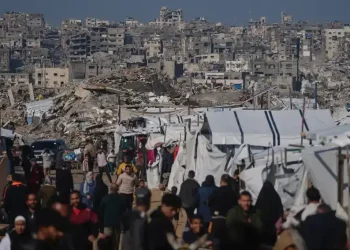
Cambodia has not released official figures for military casualties. It has reported that 30 civilians were killed and 90 injured during the fighting. On both sides of the border, hundreds of thousands of residents have been evacuated from affected areas, according to local authorities and humanitarian groups.
Each government has blamed the other for initiating the clashes, with both asserting that their forces acted in self-defence.
Land mines and international obligations
The agreement calls on both countries to comply with international conventions prohibiting the deployment of land mines, an issue that has been a particular concern for Thailand. Thai officials say at least nine incidents this year involved soldiers wounded by what they described as newly planted mines along the border.
Cambodia has rejected those allegations, saying the mines were remnants from decades of internal conflict that ended in the late 1990s. Mine clearance remains incomplete in several rural border areas, despite longstanding commitments under international treaties.
Information controls and border management
In an unusual provision, the ceasefire text includes a pledge by both sides to refrain from spreading what it describes as false information or “fake news,” reflecting the role that official statements and social media have played in inflaming tensions during the dispute.
The agreement also commits Thailand and Cambodia to resume previously agreed mechanisms to demarcate the border, a process that has stalled repeatedly over the years because of political sensitivities and competing historical claims.
Cooperation beyond the conflict
Beyond security issues, the deal calls for renewed cooperation against transnational crime, with a particular focus on online scam operations. Cambodia has been identified by international law enforcement agencies as a hub for organized cyber-fraud networks that have defrauded victims worldwide of billions of dollars.
Officials said joint efforts in this area are intended both to build trust and to address a problem that has drawn increasing scrutiny from regional governments and international partners.
Outlook
While the agreement represents the most detailed effort in months to stabilize the border, analysts note that previous ceasefires have struggled to hold without sustained political engagement and third-party mediation. For now, the emphasis remains on maintaining calm on the ground and preventing incidents that could quickly unravel the truce.
This article was rewritten by JournosNews.com based on verified reporting from trusted sources. The content has been independently reviewed, fact-checked, and edited for accuracy, neutrality, tone, and global readability in accordance with Google News and AdSense standards.
All opinions, quotes, or statements from contributors, experts, or sourced organizations do not necessarily reflect the views of JournosNews.com. JournosNews.com maintains full editorial independence from any external funders, sponsors, or organizations.
Stay informed with JournosNews.com — your trusted source for verified global reporting and in-depth analysis. Follow us on Google News, BlueSky, and X for real-time updates.