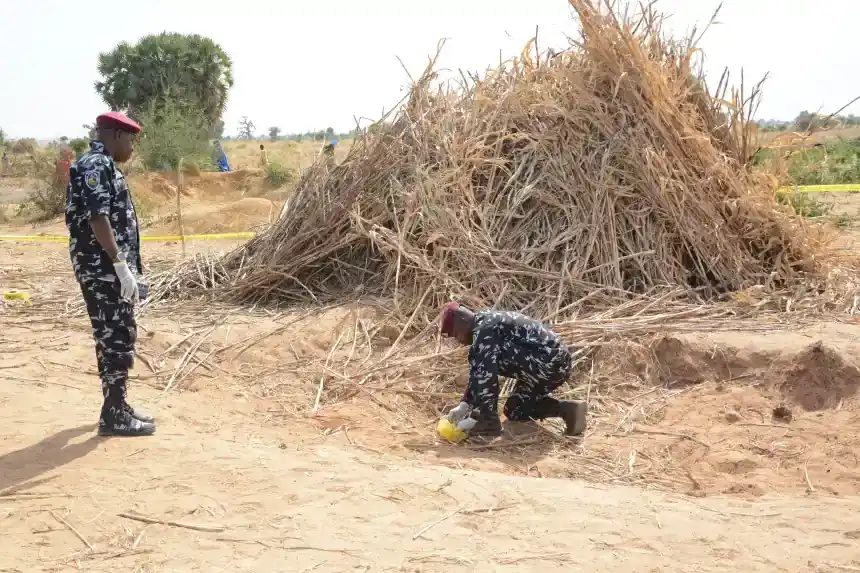
SOKOTO STATE — A U.S. airstrike targeting suspected Islamic State-linked militants in northwestern Nigeria has triggered fear and confusion among residents of a nearby village, where locals insist there is no history of extremist activity. The Nigeria US strike, carried out during coordinated operations with Nigerian authorities, is now drawing international scrutiny over intelligence accuracy and civilian risk.
Residents of Jabo village reported that the strike lit up the night sky and shook homes, even though the targeted area was believed to be outside the community. According to reporting by CNN and corroborated by other international outlets, villagers say they were left alarmed by the incident and uncertain about why their area was affected.
The operation forms part of broader U.S.-Nigeria counterterrorism cooperation aimed at confronting Islamic State affiliates operating across the Sahel. However, the aftermath has raised concerns among analysts about the potential consequences of strikes conducted near civilian populations.

Civilian Anxiety Highlights Intelligence Concerns
Local officials and residents have disputed the presence of Islamic State fighters in or near Jabo, describing the area as a peaceful rural community with no known extremist footprint. One regional lawmaker characterized the village as having “no known history” of ISIS or similar groups, reinforcing claims that the strike may have affected an unintended location.
Witnesses described scenes of panic following the strike, with families fleeing homes amid fears of further attacks. While no direct casualties were reported in the village itself, the psychological impact has been significant, underscoring the risks associated with high-intensity military operations in proximity to civilian areas.
Security experts note that intelligence in conflict zones can be fragmented, particularly in regions where armed groups operate across porous borders and blend into local populations.
Counterterrorism Strategy Under Scrutiny
The United States has framed the strike as part of its ongoing campaign against Islamic State-linked groups in West Africa, conducted in coordination with Nigerian authorities. Previous operations have targeted militant camps believed to be affiliated with the Islamic State’s Sahel network, which has expanded its reach across parts of northwest Nigeria.
However, analysts warn that discrepancies between official targets and local accounts can undermine trust and fuel skepticism about counterterrorism efforts. In fragile security environments, even near-miss incidents can contribute to broader instability if communities feel exposed or misidentified.
■ Related News



Reporting from international outlets indicates that Nigerian authorities have sought to balance cooperation with the U.S. while managing domestic sensitivities around sovereignty and civilian protection.
Regional Security Implications Grow
The incident reflects wider challenges facing counterterrorism operations in the Sahel and West Africa, where militant groups operate alongside criminal networks and local militias. The blurred lines between these actors complicate targeting decisions and increase the risk of unintended consequences.
Experts suggest that incidents involving civilian communities—even without casualties—can be exploited by extremist groups for recruitment and propaganda, potentially weakening long-term security objectives.
The Nigeria US strike also highlights the expanding role of external actors in African security affairs, as international partners seek to contain transnational militant threats while avoiding deeper military entanglement.
Strategic Stakes for U.S.–Africa Relations
For Washington, the strike represents part of a broader strategy to support regional allies without deploying large-scale ground forces. Yet the reaction from communities like Jabo underscores the delicate balance between military effectiveness and local legitimacy.
Analysts say maintaining credibility in such operations depends heavily on transparent communication and accurate intelligence. Failure in either area risks damaging not only bilateral relations but also the broader perception of U.S. engagement in Africa.
As investigations and assessments continue, the long-term impact of the strike will likely hinge on whether authorities can address local concerns while sustaining cooperation against extremist groups operating across the region.