Russian President Vladimir Putin has warned that Moscow could attempt to extend its territorial gains in Ukraine if ongoing peace negotiations collapse, a statement that signals the risk of further military escalation as international mediation efforts intensify.
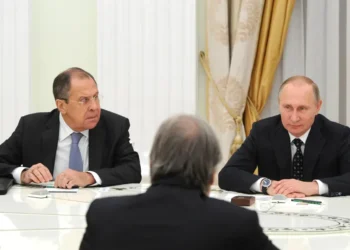
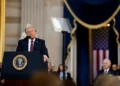
Speaking during a meeting with senior military commanders, Putin framed Russia’s objectives as achievable through diplomacy but cautioned that failure to reach an agreement would leave military expansion as the alternative. His remarks came as the United States, under President Donald Trump, presses forward with a diplomatic initiative aimed at ending the war that began with Russia’s full-scale invasion of Ukraine in 2022.
According to reporting by The Associated Press, the Kremlin leader said Moscow would seek to “liberate historical lands” by force if negotiations fail to address Russia’s demands.

The statement arrives at a moment when the negotiating gap between Moscow and Kyiv remains wide, raising questions about whether diplomacy can prevent a new phase of battlefield expansion.
Diplomacy Confronts Hardening Positions
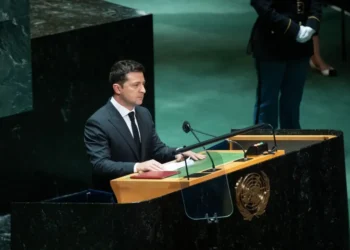
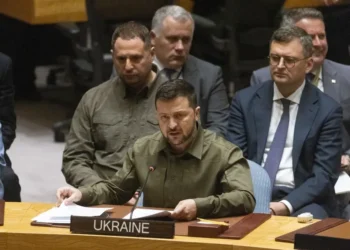
Talks this week between Ukrainian, American, and European officials have focused on a U.S.-drafted peace framework that could soon be presented to the Kremlin. Ukrainian President Volodymyr Zelenskyy said after discussions with American envoys in Berlin that negotiators were close to finalizing a workable proposal.
Yet the central dispute remains territorial control.
Russia insists that Ukraine recognize its claims over Crimea—annexed in 2014—as well as four regions partially seized during the current war. Moscow has also demanded that Ukrainian forces withdraw from areas its troops have not captured.
Kyiv has rejected those conditions, arguing that accepting them would effectively legitimize the territorial consequences of the invasion.
Zelenskyy indicated that Ukraine might consider dropping its pursuit of NATO membership if the United States and its allies provide binding security guarantees comparable to those enjoyed by members of the alliance. Still, he maintained that NATO remains Kyiv’s preferred long-term safeguard against further aggression.
The dispute leaves the negotiations confronting a structural dilemma: Russia is demanding recognition of its battlefield gains, while Ukraine insists that sovereignty cannot be negotiated away.
Military Momentum Shapes Negotiating Leverage
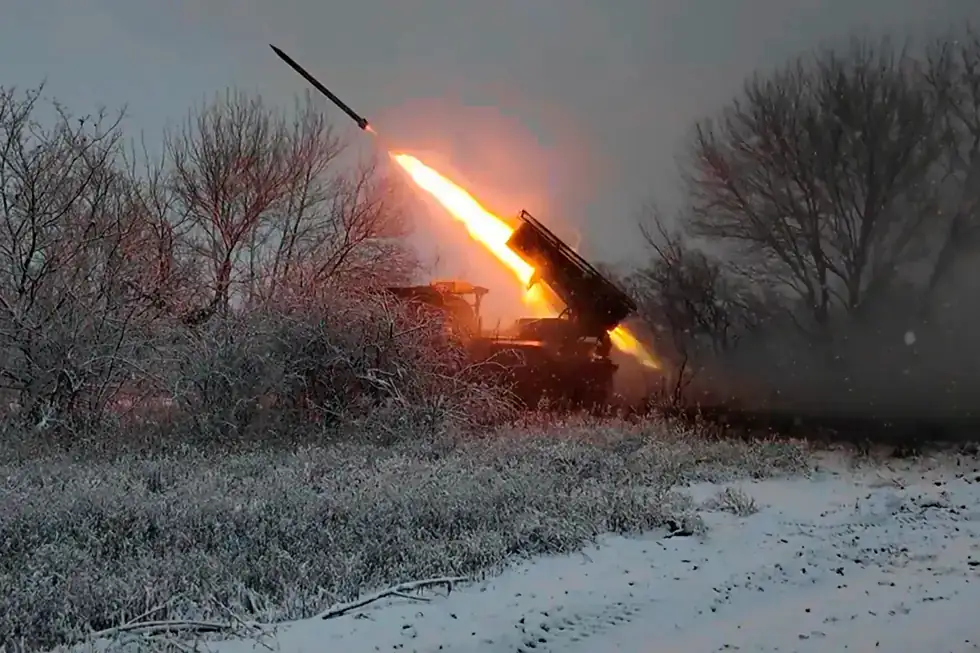
In his remarks to commanders, Putin asserted that Russian forces now hold the strategic initiative across the front line and are capable of expanding a “buffer security zone” along Russia’s border.
Russian Defense Minister Andrei Belousov outlined operational objectives that suggest Moscow intends to sustain offensive pressure while talks continue.
Belousov said recent advances in the eastern Donetsk region could enable Russian forces to push deeper into areas still under Ukrainian control. He also indicated preparations to expand operations in the partially occupied Zaporizhzhia region and potentially advance toward neighboring Dnipropetrovsk.
“The key task for the next year is to preserve and accelerate the tempo of the offensive,” Belousov told the meeting.
His remarks suggest that Moscow is positioning its battlefield progress as leverage in negotiations, seeking to reinforce territorial claims through continued military pressure.
Strategic Deterrence Signals Intensify
Putin also used the meeting to highlight Russia’s military modernization, particularly developments in its nuclear-capable missile arsenal.
He said the new Oreshnik intermediate-range ballistic missile would soon enter active service after earlier testing that involved a strike on a Ukrainian industrial facility. The Kremlin has previously claimed the system is designed to evade interception.
At the same time, the Russian leader dismissed European warnings that Moscow could eventually target NATO members, describing such claims as politically motivated.
The remarks appear aimed at reinforcing Russia’s deterrence posture while challenging Western narratives about broader regional threats.
Frontline Violence Continues as Talks Advance
While diplomacy unfolds, fighting across the front line has continued with little sign of immediate reduction.
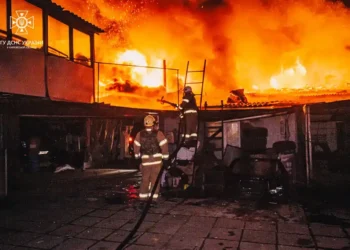
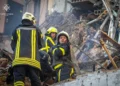
Ukrainian regional officials reported that Russian glide bombs struck residential areas in Zaporizhzhia, injuring at least 26 people and damaging homes, infrastructure, and an educational facility.
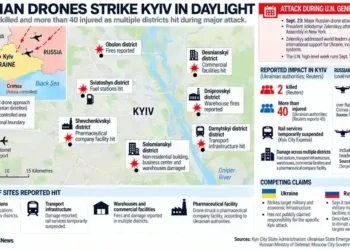
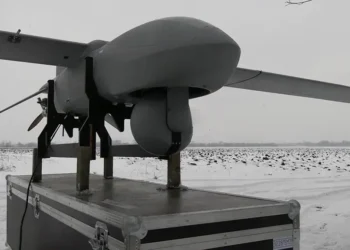
Ukraine’s air force said Russia launched dozens of long-range drones overnight, some of which were intercepted or jammed by air defenses.
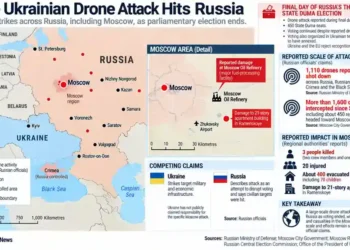
Meanwhile, Russian authorities reported that Ukrainian drone strikes targeted infrastructure in several regions, including Krasnodar and Voronezh, causing injuries and limited damage.
The continuing attacks illustrate the fragile environment surrounding the negotiations and underscore the challenge facing mediators attempting to convert diplomacy into a ceasefire.
A Negotiation Window Narrowing
Putin’s warning that Russia could expand its territorial campaign if talks fail underscores the strategic tension shaping the next phase of the conflict.
For negotiators, the coming weeks may determine whether diplomacy can freeze the front lines or whether the war will enter another period of intensified military competition.
With the battlefield still active and political demands sharply opposed, the diplomatic push now unfolding faces one of its most consequential tests since the war began.