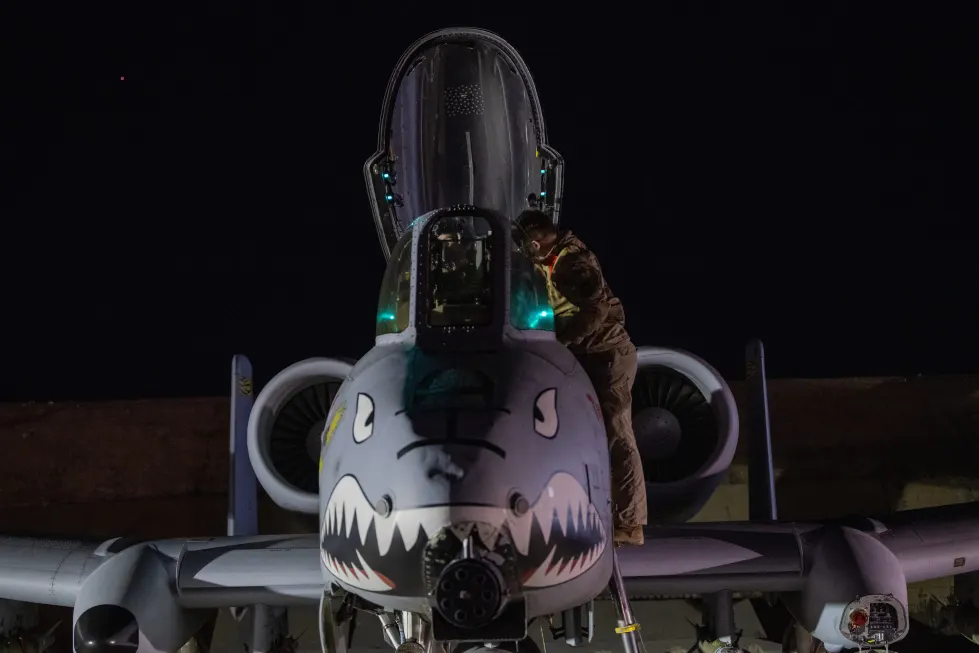
DAMASCUS — Jordan confirmed it deployed its air force alongside United States forces in coordinated airstrikes targeting Islamic State positions in Syria, in a joint operation framed as a response to a recent deadly attack on U.S. personnel. The strikes underscore deepening security cooperation between Washington and regional partners as concerns grow over a resurgence of the militant group.
According to a statement from the Jordanian military, its air force participated in “precise airstrikes” targeting multiple Islamic State group positions in southern Syria. Officials said the operation aimed to prevent extremist groups from using the area as a base to threaten neighboring countries and regional stability.
The strikes follow U.S. military action launched Friday, which targeted several locations across Syria in retaliation for an attack earlier this month that killed three U.S. citizens. Reporting from the region, including the Syrian Observatory for Human Rights, indicated that at least five people were killed in the latest wave of strikes, including an Islamic State cell leader, though the full extent of casualties has not been independently confirmed.

U.S. Central Command said its forces struck more than 70 targets across central Syria using fighter jets, attack helicopters, and artillery, with support from coalition partners including Jordan. The operation forms part of a broader counterterrorism campaign, with U.S. and allied forces conducting multiple operations in Syria and Iraq in recent weeks.
Regional Security Cooperation Expands
Jordan’s involvement highlights its role within the U.S.-led coalition against Islamic State, which includes dozens of countries working to contain the group’s remnants. Officials emphasized that the strikes were designed to disrupt the group’s ability to regroup, particularly in southern Syria, where IS has maintained a presence despite years of counterterrorism pressure.
Military and security analysts have pointed to a pattern of ISIS activity resurfacing in areas where governance remains fragmented. While the group has not claimed responsibility for the attack that prompted the latest strikes, it has carried out subsequent attacks against Syrian security forces, including one incident that killed multiple soldiers in Idlib province.
Escalating Counterterrorism Operations
The recent strikes come amid an uptick in coordinated operations across Syria and Iraq. U.S. officials say that since mid-December, joint operations have resulted in the deaths or capture of more than 20 suspected militant operatives. Over the past six months, coalition forces have reportedly carried out dozens of similar missions targeting Islamic State networks.
Officials speaking to international outlets indicated that the latest actions are part of a sustained effort to deny the group operational space and prevent future attacks on both regional and international targets. The focus on southern Syria reflects growing concern that ISIS is attempting to reconstitute its capabilities in less-secured المناطق.
■ Related News



Political Context and International Stakes
The strikes also come amid ongoing political transitions in Syria, where interim leadership under President Ahmad al-Sharaa has taken a more cooperative stance with the U.S.-led coalition against Islamic State. U.S. President Donald Trump reiterated support for continued military action, framing the response as necessary following the killing of American personnel.
The attack that triggered the strikes occurred during a meeting involving U.S. and Syrian security officials in the Palmyra region. A gunman opened fire after a confrontation, killing two U.S. troops and an interpreter, and wounding additional personnel. Syrian officials later said the assailant had recently been reassigned to a security role while under investigation for suspected ties to Islamic State.
The incident has intensified scrutiny of security coordination in areas where international forces and local authorities operate in close proximity. Analysts note that such attacks highlight persistent gaps in intelligence-sharing and vetting processes, even as cooperation between regional and international actors deepens.
Outlook for Regional Stability
The coordinated airstrikes reflect a broader strategic effort to contain Islamic State’s evolving presence, particularly in Syria’s الجنوب where the group has sought to exploit instability. While the immediate impact of the strikes remains under assessment, the operation signals continued reliance on joint military action to counter transnational militant threats.
With regional actors increasingly involved in U.S.-led operations, the developments point to a sustained, and potentially expanding, multinational campaign against Islamic State — one that remains central to broader efforts to stabilize the Middle East security landscape.