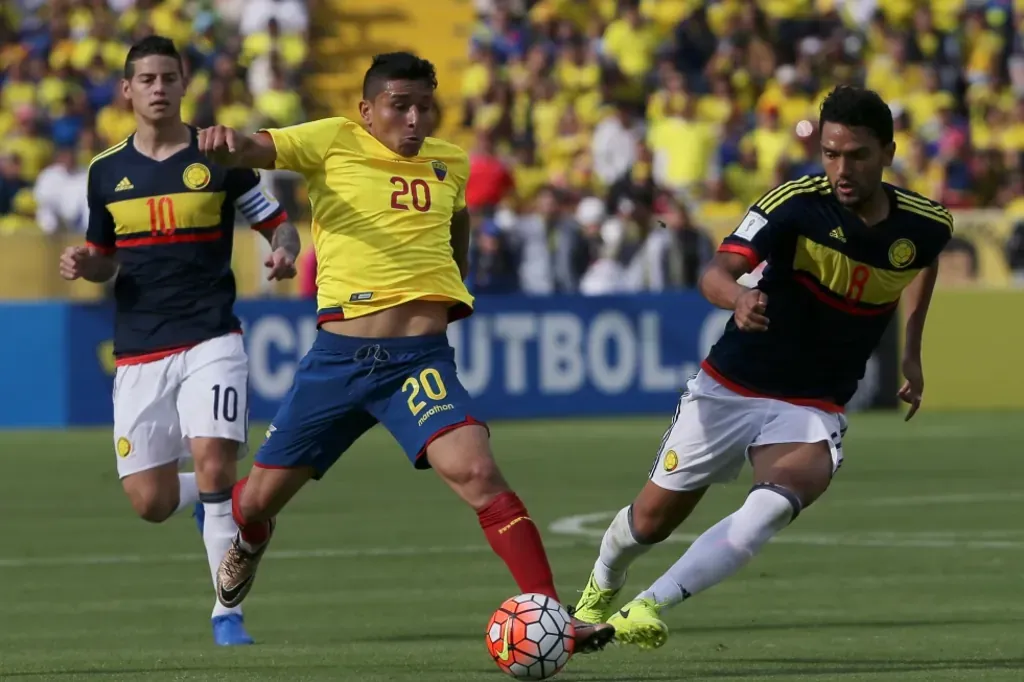
Ecuadorian police say professional soccer player Mario Pineida has been shot dead in what authorities described as an apparent targeted attack in the coastal city of Guayaquil. The killing comes as Ecuador faces its most violent year on record, with rising gun crime increasingly affecting public figures and athletes.
Police said Pineida, a 33-year-old defender for Barcelona de Guayaquil, was killed alongside another unidentified person, while a third individual was wounded. The circumstances of the shooting remain under investigation, and officials have not released details about possible motives or suspects.
The Interior Ministry confirmed Pineida’s death on Wednesday but declined to provide further information. Barcelona de Guayaquil, one of Ecuador’s most prominent clubs, said in a statement that it was deeply saddened by the loss and extended condolences to the player’s family and supporters.

Incident reported in northern Guayaquil
Local media reported that the shooting occurred in the Samanes area, a neighborhood in the northern part of Guayaquil, Ecuador’s largest city and a key commercial port. Guayaquil has been among the cities hardest hit by escalating violence linked to organized crime and drug trafficking.
Authorities have not indicated whether Pineida was specifically targeted or whether he was caught in a broader act of violence. Police have said only that the incident appeared to be an attack, without elaborating on the type of weapons used or the sequence of events.
Guayaquil lies about 265 kilometers (165 miles) southwest of Quito, the capital, and has become a focal point of Ecuador’s security crisis due to its strategic location along drug trafficking routes.
A career spanning top clubs
Pineida was a well-known figure in Ecuadorian football, having spent more than a decade in the professional game. He began his career with Independiente del Valle in 2010, developing at a club that later gained international recognition for its youth system and continental success.
He played for Independiente del Valle until 2015 before joining Barcelona de Guayaquil in 2016. During his time with the Guayaquil-based club, Pineida won two domestic league titles and became a regular presence in the squad.
In 2022, Pineida had a brief stint with Brazil’s Fluminense, adding international experience to his career before returning to Ecuadorian football. Teammates and fans remembered him as a committed defender who had spent most of his professional life in top-flight competition.
Violence increasingly affects athletes
Pineida’s killing adds to a growing list of violent incidents involving footballers in Ecuador, reflecting the broader deterioration of public security. In November, a 16-year-old player from Independiente del Valle was killed by a stray bullet in Guayaquil, according to authorities and local media reports.
Earlier in the year, Maicol Valencia and Leandro Yépez, both players for Exapromo Costa, as well as Jonathan González of the club 22 de Junio, also died from gunshot wounds in separate incidents. None of the cases were immediately linked by police, but they underscored the risks faced by athletes living and training in high-crime areas.
Football clubs across the country have repeatedly called for improved security, particularly in cities where professional teams coexist with neighborhoods affected by gang violence.
Ecuador’s worsening security crisis
Ecuador is on track to record its most violent year since the government began publishing homicide statistics. The Ecuadorian Observatory of Organized Crime has reported more than 9,000 homicides so far this year, surpassing the previous record of 8,248 killings in 2023. Last year, authorities recorded 7,063 violent deaths.
The surge in violence has been attributed largely to the expansion of organized criminal groups linked to international drug cartels. Ecuador’s ports, including Guayaquil, have become key transit points for cocaine shipments bound for Europe and North America.
President Daniel Noboa has pledged to confront criminal organizations through a mix of military deployments, states of emergency, and tougher security measures. His administration has framed the violence as a direct threat to national stability, though rights groups have urged the government to balance enforcement with protections for civilians.
Investigation continues
Police have not released further details about the investigation into Pineida’s death, including whether arrests have been made. Officials said they are reviewing evidence and witness accounts to determine responsibility for the attack.
For now, authorities have urged the public to avoid speculation while the investigation remains ongoing. Pineida’s death has prompted an outpouring of tributes from fans and players, highlighting the impact of Ecuador’s security crisis beyond crime statistics.
As Ecuador grapples with rising violence, the killing of a high-profile athlete has once again drawn attention to the challenges facing a country struggling to contain organized crime and restore public safety.
This article was rewritten by JournosNews.com based on verified reporting from trusted sources. The content has been independently reviewed, fact-checked, and edited for accuracy, neutrality, tone, and global readability in accordance with Google News and AdSense standards.
All opinions, quotes, or statements from contributors, experts, or sourced organizations do not necessarily reflect the views of JournosNews.com. JournosNews.com maintains full editorial independence from any external funders, sponsors, or organizations.
Stay informed with JournosNews.com — your trusted source for verified global reporting and in-depth analysis. Follow us on Google News, BlueSky, and X for real-time updates.