MANILA, Philippines (Journos News) – Authorities in Australia and the Philippines are examining a recent visit to the southern Philippine island of Mindanao by two suspects accused in the deadly shooting at Bondi Beach, as investigators assess whether the trip had any connection to the attack.
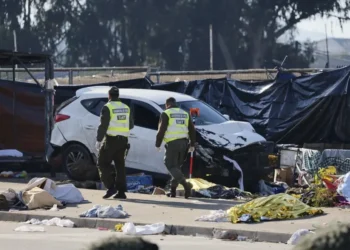
Australian police allege that a father and son opened fire in the popular Sydney beachfront area on Sunday, killing 15 people. Officials in Sydney said the incident is being investigated as an extremist-motivated attack linked to the Islamic State.
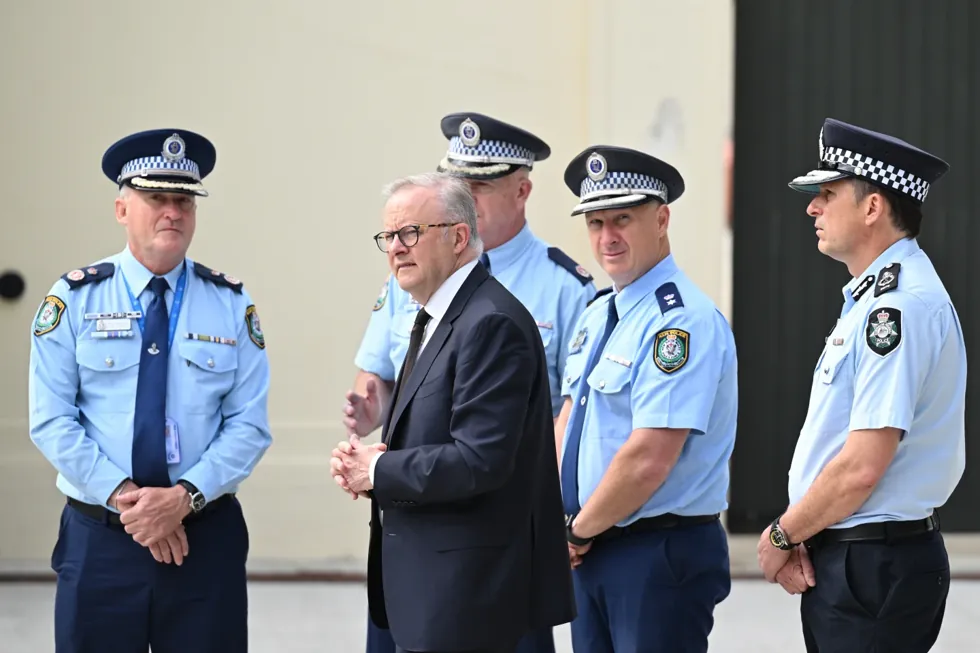
Australian Prime Minister Anthony Albanese said Tuesday the assessment was based on evidence collected during the investigation, including Islamic State flags allegedly found in a seized vehicle.

According to the Philippine Bureau of Immigration, the two suspects traveled to the Philippines from Nov. 1 to Nov. 28, with the southern city of Davao City listed as their final destination before returning to Australia.
Investigation Details
Eduardo Año, the Philippines’ national security adviser, told The Associated Press that investigators found no indication the suspects received training in the country during their stay.
“They stayed in a budget hotel in downtown Davao City,” Año said in a statement Thursday, adding that authorities have seen no evidence suggesting the pair took part in militant training while in the Philippines.
“There is no valid report or confirmation that the two received any form of military training while in the country and no evidence supports such a claim at present,” Año said. He also noted that the length of the suspects’ stay would likely have been insufficient for structured training.
Mindanao’s History of Conflict
Mindanao, the southernmost major island group in the Philippines, has experienced decades of armed conflict involving Muslim separatist movements in a country where the majority of the population is Christian.
■ Related News




Historically, the region attracted a small number of foreign militants linked to groups such as al-Qaeda and the Islamic State, particularly during earlier phases of the separatist conflict.
The violence has roots in centuries of colonial rule by Spain, the United States and later migration by Christian settlers, developments that left Muslim communities a minority in the resource-rich southern region.
Since the 1970s, the conflict in Mindanao has resulted in the deaths of an estimated 150,000 combatants and civilians and slowed economic development in what remains one of the Philippines’ poorest regions.
Peace Agreements and Autonomy
Peace agreements between the Philippine government and major Muslim rebel movements helped reduce large-scale fighting in the region.
A 1996 accord allowed thousands of insurgents to return to their communities in Mindanao. A broader agreement signed in 2014 established expanded autonomy for Muslim communities through the creation of the Bangsamoro Autonomous Region in Muslim Mindanao.
The arrangement integrated former rebel leaders into regional governance and positioned former insurgent organizations as partners in efforts to counter extremist groups attempting to establish a foothold in the region.
Militant Offshoots and Security Operations
Several smaller militant factions emerged after the peace deals, including the extremist group Abu Sayyaf, which has been designated a terrorist organization by the United States and the Philippines.
Abu Sayyaf became known for kidnappings for ransom, bombings and other attacks. Many of its commanders who pledged allegiance to the Islamic State were later killed during military operations.
One of the most significant clashes occurred during the Battle of Marawi, when Philippine security forces — supported by surveillance assistance from the United States and Australia — recaptured the city from militants aligned with the Islamic State.
Philippine security officials say sustained military campaigns have weakened such groups considerably. According to a senior security official and a joint assessment by the Philippine military and police reviewed by The Associated Press, there has been no confirmed presence of foreign militants in the southern Philippines since the last remaining militant groups were neutralized in 2023.
Earlier this month, the Philippine army reported that troops killed a suspected bomb maker linked to the Dawlah Islamiyah in the province of Maguindanao del Sur.
Regional Security Assessment
Security analysts say that while isolated violence continues in parts of Mindanao, recent incidents have largely been linked to local political rivalries, clan disputes and election-related tensions rather than international extremist networks.
Sidney Jones, a U.S.-based researcher who studies militant movements in the region, said it was unclear why suspected attackers would seek training in the Philippines given the setbacks militant groups have suffered there in recent years.
“The level of violence in Mindanao is high, but for the last three years, it’s almost all been linked to elections, clan feuds, or other sources,” Jones said.
Legal Status of the Case
Authorities in Australia continue to investigate the suspects’ motives and possible extremist connections. As of the latest statements from officials, the suspects have been accused in the attack but the case remains under investigation.
Officials in both countries said they are cooperating as part of the ongoing inquiry.