The European Union is advancing a controversial reparations loan plan aimed at financing Ukraine’s war effort and economic recovery by leveraging frozen Russian sovereign assets, marking one of the bloc’s most ambitious financial responses to Russia’s invasion.
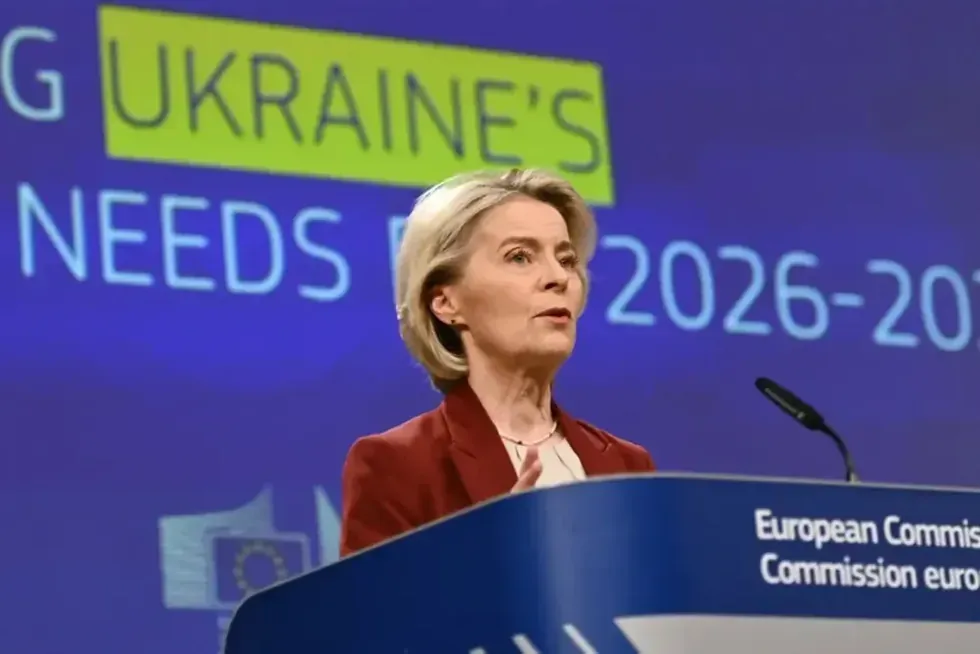
Under the proposal presented by European Commission President Ursula von der Leyen, the EU would channel hundreds of billions of euros in immobilized assets belonging to the Central Bank of Russia into a zero-interest loan for Ukraine. Kyiv would only be required to repay the funds if Moscow ends its war and agrees to compensate Ukraine for damages caused by the invasion.
The initiative represents an unprecedented attempt by Western governments to convert sanctioned state assets into long-term financial support for a country affected by conflict, raising complex legal and diplomatic questions across Europe.

Legal and Diplomatic Pressure Mounts
The proposal comes as European officials seek to maintain financial support for Ukraine while avoiding direct fiscal burdens on member states. Speaking to reporters in Brussels, von der Leyen said the plan would help Ukraine sustain its defence and economic stability while strengthening its negotiating position in any future peace talks.
“Pressure is the only language the Kremlin responds to,” she said, adding that the initiative would provide Kyiv with resources to “defend itself and negotiate from a position of strength.”
The plan would redirect approximately €210 billion in frozen Russian sovereign assets held across European financial institutions, including the majority located in Belgium at the Brussels-based securities depository Euroclear.
However, the proposal has triggered concerns among several EU governments, particularly Belgium, which hosts the largest portion of the assets and fears potential legal retaliation from Moscow.
Safeguards Designed to Ease Member State Concerns
European Commission officials have introduced extensive financial guarantees intended to address those concerns. The EU would initially provide a €105 billion guarantee covering the €90 billion expected to be disbursed to Ukraine over the next two years.

The guarantees would be distributed among EU member states according to the size of their economies and would ensure that institutions such as Euroclear are protected if sanctions are lifted or if courts rule in favor of Russia in legal disputes.
According to Commission officials, additional safeguards would also allow financial institutions to offset potential losses using the immobilized assets themselves if legal challenges emerge outside EU jurisdictions.
Strategic Stakes for European Policy
Beyond the financial structure, the proposal carries broader geopolitical implications for the EU’s sanctions regime against Russia. Brussels is exploring legal measures to prevent the frozen sovereign assets from being returned to Moscow even if sanctions are lifted prematurely.
One proposed mechanism relies on Article 122 of the EU treaties, a rarely used legal provision allowing economic measures in response to severe disruptions. Officials argue that Russia’s invasion has created economic shocks across the bloc, potentially justifying the extraordinary legal approach.
Analysts say the move reflects Europe’s effort to maintain pressure on Moscow while sustaining Ukraine’s war effort without exhausting national budgets.
Funding Linked to Governance and Anti-Corruption Measures
The EU plan also includes conditions tied to Ukraine’s governance reforms. Payments from the loan would be linked to anti-corruption measures required under Ukraine’s bid for membership in the European Union.
If Kyiv weakens oversight institutions or rolls back anti-corruption commitments, the Commission could suspend financial disbursements under a proposed “no rollback” clause.
The safeguards come amid recent political turbulence in Ukraine’s energy sector that has triggered high-level resignations and intensified scrutiny of government oversight mechanisms.
Defence Spending to Prioritize European Industry
A portion of the financial assistance would support Ukraine’s military needs, with procurement rules designed to prioritize European and Ukrainian defence manufacturers.
Under the proposal, weapons and ammunition purchases would follow a “Made in Europe” principle, favouring production within the EU and associated countries such as Iceland, Norway, Liechtenstein and Switzerland. Purchases from outside those regions would only occur if urgent needs cannot be met domestically.
The policy reflects growing European efforts to strengthen defence manufacturing capacity and reduce reliance on non-European suppliers.
Alternative Financing Still Under Consideration
If legal or political resistance prevents the use of Russian assets, the European Commission has outlined an alternative option: issuing joint EU debt to raise €90 billion for Ukraine.
Such borrowing would mirror the bloc’s pandemic-era financial instruments but would require unanimous approval from member states and could impose interest costs on national budgets.
Officials have also suggested that both approaches could operate simultaneously, combining asset-backed financing with market borrowing to ensure Ukraine receives the funds it needs.
Future Decisions Loom
EU leaders are expected to discuss the proposal at a summit in December, where they must decide whether to proceed with the asset-based loan, shift toward collective borrowing, or adopt a hybrid approach.
Regardless of the outcome, European officials say Ukraine’s financial and military needs are likely to remain significant even if diplomatic efforts eventually lead to a ceasefire or peace agreement.