European Union leaders are meeting in Brussels to try to agree on a large loan package intended to cover Ukraine’s military and financial needs over the next two years. While the summit agenda includes migration, enlargement, and economic issues, securing funding for Kyiv remains the most urgent and contentious item.
The meeting comes as international institutions estimate Ukraine will require sustained external support as Russia’s war continues into its fourth year. The International Monetary Fund has put Ukraine’s financing needs at about 137 billion euros ($160 billion) through 2026, covering defense, reconstruction, and basic state functions.
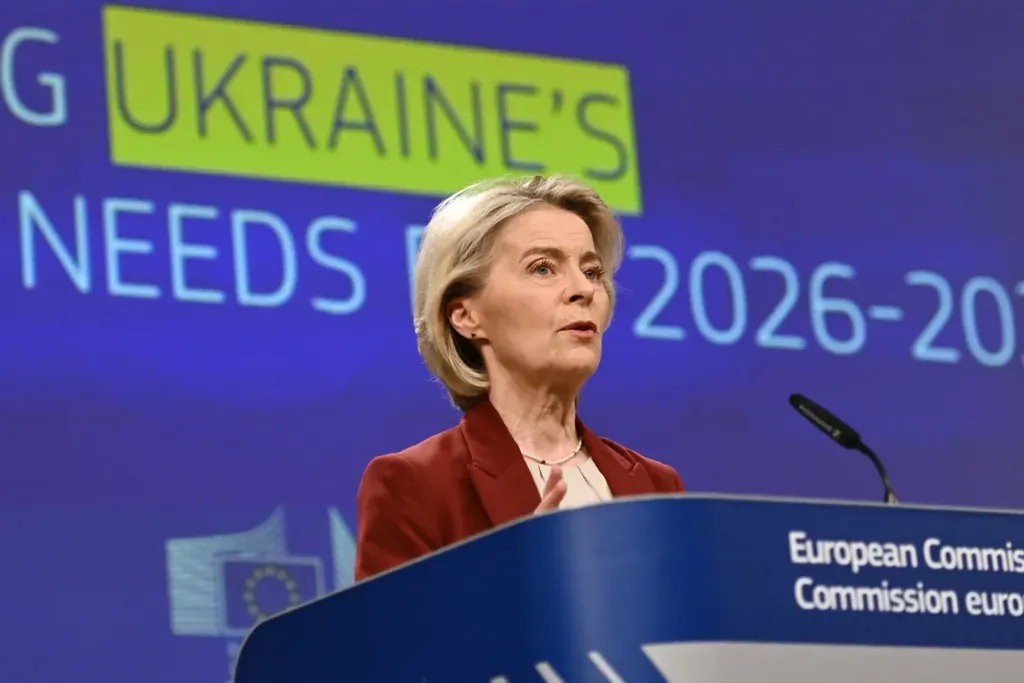
European Commission President Ursula von der Leyen told EU lawmakers ahead of the summit that the bloc faces a clear choice on how to provide that support. She said the urgency was evident to all member states and that delay would come at a cost for both Ukraine and European security.

Push for a major loan framework
At the center of the talks is a proposal to extend a large loan to Ukraine, with repayment linked to future Russian compensation for war damage. Under the plan backed by von der Leyen, up to 90 billion euros ($105 billion) would be lent to Kyiv until Russia ends the war and pays reparations.
European Council President António Costa, who is chairing the summit, has said he is prepared to keep leaders in negotiations until an agreement is reached, even if discussions extend beyond the scheduled meeting. Diplomats say pressure is high to present a unified EU position as Ukraine seeks predictable, long-term financing.
Ukrainian President Volodymyr Zelenskyy has repeatedly argued that the destruction caused by Russia’s invasion exceeds 600 billion euros ($700 billion), strengthening Kyiv’s case that Moscow should ultimately bear the financial burden.
Frozen Russian assets at the center of debate
A key element of the proposal involves using proceeds or guarantees linked to Russian assets frozen in Europe since the invasion. Tens of billions of euros belonging to Russia’s central bank are immobilized, largely held at the Belgian-based financial services company Euroclear.
Supporters of the idea argue that tapping those assets would reduce the burden on European taxpayers while sending a strong political signal. Several EU governments favor directing at least part of the frozen funds toward Ukraine’s military and economic needs.
However, the approach remains highly controversial. The European Central Bank has warned that seizing or repurposing sovereign assets could undermine confidence in the euro and in Europe as a safe place to hold foreign reserves. Some governments also fear legal challenges and possible retaliation from Moscow.
Belgium and others voice concerns
Belgium, where most of the frozen Russian assets are located, has emerged as the strongest opponent of using them directly. Belgian officials have warned that Russia could retaliate against Belgian interests and have instead suggested borrowing on international markets as a safer alternative.
Those concerns intensified last week after Russia’s central bank filed a lawsuit against Euroclear in a Moscow court, a move widely seen as increasing pressure ahead of the EU summit. Belgian authorities argue that such legal risks should not be underestimated.
Several other member states remain undecided. Bulgaria, Italy, and Malta have yet to fully endorse the proposal, according to EU diplomats, and have sought further clarification on legal safeguards and financial exposure.
Opposition from Hungary and Slovakia
Hungary and Slovakia have openly opposed von der Leyen’s plan, rejecting what has been described as a “reparations loan.” Both governments have been skeptical of deeper EU financial commitments to Ukraine and have raised objections to linking loans to future Russian payments.
Their resistance complicates efforts to secure unanimous backing, which is required for major financial decisions at the EU level. Diplomats say that if a sufficient number of countries withhold support, the proposal could be blocked altogether.
Limited alternatives on the table
In recent weeks, EU envoys have worked to narrow differences and refine the technical details of the loan framework, hoping to bring hesitant capitals on board. So far, however, there is no majority support for an alternative plan to raise the full amount on international markets.
Without agreement, the EU risks delaying financial assistance at a critical moment for Ukraine, which relies heavily on external aid to maintain public services and defense operations.
As leaders meet behind closed doors in Brussels, the outcome remains uncertain. What is clear is that the summit has become a test of the EU’s ability to sustain long-term support for Ukraine while managing internal divisions and financial risks.
This article was rewritten by JournosNews.com based on verified reporting from trusted sources. The content has been independently reviewed, fact-checked, and edited for accuracy, neutrality, tone, and global readability in accordance with Google News and AdSense standards.
All opinions, quotes, or statements from contributors, experts, or sourced organizations do not necessarily reflect the views of JournosNews.com. JournosNews.com maintains full editorial independence from any external funders, sponsors, or organizations.
Stay informed with JournosNews.com — your trusted source for verified global reporting and in-depth analysis. Follow us on Google News, BlueSky, and X for real-time updates.