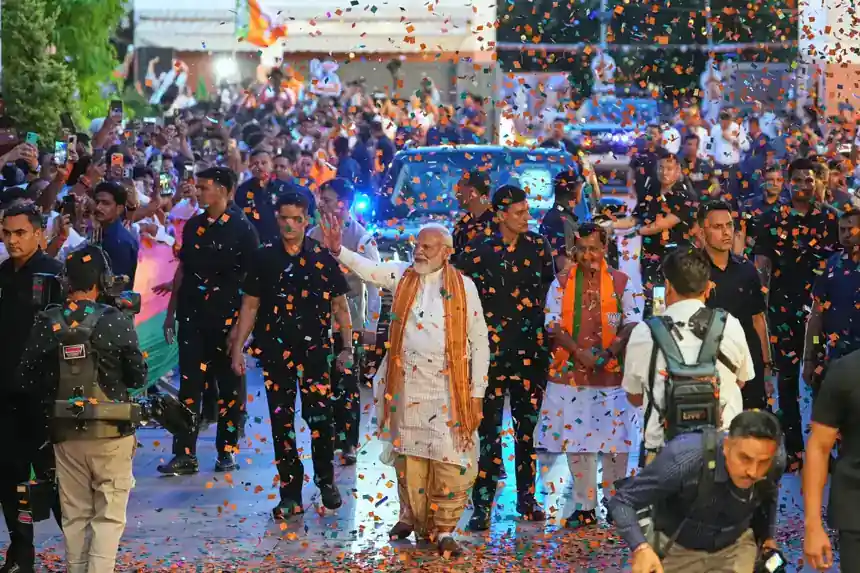
India’s ruling Bharatiya Janata Party (BJP), led by Prime Minister Narendra Modi, has secured control of the eastern state of West Bengal in a closely watched regional election, marking a significant shift in the country’s political dynamics with broader national implications.
The result represents a strategic breakthrough for the BJP in a state long dominated by regional forces, underscoring the party’s expanding geographic reach ahead of future national contests. Reporting from The Associated Press indicates the victory could recalibrate alliances and intensify competition among opposition parties across India.
Strategic Stakes Rise in Eastern India
West Bengal has historically been a political stronghold of regional parties, making the BJP’s win a notable departure from established voting patterns. Analysts say the outcome reflects shifting voter sentiment and the party’s sustained organizational push in regions previously resistant to its platform.

The state’s economic and cultural significance adds weight to the victory, positioning the BJP to influence policy direction in eastern India while reinforcing its broader national narrative. Political observers note that consolidating power in such regions enhances the party’s leverage in federal decision-making.
Opposition Faces Renewed Pressure
The defeat places increased pressure on opposition groups, particularly regional parties that have relied on localized support bases to counter the BJP’s national dominance. According to analysts cited in international coverage, the outcome may trigger internal reassessments and efforts to rebuild coalitions capable of challenging the ruling party.
The shift in West Bengal also raises questions about the opposition’s ability to present a unified front in upcoming elections. Fragmentation among rival groups has been identified as a key factor benefiting the BJP’s electoral strategy.
National Implications Expand
The election result is likely to influence political calculations beyond the state, as parties prepare for future contests that could shape India’s policy direction. Observers say the BJP’s success in West Bengal demonstrates its capacity to penetrate diverse political landscapes, potentially reshaping electoral strategies nationwide.
While regional issues played a central role in the campaign, the broader implications point to an evolving political environment in which national narratives increasingly intersect with local dynamics.




International Attention on India’s Political Trajectory
India’s electoral developments are being closely monitored by global stakeholders, given the country’s role as a major economic and geopolitical actor. The consolidation of power by the BJP may affect policy continuity in areas such as trade, foreign investment, and regional diplomacy.
As the political landscape adjusts to the new balance of power, analysts suggest that upcoming elections in other states will serve as critical indicators of whether the trend seen in West Bengal reflects a broader national shift.
The outcome underscores a period of political realignment in India, with potential long-term consequences for governance, opposition strategy, and the country’s engagement on the global stage.