LA GUAIRA, Venezuela — International aid organizations have warned that Venezuela’s already fragile healthcare system is nearing collapse almost a week after two powerful earthquakes devastated parts of the country, overwhelming hospitals and raising concerns about the spread of infectious diseases, according to The Associated Press.
The warning comes as rescue operations increasingly shift toward recovery efforts, with the number of survivors being pulled from the rubble falling sharply in recent days.
Government officials said rescue teams found only one survivor by Tuesday afternoon—a toddler rescued after spending six days trapped beneath a collapsed building. Jorge Rodríguez, president of Venezuela’s National Assembly, announced the rescue while noting that official search operations had slowed significantly.

Authorities said rescue teams saved 5,380 people during the first two days after the earthquakes, compared with just four people rescued alive on Monday. Volunteer groups, however, carried out additional rescues independently before international emergency teams arrived.
Death Toll Continues to Rise
The Venezuelan government has placed the official death toll at more than 1,900 people.
Experts believe the actual number may be considerably higher as recovery crews continue retrieving bodies from collapsed buildings and morgues struggle to accommodate the increasing number of victims.
The United Nations estimated Tuesday that the earthquakes generated approximately 1.2 million tons of debris from destroyed homes, businesses and infrastructure.
Aid agencies also warned that thousands of displaced residents remain exposed to harsh conditions after spending several days sleeping outdoors or inside overcrowded emergency shelters.


Hospitals Operating Beyond Capacity
The World Health Organization (WHO) said Venezuela’s healthcare system, already weakened by years of economic hardship and underinvestment, is now under extraordinary strain.
WHO spokesperson Christian Lindmeier told reporters in Geneva that hospitals are operating beyond their capacity to manage the surge in trauma patients resulting from the disaster.
Government figures indicate that more than 15,800 people have been directly affected by the earthquakes, a number that primarily reflects officially registered displaced residents. According to UNHCR spokesperson Carlotta Wolf, that figure is expected to continue rising as damage assessments continue.
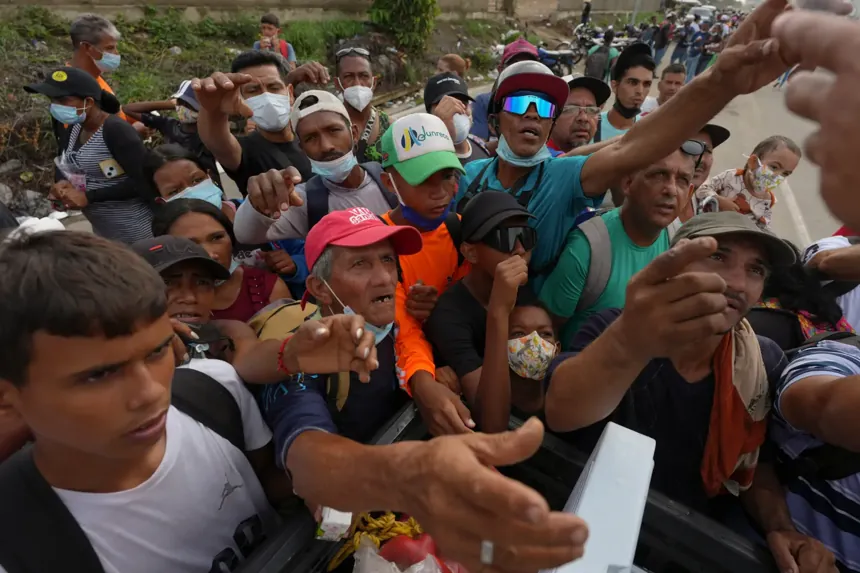
Many newly displaced families are sheltering in parks, vehicles and temporary camps, particularly in La Guaira, where shortages of food and essential supplies remain widespread.
Disease Risks Grow in Crowded Shelters
Humanitarian organizations warned that inadequate sanitation is creating conditions for disease outbreaks.
Without reliable access to toilets, showers or hygiene supplies, displaced communities face elevated risks of preventable illnesses, including measles, particularly because vaccination coverage remains low.
Lindmeier also warned that conditions favor the spread of mosquito-borne and waterborne diseases such as dengue fever, yellow fever and malaria.
According to government data, the earthquakes damaged or compromised 38 hospitals across Venezuela.
The WHO has assessed 21 of those facilities. Three hospitals are no longer operational, while six others sustained significant structural damage. The remaining hospitals continue functioning but are struggling under heavy patient loads.
The crisis has also been worsened by shortages of medical personnel. WHO officials said numerous specialist physicians remain missing following the earthquakes, including healthcare professionals responsible for maternity services in La Guaira.
Years of migration have further weakened Venezuela’s healthcare workforce, with approximately 8 million people—including many doctors and nurses—having left the country in recent years.
Lindmeier said assessments revealed overcrowded emergency departments, growing surgical backlogs and deteriorating infection-control procedures.
International Aid Expands Across Disaster Zone
International humanitarian organizations have increased their presence in La Guaira and neighboring communities.
The Red Cross, the World Food Programme, and other relief organizations established temporary aid stations along public spaces, distributing food, medicines, hygiene products and protective equipment.
Long lines formed throughout Tuesday as residents sought emergency assistance under intense heat.
Families Search for Missing Relatives
Many Venezuelans continue searching for missing relatives as authorities have not released an official number of people still unaccounted for.
Families have increasingly relied on WhatsApp groups and nongovernmental online registries to report missing loved ones. One independent database listed more than 43,000 missing individuals.
During his daily televised briefing, Jorge Rodríguez reported that 1,943 people had died and 10,571 had been injured as of Tuesday. He urged the public to rely solely on official government information regarding casualties.
His figures, however, leave many people unaccounted for.
Rodríguez said officials estimate approximately 30,000 people were present in the hardest-hit areas of La Guaira when the earthquakes struck and that roughly 20,000 either escaped independently or were later rescued.
Meanwhile, NASA estimates that nearly 59,000 buildings have been damaged or destroyed nationwide, suggesting the number of people affected extends into the hundreds of thousands.
The United Nations Children’s Fund (UNICEF) said Tuesday that approximately 680,000 children across Venezuela now require humanitarian assistance following the disaster.
Tags: Venezuela, La Guaira, Earthquake, World Health Organization, United Nations, UNICEF, UNHCR, Humanitarian Crisis, Healthcare, Red Cross, World Food Programme, Natural Disaster