DOVER AIR FORCE BASE, Del. (Journos News) – The return of six American soldiers killed in the Middle East placed the human toll of the escalating U.S.–Iran conflict squarely before the country’s political and military leadership on Saturday.
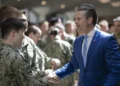
At Dover Air Force Base in Delaware, Donald Trump stood with grieving families during the solemn “dignified transfer” ceremony, one of the most somber traditions in the U.S. military. The ritual — marking the return of service members killed in action — unfolded as Washington faces growing questions about the trajectory of the widening confrontation with Iran.
As first reported by The Associated Press, the six soldiers died in a drone strike targeting a command center in Kuwait, just a day after the United States and Israel launched coordinated military operations against Iran. Their deaths mark one of the earliest confirmed U.S. combat losses since the campaign began.

The ceremony, lasting roughly half an hour, reflected both national mourning and the strategic weight of the conflict now unfolding across the region.
Command Responsibility Tested as War Expands
For any American president, attending a dignified transfer is considered among the most difficult duties of the role. During the ceremony, Trump remained silent as each flag-draped transfer case was carried from a military aircraft to waiting vehicles.
Standing alongside him were JD Vance, senior national security officials, and members of the administration’s leadership team. The presence of top officials underscored the significance of the moment as the U.S. military prepares for the possibility of further escalation.
Speaking to reporters aboard Air Force One after leaving Delaware, Trump described the day as “very sad,” adding that he was grateful the government could “pay our respects” to the families.
Yet beyond the ceremony itself, the moment highlighted a broader reality confronting policymakers: early battlefield losses are emerging as Washington weighs the scale and duration of its military campaign.
■ Related News



Early Casualties Signal Operational Risks
The soldiers were part of the Army Reserve’s 103rd Sustainment Command, a logistics formation responsible for supplying fuel, food, equipment, and ammunition to U.S. forces operating in the region.
Those killed were:
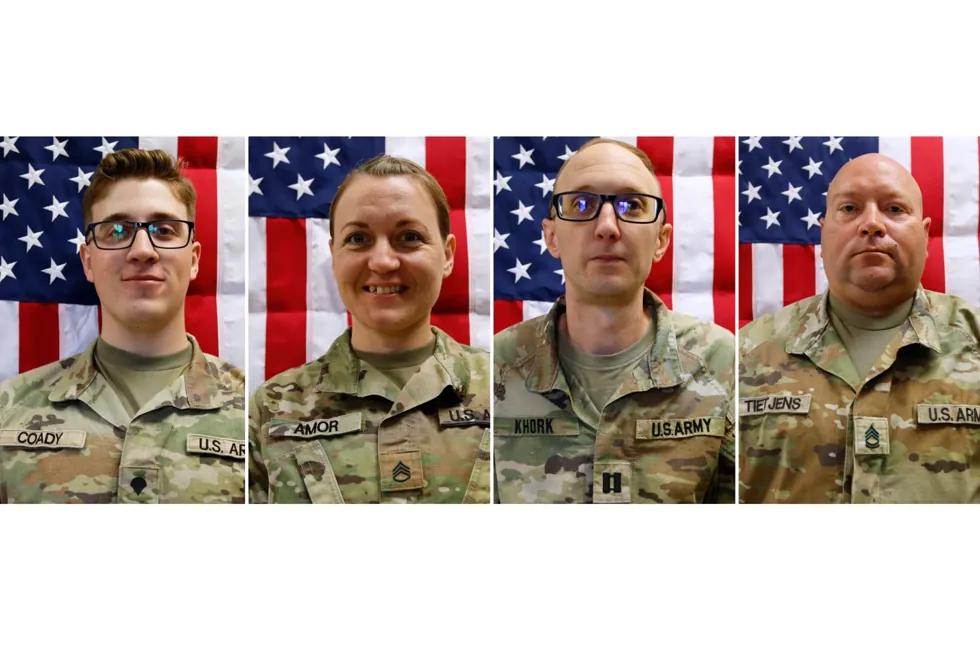
Maj. Jeffrey O’Brien, 45, of Indianola, Iowa
Capt. Cody Khork, 35, of Winter Haven, Florida
Chief Warrant Officer 3 Robert Marzan, 54, of Sacramento, California
Sgt. 1st Class Nicole Amor, 39, of White Bear Lake, Minnesota
Sgt. 1st Class Noah Tietjens, 42, of Bellevue, Nebraska
Sgt. Declan Coady, 20, of West Des Moines, Iowa, who was posthumously promoted from specialist
According to statements from relatives and military officials, the unit had been operating in a support role when the drone strike occurred.
The attack highlights a growing concern among defense planners: even rear-area installations are increasingly vulnerable as drones and precision weapons reshape the operational environment across the Middle East.
Families Confront the War’s Human Toll
For relatives gathered at Dover, the ceremony transformed a strategic conflict into a deeply personal loss.
Nicole Amor had been scheduled to return home within days, her husband Joey Amor said earlier in remarks reported by The Associated Press. The couple shared two children.
“You don’t go to Kuwait thinking something’s going to happen,” he said. “For her to be one of the first — it hurts.”
Declan Coady, the youngest among the fallen, had recently trained to troubleshoot military computer systems. His father described him as dedicated to both service and physical fitness, adding that he was known among family and friends for his kindness.
Other relatives described the soldiers as devoted parents, partners, and community members — reminders that the military campaign’s strategic calculations carry profound human consequences.
Political and Strategic Pressure Builds
The deaths have also intensified scrutiny on Washington’s expanding military engagement.
Republican Sen. Joni Ernst of Iowa, a combat veteran, said earlier in the week that the nation “owes them an incredible debt of gratitude that can never be repaid.”
But beyond tributes, the incident underscores the operational stakes now facing U.S. leaders. As strikes continue across the region, analysts warn that additional casualties could reshape the domestic and international debate over the campaign.
For the administration, the Dover ceremony was both a moment of national mourning and a reminder of the responsibilities that accompany wartime decisions.
A Conflict Still Unfolding
Saturday’s transfer ceremony may mark only the beginning of the war’s visible human cost.
Military officials have indicated that operations against Iranian targets and allied militias could continue in multiple theaters across the Middle East. Each expansion raises the possibility of new confrontations — and further losses.
For now, the images from Dover Air Force Base offer a stark illustration of the stakes.
Behind the strategic calculations and diplomatic maneuvering surrounding the U.S.–Iran confrontation lie individual lives, families, and communities now grappling with the consequences of a conflict that appears far from over.