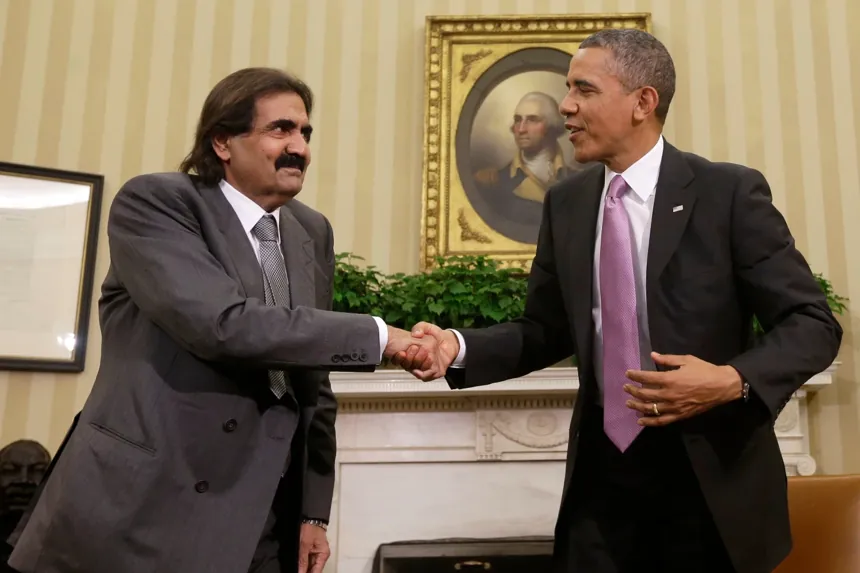
DUBAI, United Arab Emirates – Sheikh Hamad bin Khalifa Al Thani, the former emir who transformed Qatar into a major force in global diplomacy, media, aviation and investment, has died at the age of 74, state media announced.
The state-run Qatar News Agency reported his death but did not disclose a cause.
Sheikh Hamad ruled Qatar from 1995 until his voluntary abdication in June 2013, making way for his son, Sheikh Tamim bin Hamad Al Thani. The peaceful transfer of power was rare in the Gulf, where rulers have traditionally remained in office until death or removal.

During his 18 years in power, Qatar used its vast natural gas wealth to expand its influence far beyond the Gulf. The country invested heavily in infrastructure, international business, diplomacy and global sports, reshaping its position on the world stage.
One of Sheikh Hamad’s most significant legacies was the creation of Al Jazeera, which became one of the Arab world’s most influential news organizations. Qatar also expanded Qatar Airways into a leading international airline, increased investments in global real estate and sports, and secured the right to host the 2022 FIFA World Cup.
After stepping down, Sheikh Hamad remained a respected national figure. He received a warm public reception during the opening ceremony of the World Cup in Doha.
Regional Influence and Diplomatic Reach
Sheikh Hamad sought to establish Qatar as a regional mediator. During his rule, the country played diplomatic roles in conflicts involving Sudan, Lebanon, the Palestinian territories and Afghanistan.
Qatar also maintained ties with a wide range of international partners, including the United States, Iran and several regional political movements.
■ Related News




Those relationships, however, also strained ties with neighboring Gulf states. Qatar’s links to Iran, Hamas and the Muslim Brotherhood drew criticism and later contributed to the regional blockade imposed by Bahrain, Egypt, Saudi Arabia and the United Arab Emirates during Sheikh Tamim’s reign.
Rise to Power
Born into Qatar’s ruling Al Thani family, Sheikh Hamad received military training at Britain’s Royal Military Academy Sandhurst before serving as commander of the armed forces and defense minister.
He later became crown prince and took power in 1995 after peacefully deposing his father, Sheikh Khalifa bin Hamad Al Thani, in a bloodless palace coup.
Under his leadership, Qatar became one of the world’s wealthiest countries on a per-capita basis. Revenue from liquefied natural gas exports financed major infrastructure projects, overseas investments and ambitious economic development.
Doha also emerged as a global aviation hub through the expansion of Hamad International Airport, which was later named in his honor.
Qatar pursued an aggressive international investment strategy during his reign. The country acquired London’s Harrods department store, invested in major global companies and expanded its influence in international sports, including ownership of Paris Saint-Germain.
Lasting Legacy
In his final year in office, Qatar deepened its role as a diplomatic intermediary. In 2013, the country opened a political office for Afghanistan’s Taliban, helping lay the groundwork for negotiations that ultimately preceded the U.S. withdrawal from Afghanistan.
His decision to step down was widely seen as an effort to ensure a smooth generational transition during a period of significant regional change following the Arab Spring.
Sheikh Hamad is survived by his son, Sheikh Tamim, who has led Qatar since 2013 and has continued many of the domestic and foreign policies established during his father’s reign.
This report is based on reporting by The Associated Press.
Article Topics: Diplomacy | Royal Family | Al Jazeera | Sheikh Hamad bin Khalifa Al Thani | Qatar | ArabWorld | Qatari Royal Family | Leadership