Command Authority Reasserted Amid Wartime Shock
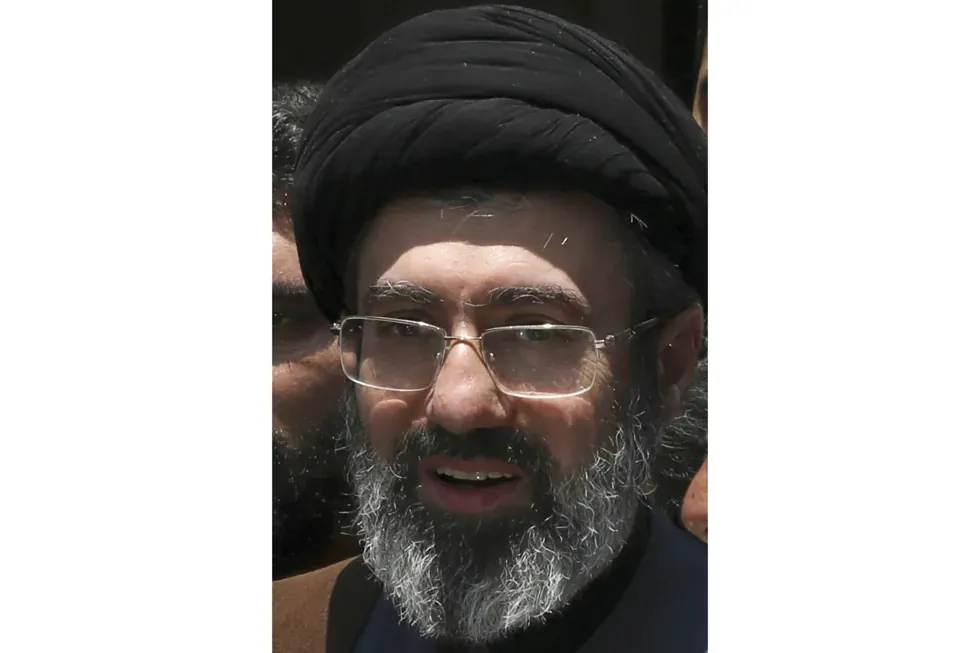
Iran has moved swiftly to stabilize its leadership after the killing of its top cleric, appointing Mojtaba Khamenei as the country’s new supreme leader during an intensifying regional war.
The decision was announced early Monday by Iranian state television, which said the clerical Assembly of Experts voted strongly to elevate the 56-year-old son of the slain leader Ali Khamenei, who was killed in an Israeli strike days earlier.
As first reported by The Associated Press, the appointment ends a period of uncertainty that emerged after the assassination triggered a war between Iran and Israel and raised questions about the continuity of authority in Tehran.

State television broadcast scenes of celebrations in parts of Tehran, while officials urged national unity as Iranian forces continue to face Israeli strikes and regional escalation.
Institutional Resilience Tested by Sudden Succession
Iran’s political system has faced only one previous transition of supreme leadership since the Iranian Revolution, making the latest succession one of the most consequential institutional tests in decades.
The supreme leader holds ultimate authority in Iran’s theocratic structure, controlling the armed forces, foreign policy direction, and the powerful Islamic Revolutionary Guard Corps.
Mojtaba Khamenei, a cleric long viewed by analysts as a potential successor, had maintained a largely low public profile and had never held elected office. Nevertheless, Iranian officials say he had spent years working closely with his father within the clerical and security establishment.
Senior Iranian security official Ali Larijani praised the Assembly of Experts for convening despite ongoing airstrikes in Tehran, saying the new leader had been “trained” for the role and could guide the country through the current crisis.

The rapid appointment suggests Iran’s leadership is prioritizing institutional continuity as the war reshapes the regional security landscape.
Regional Allies Rally Behind the New Leader
Support from Iran’s security establishment and regional partners appeared quickly after the announcement.
The Islamic Revolutionary Guard Corps issued a statement backing the decision, while the Lebanese militant movement Hezbollah shared an image of Mojtaba Khamenei online, describing him as the “leader of the Islamic revolution.”
Such endorsements signal an effort to reinforce unity across Iran’s regional network as the conflict spreads beyond its borders.
The war has already drawn in multiple actors across the Middle East, with Iran and its allies confronting Israeli forces while U.S. troops stationed in the region face growing security threats.
Washington Signals Opposition to Dynastic Succession
The leadership change is also likely to deepen tensions between Tehran and Washington.
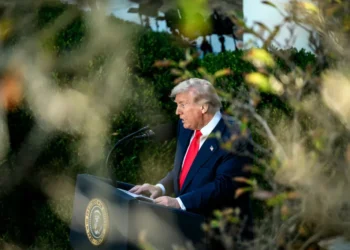
U.S. President Donald Trump previously criticized the prospect of Mojtaba Khamenei taking power, saying he would prefer a leader capable of bringing “harmony and peace” to Iran.
In comments reported by U.S. media, Trump suggested any future Iranian leader would struggle to remain in power without American acceptance once the war concludes.
The White House did not immediately respond to requests for comment following the announcement.
War Expands Across the Region
The leadership transition comes as the war between Israel and Iran escalates across multiple fronts.
Civilian infrastructure has been struck across the region, with Bahrain accusing Iran of damaging a desalination plant vital to drinking water supplies. Iranian officials, in turn, accused the United States of striking a desalination facility on Qeshm Island, disrupting water access for nearby villages.
Israeli airstrikes overnight targeted oil storage sites in Tehran that Israel’s military said were used to fuel missile launches.
Meanwhile, Gulf states hosting U.S. bases have faced waves of Iranian missiles and drones since the war began on February 28, raising concerns about broader regional instability.
Energy Markets and Diplomacy Face Growing Strain
The conflict is already reshaping global energy markets.
Oil prices have climbed above $100 per barrel for the first time in more than three years as fighting disrupts shipping routes and production near the Strait of Hormuz, one of the world’s most important energy corridors.
Several regional producers, including Iraq, have curtailed output amid security risks, amplifying market volatility.
Diplomatic tensions have also intensified. The Arab League criticized Iran for what it described as attacks on neighboring countries, while U.S. officials have begun evacuating nonessential diplomatic personnel from several Middle Eastern posts.
Civilian Toll Mounts Across Multiple Fronts
The humanitarian impact continues to expand as fighting spreads.
Authorities say the conflict has killed at least 1,230 people in Iran, 397 in Lebanon, and more than a dozen in Israel. In Lebanon, officials report more than half a million people displaced by fighting between Israeli forces and Hezbollah.
Families have sought refuge in schools, cars, and open coastal areas around Beirut as evacuation orders expand.
Israel has also confirmed its first military casualties in the conflict, reporting the deaths of two soldiers during fighting in southern Lebanon.
A Leadership Test With Regional Consequences
The appointment of Mojtaba Khamenei during wartime represents one of the most significant stress tests for Iran’s political system since the Islamic Republic’s founding.
By rapidly installing a successor, Iran’s clerical establishment appears intent on projecting continuity despite the shock of its leader’s assassination.
Whether the transition strengthens the system’s resilience — or exposes deeper fractures under the strain of a widening war — will likely shape the trajectory of the conflict and the future of regional stability.