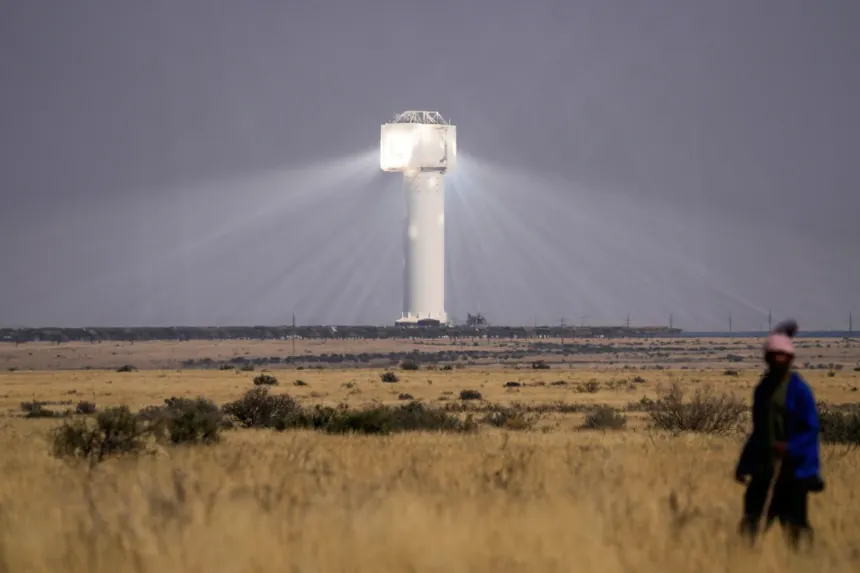
NAIROBI, Kenya — Africa’s clean energy transition is entering a new phase. Experts say the continent’s biggest challenge is no longer developing renewable energy projects. Instead, they say countries must strengthen the institutions, regulations and markets needed to deploy them at scale.
The shift comes as renewable energy reaches a historic milestone worldwide. Renewables generated 34% of the world’s electricity in 2025, surpassing coal’s 33% share. Together with nuclear power, renewable sources are projected to produce half of global electricity by 2030.
At the same time, Africa continues to face a major energy gap. Despite rising demand driven by industrialization, artificial intelligence and electrification, roughly 600 million people across the continent still lack access to electricity.

Institutional Barriers Replace Technology Challenges
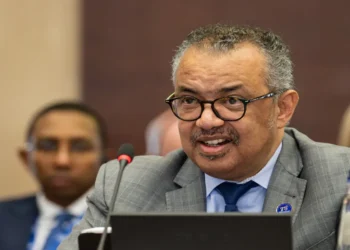
Former New York City Mayor Michael R. Bloomberg, who serves as the United Nations Secretary-General’s Special Envoy on Climate Ambition and Solutions, said the economics of renewable energy have fundamentally changed.
“Clean energy is now cheaper than fossil fuels in virtually every part of the world,” Bloomberg said in late June while announcing a new $285 million Bloomberg Philanthropies initiative to strengthen clean energy industries in emerging and developing economies.
He said governments and institutions can no longer afford delays caused by barriers that can be addressed, particularly as global demand for electricity continues to grow.
Instead of directly funding wind and solar projects, the initiative will focus on improving market design, regulatory capacity, technical expertise and industry institutions. Energy experts increasingly view those areas as essential for attracting private investment and accelerating renewable energy deployment.
Turning Potential Into Investment
The initiative reflects a growing consensus that Africa’s biggest obstacle is not a lack of renewable resources. Rather, many countries lack the institutional capacity needed to turn those resources into bankable projects connected to national power grids.
■ Related News




As a result, many projects face delays because of weak market structures, limited grid planning, lengthy permitting procedures and fragmented regulatory systems.
“What has been missing is not the potential, but the institutional infrastructure and capabilities to unlock it,” said Saliem Fakir, executive director of the African Climate Foundation.
“Philanthropy that targets those gaps directly is the kind of intervention that can shift the trajectory of a continent’s energy system,” he added.
Policy Certainty Seen as Key to Growth
Renewable energy costs have fallen sharply across Africa, and investor interest continues to grow.
However, industry leaders say policy uncertainty, slow approval processes and limited regulatory capacity still discourage investment.
Wangari Muchiri, founder and chief executive of RE.Think Energy, said the latest commitment reflects a broader shift in priorities.
“The next phase of the energy transition is not about proving clean energy works. It’s about removing the barriers preventing it from scaling fast enough,” she said.
The Bloomberg initiative aims to help countries move beyond setting renewable energy targets. It will do so by strengthening the institutional frameworks that allow projects to secure long-term financing and connect to national electricity grids.
“The next chapter of Africa’s renewable energy story will not be defined only by the projects it builds, but by the institutions that make those projects possible,” Muchiri said.
This report is based on reporting by The Associated Press.
Article Topics: Africa | Renewable Energy | Clean Energy | Climate | Energy Transition | Infrastructure | Investment | Electricity