Journos News - Breaking News, World News, Top Stories, Todays Headlines and Flash Reports
Tuesday, September 1, 2026
  • Login
  • Home
  • World
    • Africa
    • Americas
    • Asia
    • Europe
    • Middle East
    • Oceania
  • Politics
  • Business
  • Technology
  • Health
  • Science
  • Sports
  • Entertainment
  • Culture
No Result
View All Result
  • Home
  • World
    • Africa
    • Americas
    • Asia
    • Europe
    • Middle East
    • Oceania
  • Politics
  • Business
  • Technology
  • Health
  • Science
  • Sports
  • Entertainment
  • Culture
No Result
View All Result
Journos News - Breaking News, World News, Top Stories, Todays Headlines and Flash Reports
No Result
View All Result
Home World News Americas

U.S. Strategic Bandwidth Tested as China Declines Hormuz Role Amid Expanding Iran Conflict

Washington’s Middle East entanglement reshapes global priorities, raising questions over Indo-Pacific commitments and diplomatic leverage with Beijing

The Daily Desk by The Daily Desk
June 5, 2026
in Americas, World News
0
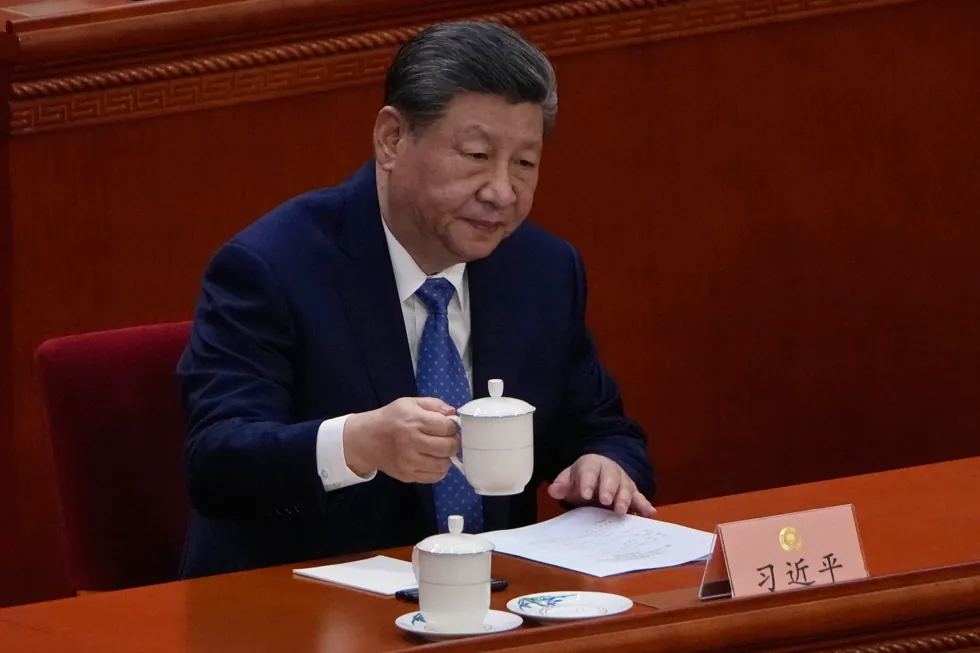
US China tensions over Strait of Hormuz during Iran conflict escalation - AP Photo/Andy Wong

Strategic tensions rise as U.S. and China diverge over Hormuz response - AP Photo/Andy Wong

The deepening confrontation between the United States and Iran is beginning to strain Washington’s broader strategic posture, as China signals it will not intervene in efforts to reopen the Strait of Hormuz — a development that underscores shifting global leverage dynamics.

According to reporting by The Associated Press, Beijing has declined to directly support a U.S. request to help stabilize the critical maritime corridor, even as the conflict enters its third week and oil flows remain disrupted. The refusal highlights a widening gap between U.S. military commitments and its ability to mobilize international backing.

The decision comes as President Donald Trump delays a planned summit with Xi Jinping — a move that analysts interpret less as a scheduling issue and more as a reflection of mounting geopolitical strain.

Strategic Focus Begins to Fragment

The ongoing conflict has forced Washington to divert military assets from the Indo-Pacific toward the Middle East, raising concerns among defense analysts that the U.S. is stretching its operational capacity across multiple theaters.

As deployments shift, questions are emerging over whether the U.S. can sustain its long-term strategic emphasis on Asia while managing an increasingly complex crisis in the Gulf. Analysts warn that prolonged engagement risks diluting deterrence in regions where Washington has sought to reinforce its presence in recent years.

This recalibration is not occurring in isolation. China, long identified as the United States’ primary strategic competitor, appears to be adopting a posture of calculated restraint — allowing events to unfold without direct intervention while maintaining diplomatic engagement across the Middle East.

Diplomatic Leverage Rebalances

Beijing’s response to U.S. overtures has been deliberately measured. Rather than committing to operational support in Hormuz, Chinese officials have reiterated calls for de-escalation and stability, positioning China as a neutral actor advocating restraint.

At the same time, Chinese diplomatic channels have remained active in the region, including humanitarian outreach efforts and engagement with regional governments. This dual-track approach allows Beijing to expand its influence without assuming the risks associated with direct military involvement.

■ Related News

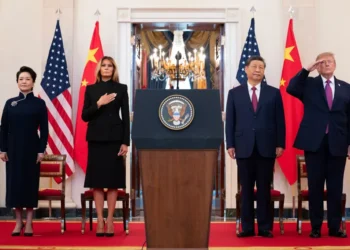
U.S. President Donald Trump greets Chinese leader Xi Jinping before a bilateral meeting in Busan, South Korea.

Trump’s Iran Economic Campaign Faces a Test in China

August 26, 2026
Saudi Crown Prince, Turkish President and Pakistani Prime Minister attend the signing of a joint defense agreement in Makkah.

Turkey, Pakistan and Saudi Arabia Sign Mutual Defense Pact as Regional Security Tensions Rise

August 8, 2026
Firefighters from Ukraine's State Emergency Service work among the rubble of a severely damaged building as smoke rises following a Russian attack in Kyiv.

Ukraine Expands Strikes on Russian Oil Facilities as Kyiv Seeks Stronger Air Defenses

August 7, 2026
A U.S. Navy sailor stands watch aboard a military vessel while transiting the Strait of Hormuz, monitoring nearby maritime traffic.

Iran Nears Strait of Hormuz Agreement as Israel Reports First Troop Deaths Since Lebanon Ceasefire

August 6, 2026

The postponement of the U.S.-China summit further reflects this shifting balance. While both sides have indicated willingness to reschedule, the delay reduces immediate pressure on Beijing to engage substantively on contentious issues such as trade, technology, and regional security.

Economic Pressure Points Intensify

The closure of the Strait of Hormuz — a critical artery for global energy shipments — has amplified economic risks tied to the conflict. With oil flows halted, the situation introduces volatility into global markets and places additional pressure on U.S. allies already reluctant to participate in securing the waterway.

China, as one of the world’s largest energy importers, faces exposure to these disruptions. However, its current posture suggests a preference to manage risk diplomatically rather than through direct involvement, preserving flexibility while the United States absorbs the operational burden.

Meanwhile, stalled trade discussions between Washington and Beijing indicate that economic cooperation remains constrained, with structural disagreements unresolved. The summit delay effectively postpones any potential breakthroughs, extending uncertainty for global markets.

Regional Commitments Face New Scrutiny

The redistribution of U.S. forces has also triggered concern among Asian allies, particularly regarding Washington’s ability to uphold security guarantees in the Indo-Pacific.

Security analysts note that any prolonged diversion of resources could influence perceptions of U.S. reliability, especially in sensitive areas such as Taiwan, where defense support remains a central pillar of deterrence against Beijing.

The delay in high-level engagement between Washington and Beijing may also slow decision-making on arms transfers and broader security coordination, further complicating the regional balance.

Strategic Patience Versus Operational Strain

China’s current posture suggests a strategy centered on patience rather than confrontation. By avoiding entanglement while maintaining diplomatic visibility, Beijing may be positioning itself to benefit from a scenario in which the United States becomes increasingly absorbed by the Middle East.

For Washington, the challenge lies in managing a conflict that is beginning to ripple across its global commitments. The longer the crisis persists, the more it risks reshaping U.S. strategic priorities — not by design, but by necessity.

The trajectory of the Iran conflict now extends beyond the Gulf, influencing the broader architecture of global power competition. Whether the United States can recalibrate without further erosion of its strategic focus remains an open question.

Tags: #ChinaStrategy#DefensePolicy#Geopolitics#GlobalSecurity#HormuzCrisis#IndoPacific#IranConflict#MiddleEastTensions#OilDisruption#StrategicCompetition#USChinaRelations#WorldNews
The Daily Desk

The Daily Desk

The Daily Desk is a contributor at JournosNews.com covering politics, media, governance, and the evolving dynamics of public discourse. Stories published under this byline are produced in accordance with JournosNews' editorial standards, with an emphasis on verified reporting, accuracy, context, and impartiality.

Related Posts

Japan Maritime Self-Defense Force frigate JS Mogami (FFM-1) moored at Yokosuka Naval Base, viewed from the left rear during a port visit.

Japan Prioritizes Combat Drones and AI as Defense Strategy Evolves Amid Regional Security Challenges

August 4, 2026
Locator map showing the approximate coal mine explosion site near Harnai in Pakistan's Baluchistan province, rescue operation areas, nearby communities, and key incident information.

Pakistan Coal Mine Explosion Kills at Least 32 as Rescuers Search for Trapped Workers

July 31, 2026
A Russian Gerbera drone displayed after being downed by Ukrainian border guards in Ukraine's Sumy region during a reported drone attack.

Romania Shoots Down Russian Drones After Repeated Airspace Violations Near Ukraine

July 29, 2026
Regional map showing conflict locations across Iraq and Iran, major maritime shipping routes, and strategic chokepoints including the Strait of Hormuz and Bab el-Mandeb Strait.

US Strikes Continue as Explosions Reported Near American Base in Northern Iraq Conflict expands across the region

July 24, 2026
A pair of binoculars sits on the signal bridge of USS Harry S. Truman as an MH-60S Seahawk conducts a replenishment mission at sea.

Navy Ends Routine Release of Sailors’ Service Records, Expanding Limits on Media Access

July 23, 2026
Live coverage dashboard summarizing military operations, maritime security, oil markets, and regional developments across the Middle East. – Image Graphic/JournosNews (File)

LIVE: Middle East Security Crisis — Ongoing Coverage

July 20, 2026
Map showing the strategic islands near the Strait of Hormuz and major shipping routes. — Graphic: JournosNews

Strategic Hormuz Islands Return to Focus as U.S.-Iran Conflict Escalates

July 17, 2026
U.S. President Donald Trump and Chinese President Xi Jinping attend an official welcome ceremony in Beijing.

Global Survey Finds China and Xi Viewed More Favorably Than U.S. and Trump in Many Countries

July 16, 2026
Load More
Next Post
Ali Larijani Iran leadership crisis after Israeli strike escalation - AP Photo/Vahid Salemi, File

Iran’s War Command Faces Sudden Void After Larijani Killed in Israeli Strike

Joe Kent resignation highlights internal divisions over Iran war strategy - AP Photo/Rod Lamkey, Jr., File

Counterterrorism Rift Exposes Internal Strain as Iran War Narrative Fractures Inside Trump Team

JournosNews logo

Journos News delivers globally neutral, fact-based journalism that meets international media standards — clear, credible, and made for a connected world.

  • Categories
  • World News
  • Politics
  • Business & Markets
  • Technology
  • Health
  • Science
  • Sports
  • Arts & Culture
  • Resources
  • Editorial Standards
  • Submit a Story
  • Advertise with Us
  • Syndication & Partnerships
  • Site Map
  • Press & Media Kit
  • Editorial Team
  • Careers

Join thousands of readers receiving the latest updates, tips, and exclusive insights straight to their inbox. Never miss an important story again.

  • About Us
  • Editorial & Trust Center
  • Contact Us
  • Privacy Policy
  • Terms of Use & Copyright Notice

© JournosNews.com All rights reserved.

Welcome Back!

Login to your account below

Forgotten Password?

Retrieve your password

Please enter your username or email address to reset your password.

Log In
JournosNews

Independent Journalism.
Verified Facts.

You're about to read a professionally edited article from JournosNews.com.

Every article is produced in accordance with our editorial standards, emphasizing factual accuracy, transparent attribution, fairness, editorial independence, and meaningful context.

Editorial Standards
No Result
View All Result
  • Home
  • World
    • Africa
    • Americas
    • Asia
    • Europe
    • Middle East
    • Oceania
  • Politics
  • Business
  • Technology
  • Health
  • Science
  • Sports
  • Entertainment
  • Culture

© JournosNews.com All rights reserved.

This website uses cookies. By continuing to use this website you are giving consent to cookies being used. Visit our Privacy and Cookie Policy.