The Biden–Trump transition period has amplified U.S. pressure on Ukraine to respond to a proposed peace framework aimed at halting the war with Russia, as Washington signals it hopes to see initial movement before Christmas. Kyiv, however, continues to resist any settlement involving territorial concessions.
U.S. officials have given Ukrainian President Volodymyr Zelensky a short window to reply to a preliminary peace proposal that would require Kyiv to accept the loss of territory now controlled by Russian forces, according to reporting from the Financial Times and officials familiar with the discussions. The plan includes a series of security guarantees for Ukraine, though the details have not been publicly disclosed and remain the subject of ongoing negotiations.
One official cited in the Financial Times said U.S. President Donald Trump, who has pushed for accelerated negotiations, hopes to see substantive progress before Christmas. Zelensky, however, has reportedly told U.S. envoys that Kyiv needs additional time to consult with key European partners, many of whom remain wary of any deal that could be seen as legitimizing Russia’s territorial advances since 2022.
Trump had previously suggested he would like to see an agreement in place before Thanksgiving, but he later softened that timeline publicly, saying he was not tied to a specific deadline. Even so, both U.S. diplomats and NATO officials say the American delegation has increased its engagement with Kyiv in recent weeks, signaling Washington’s renewed intent to explore what it describes as “a realistic path toward de-escalation.”
Zelensky Signals Hesitation Over Territorial Concessions
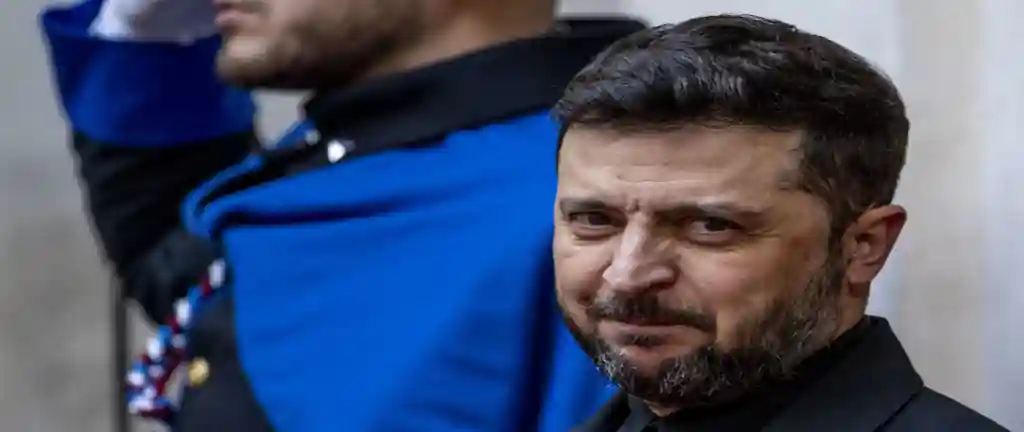
During a trip to London on Monday, Zelensky acknowledged that the United States was urging Ukraine to consider “a compromise” as part of a broader effort to halt the fighting. He emphasized, however, that Kyiv has reached no agreement on territorial concessions and remains firm in its position that Ukraine will not willingly surrender any part of its internationally recognized borders.
The Ukrainian president reiterated that any proposal requiring the ceding of land would be politically and strategically unacceptable without significant, long-term security guarantees and tangible commitments from Western governments. “We are not prepared to give up territory without a fight,” Zelensky said, echoing sentiments repeatedly expressed by Ukrainian military and political leaders since the war’s escalation.
Ukraine’s insistence on maintaining territorial integrity has remained one of the central obstacles in negotiations since 2022. European Union officials, while eager to see a reduction in hostilities, have largely supported Kyiv’s stance and continue to frame Russia’s territorial claims as violations of international law.
Russian Advances Create Urgency on the Ground
The diplomatic effort comes amid ongoing Russian gains along several sections of the front line. Ukrainian commanders have warned repeatedly that their forces are stretched thin, outmatched technologically, and increasingly challenged in replenishing units weakened by battlefield losses.
Russian troops have continued their slow but steady push in Donbass. In early December, Moscow announced the capture of Krasnoarmeysk—also known as Pokrovsk—a strategically important city in the region. Russian President Vladimir Putin has previously described Pokrovsk as a critical “bridgehead” for potential future offensives deeper into Ukrainian-held territory.
Military analysts say the fall of the city underscores a broader shift on the battlefield, where Russian forces have sought to exploit Ukrainian shortages of ammunition and personnel. Kyiv has faced delays in Western military assistance, with several aid packages stalled amid political debates in both Washington and European capitals.
For Ukraine, the timing of these diplomatic pressures coincides with one of the most difficult phases of the conflict. Commanders say recruitment has become increasingly challenging, and the government recently expanded mobilization measures to fill ranks depleted over nearly three years of fighting.
Washington’s Strategy: A Difficult Balancing Act
The evolving U.S. approach reflects a complex balancing act between supporting Ukraine militarily and exploring pathways to reduce the intensity of the conflict. American officials have described the current proposal as a “starting point” rather than a final blueprint for a settlement.
People familiar with the talks say the U.S. plan submitted in November includes provisions for a phased withdrawal of Ukrainian troops from Russian-held positions in parts of Donbass, echoing one of Moscow’s long-standing conditions for a broader ceasefire. In exchange, Ukraine would receive a set of security guarantees—possibly involving commitments from NATO member states, enhanced military aid packages, and long-term defense cooperation agreements.
However, many of these guarantees remain undefined, and European governments have signaled they want clearer detail before endorsing any framework. Germany, France, and the United Kingdom—Kyiv’s principal European backers—have urged caution, emphasizing that Ukraine must not be pressured into concessions without robust protection measures in place.
Diplomatic experts say any deal that codifies Russian territorial control would be politically sensitive across Europe and could reshape the region’s security architecture for decades.
Christmas Deadline Adds New Pressure
As Washington pushes for a response before Christmas, diplomats caution that the timeline should be viewed as an opening marker rather than a fixed deadline. They note that previous peace initiatives have faltered due to mismatched expectations and shifting battlefield conditions.
Still, U.S. officials believe that momentum is necessary to prevent further deterioration in Ukraine’s military position. The winter season, typically characterized by slower operations, may provide a temporary window for negotiations before spring fighting resumes.
European leaders, while supportive of renewed talks, have urged Washington to ensure Kyiv retains agency in the negotiation process. They argue that any externally imposed deadline risks weakening Western unity at a time when Russia is seeking to exploit perceived divisions among Ukraine’s allies.
Looking Ahead
With the battlefield dynamic shifting and political pressures intensifying in multiple capitals, the coming weeks may prove decisive in determining whether a diplomatic path can be advanced. For now, Ukraine continues to signal that it will not accept any agreement that legitimizes Russia’s territorial claims. The United States, meanwhile, is attempting to steer discussions toward what it describes as “realistic and workable” steps to limit further escalation.
Whether the widening gap between these positions can be bridged remains uncertain. But the urgency expressed by Washington underscores a growing recognition that the war’s trajectory—both militarily and politically—may be approaching a new turning point.
This article was rewritten by JournosNews.com based on verified reporting from trusted sources. The content has been independently reviewed, fact-checked, and edited for accuracy, neutrality, tone, and global readability in accordance with Google News and AdSense standards.
All opinions, quotes, or statements from contributors, experts, or sourced organizations do not necessarily reflect the views of JournosNews.com. JournosNews.com maintains full editorial independence from any external funders, sponsors, or organizations.
Stay informed with JournosNews.com — your trusted source for verified global reporting and in-depth analysis. Follow us on Google News, BlueSky, and X for real-time updates.