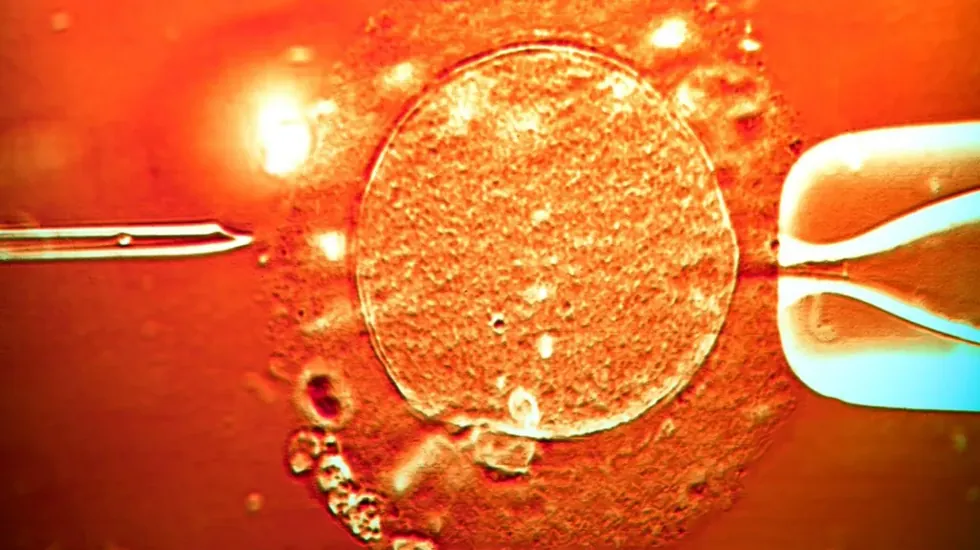
An international investigation has found that sperm from a donor carrying a cancer-linked mutation was used to conceive at least 197 children across Europe. The case raises questions about genetic screening limits, cross-border fertility treatment, and how countries regulate donor use.
For nearly two decades, an anonymous sperm donor’s samples were distributed to clinics across Europe. He had passed routine screening and was considered healthy. Yet a mutation in one of his genes — undetected at the time of donation — meant that some of the children conceived from his sperm would inherit a markedly elevated lifetime risk of cancer.
The investigation, conducted by a consortium of European public broadcasters including the BBC, found that at least 197 children were born using the donor’s sperm. Doctors have identified multiple children carrying the mutation, and some have already developed cancer. A small number of families in the United Kingdom were also affected after travelling to Denmark for treatment.

At the centre of the case is a mutation in the TP53 gene — a gene often described by scientists as the body’s “guardian” against cancer. The episode has become a case study in how genetic risk can travel across borders in an era when fertility services are increasingly global.
How the TP53 mutation works
The TP53 gene plays a crucial role in regulating cell growth and preventing damaged cells from becoming cancerous. When functioning normally, it acts as a safeguard against tumour formation. However, inherited mutations in TP53 are associated with Li-Fraumeni syndrome, a rare genetic condition linked to a significantly increased risk of multiple cancers, often beginning in childhood.
According to widely cited medical research, individuals with Li-Fraumeni syndrome may face up to a 90% lifetime risk of developing cancer. These cancers can include soft tissue sarcomas, brain tumours, leukaemia, and early-onset breast cancer. Management often involves intensive monitoring, including annual whole-body MRI scans and other regular screening.
In this case, the donor himself is reportedly healthy. Investigators were told that only a proportion of his sperm — estimated at up to 20% — carried the TP53 mutation. That pattern suggests a phenomenon known as mosaicism, in which some cells carry a genetic mutation while others do not. Mosaic mutations can be difficult to detect in routine screening because they may not appear in blood tests typically used during donor assessment.
However, when a child is conceived from sperm carrying such a mutation, the altered gene becomes present in every cell of the child’s body, transforming a partial cellular change in the donor into a systemic inherited condition.


Screening limits and the “unknown unknowns”
The European Sperm Bank, which distributed the donor’s samples beginning in 2005, said the mutation could not have been detected preventively through standard screening protocols at the time. The bank said it blocked the donor once the issue was discovered and expressed sympathy to affected families.
The episode highlights a central tension in reproductive medicine: no screening system can eliminate all genetic risk.
Professor Allan Pacey of the University of Manchester, a former sperm bank director, told the BBC that only a small percentage of applicants are accepted as donors after medical and genetic screening. Tightening criteria further, he suggested, could severely limit donor availability. “You can’t screen for everything,” he said, reflecting a widely acknowledged reality in genetic medicine.
Historically, sperm donors are screened for infectious diseases, certain hereditary conditions, and family medical history. Broader genomic sequencing has become more accessible in recent years, but comprehensive sequencing of all donors remains neither universal nor guaranteed to detect mosaic mutations present only in reproductive cells.
Geneticists note that even whole-genome testing has limits. Some mutations arise spontaneously and may not be detectable in blood or saliva samples. Others may not yet be linked to known disease risks. As genomic science evolves, the definition of what constitutes “adequate” screening also changes.
Cross-border fertility and regulatory gaps
Beyond genetics, the case has exposed regulatory inconsistencies across Europe.
There is no global law limiting how many families can use sperm from a single donor. Instead, individual countries set their own caps. In the United Kingdom, for example, the Human Fertilisation and Embryology Authority (HFEA) limits a donor’s sperm to use in 10 families. Belgium allows use by six families. Denmark has its own regulatory framework.
However, when sperm is distributed internationally, national limits may not effectively cap total births worldwide. According to investigators, the donor’s sperm was used by 67 fertility clinics in 14 countries. In Belgium alone, it was reportedly used by 38 women, resulting in 53 children — exceeding that country’s limit.
Professor Pacey told the BBC that reliance on large international sperm banks has grown, with around half of UK donor sperm reportedly imported. This suggests that market dynamics — including economies of scale — can outpace regulatory coordination.
The European Society of Human Reproduction and Embryology (ESHRE) has recently recommended an interim limit of 50 families per donor across borders, with a long-term aim of fewer than 15 families. However, ESHRE has indicated that lowering family limits would not prevent rare genetic conditions from occurring. Instead, such limits are framed as addressing social and psychological considerations, including the implications of large numbers of half-siblings.
The human dimension
For families affected, the impact extends beyond regulatory debate.
Some children have already developed cancer. Others face a lifetime of intensive medical surveillance. Annual whole-body imaging, neurological scans, and preventive surgeries may become part of routine life. For women with Li-Fraumeni syndrome, prophylactic mastectomy is often considered to reduce breast cancer risk.
Parents interviewed by investigators described the emotional burden of uncertainty — not knowing when or whether cancer may develop. At the same time, some families expressed no personal resentment toward the donor, acknowledging that he donated in good faith and was unaware of the mutation.
The Human Fertilisation and Embryology Authority confirmed that a small number of British women who travelled to Denmark for treatment have been informed. Authorities did not release identifying details, citing donor anonymity and privacy.
The case also intersects with earlier controversies, including that of a Dutch donor who fathered hundreds of children across multiple countries. Together, these episodes have prompted renewed scrutiny of international sperm bank practices and oversight mechanisms.
What the case suggests about risk and oversight
From a public health perspective, experts emphasise that cases like this are rare relative to the total number of donor-conceived births. Sarah Norcross, director of the Progress Educational Trust, told the BBC that such situations are “vanishingly rare” in the context of the thousands of children born through donor sperm each year.
That assessment reflects a broader understanding in reproductive medicine: while no system can eliminate genetic risk, regulated clinics generally apply more extensive screening than occurs in natural conception.
At the same time, the case illustrates how rare risks can scale when a single donor’s sperm is used widely across borders. Even a mutation present in a minority of sperm cells can result in multiple affected children if distribution is extensive.
It also underscores how advances in genetic science can retrospectively change understanding. Screening standards in 2005 differed from those available today. What was considered sufficient two decades ago may now appear incomplete in light of current genomic knowledge.
An evolving regulatory landscape
European regulators are now in dialogue over how to prevent similar cases. The European Sperm Bank has acknowledged that country limits were breached in some instances and said it is cooperating with authorities in Denmark and Belgium.
Whether reforms will focus on stricter family caps, expanded genetic screening, or stronger cross-border coordination remains uncertain. Any policy shift must weigh competing priorities: safeguarding children’s health, protecting donor privacy, ensuring equitable access to fertility treatment, and maintaining a viable donor supply.
The episode suggests that reproductive medicine, increasingly globalised and data-driven, may require more harmonised oversight. As cross-border treatment becomes routine, national frameworks alone may not fully manage cumulative risk.
For now, the case stands as a reminder of the inherent uncertainties in genetics. Scientific screening reduces risk, but it cannot eliminate it. In fertility medicine, as in many areas of healthcare, policy operates in the space between known safeguards and unknown variables.
Source: BBC – Sperm from donor with cancer-causing gene was used to conceive almost 200 children