The U.S.-supported peace framework to end the war in Ukraine incorporated elements from a document drafted by Russian officials and shared with the Trump administration in October, according to three people familiar with the discussions. The previously undisclosed link adds a new dimension to the origins of the 28-point plan, which surfaced publicly last week and has already prompted scrutiny in Washington, Kyiv and European capitals.
Sources told Reuters that Moscow passed the paper — described in diplomatic terminology as a “non-paper” — to senior U.S. officials shortly after a meeting between President Donald Trump and Ukrainian President Volodymyr Zelenskiy in Washington in mid-October. While non-papers are often exchanged informally during negotiations to outline positions without formal attribution, this one echoed longstanding Russian conditions Ukraine has repeatedly rejected, including surrendering significant eastern territory.
The U.S. State Department and the Russian and Ukrainian embassies in Washington did not comment. The White House declined to address the document directly but referenced Trump’s recent remarks expressing optimism about progress on the peace initiative.

Russian Input Confirmed in U.S. Proposal
This marks the first confirmation that the Russian non-paper was used as a meaningful reference point for the U.S. proposal. The document contained language and concessions Russia has raised at previous negotiation attempts, including at talks in 2022 that stalled within weeks of Russia’s full-scale invasion. Ukraine has consistently ruled out territorial concessions, with President Zelenskiy stating that sovereignty and internationally recognized borders remain non-negotiable.
In a written statement, Trump said he had directed his special envoy, Steve Witkoff, to meet Russian President Vladimir Putin in Moscow while Secretary of the Army Dan Driscoll held parallel talks with Ukrainian officials. The sequencing of those meetings, and the limited visibility among senior U.S. agencies, left several officials questioning how the Russian non-paper became intertwined with elements of the American plan.
Some U.S. officials who reviewed the document, including Secretary of State Marco Rubio, believed the Russian terms would be rejected immediately by Kyiv, according to two sources. Rubio later acknowledged receiving “numerous written non-papers,” though he declined to elaborate.
Growing Skepticism in Washington and Europe
Since the plan first emerged in media reports last week, skepticism has intensified across U.S. government agencies and among lawmakers. Critics argue the proposal closely mirrors Russian positions rather than reflecting a balanced diplomatic effort.
Despite concerns, the United States has pressed Kyiv to engage with the framework and warned that military assistance could be reconsidered if Ukraine refused to participate, according to the sources. U.S. military support for Ukraine has totaled more than $70 billion since the invasion, according to publicly available data, making continued assistance central to Ukraine’s ability to sustain its defense.


The plan was drafted in part during a meeting in Miami last month involving Trump’s son-in-law Jared Kushner, special envoy Witkoff and Kirill Dmitriev, who heads one of Russia’s sovereign wealth funds. Two people familiar with the matter said few officials inside the State Department or White House were informed about the discussions.
On Tuesday, Bloomberg reported that Witkoff had offered communication advice to senior Kremlin aide Yuri Ushakov regarding how Putin should speak to Trump. Call transcripts reviewed by the news agency referred to a potential “20-point plan” as early as October 14, which later expanded through subsequent exchanges involving Dmitriev.
Plan Scaled Back After Diplomatic Backlash
The U.S. proposal surprised officials in Washington and European capitals, triggering urgent consultations across three continents. According to ABC News, nine of the original 28 points have been removed following discussions between senior U.S. and Ukrainian officials.
A bipartisan group of U.S. senators said over the weekend that Rubio had described the proposal as a Russian “wish list,” a characterization the White House and State Department strongly denied. The contradiction fueled questions about how widely the plan was vetted inside the administration.
Diplomats familiar with the talks said a U.S. delegation, including Rubio, met European and Ukrainian counterparts in Geneva and agreed to remove or revise sections viewed as overly favorable to Moscow. Driscoll is currently holding discussions with a Russian delegation in Abu Dhabi, while Ukrainian officials have traveled to the United Arab Emirates for parallel meetings, a U.S. official confirmed.
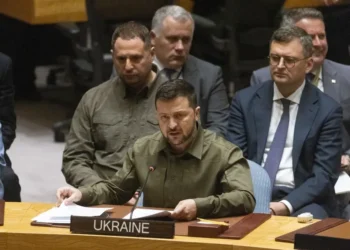
Ukrainian officials said on Tuesday they supported the modified framework emerging from the latest round of talks but emphasized that the most sensitive points — especially territorial issues — could only be resolved in a direct meeting between Zelenskiy and Trump.
Unanswered Questions Over Influence and Process
It remains unclear why the Trump administration relied on a Russian-authored proposal to help shape its initial peace outline. Analysts note that non-papers can serve as informal diplomatic tools, but their use typically comes with broad interagency review. In this case, sources said only a small circle of advisers had access to the document before its content influenced the draft proposal.
European officials, who have backed Ukraine’s calls for a peace process based on the United Nations Charter, expressed concern that the U.S. plan appeared to diverge from internationally recognized conditions, including the withdrawal of Russian troops and restoration of territorial integrity. Several NATO governments were not given advance notice before the framework circulated.
Russia has repeatedly said it is open to negotiations but insists that Kyiv must accept the “new realities on the ground” — language referring to territory Russia claims to have annexed, moves not recognized by the United Nations.
Next Steps and Diplomatic Outlook
The updated U.S. plan remains under discussion, with further revisions expected. Zelenskiy has maintained that Ukraine will only support a peace agreement that ensures security guarantees, full sovereignty and accountability for wartime actions. Kyiv continues to advance its own 10-point peace formula, which includes nuclear safety, food security, prisoner exchanges and the withdrawal of Russian forces.
Talks are set to continue in the coming weeks, though no timeline has been announced for a potential meeting between Zelenskiy and Trump. Western diplomats caution that even a revised framework faces significant obstacles, given the scale of territorial disputes and the lack of direct negotiations between Kyiv and Moscow since 2022.
The war in Ukraine has entered its third year with front lines largely static but casualties continuing to mount. The United Nations estimates that millions have been displaced, and the conflict has had far-reaching effects on global food and energy markets.
For now, officials say the modified framework represents an ongoing attempt to keep diplomatic channels open — but with no guarantee of producing a breakthrough.
Source: Reuters – Exclusive: US peace plan for Ukraine drew from Russian document, sources say