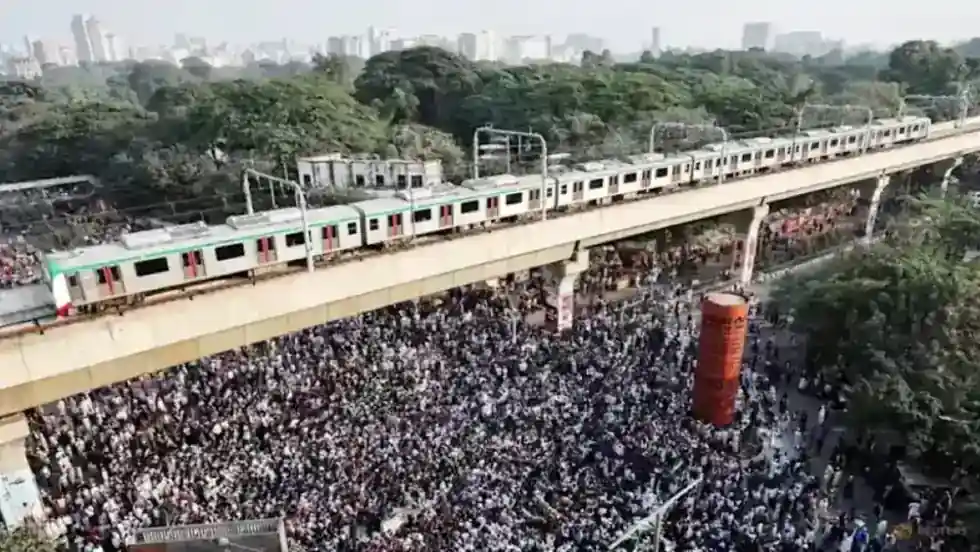
The killing of a prominent youth leader in Bangladesh has triggered widespread unrest, heightening concerns over stability as the country approaches a pivotal national election. Security forces have been deployed across major cities, including Dhaka, as authorities attempt to contain protests and prevent further escalation with potential regional implications.
The Bangladesh unrest follows the fatal shooting of Sharif Osman Hadi, a rising political figure who had been preparing to contest in the upcoming parliamentary vote. His death has ignited demonstrations, attacks on media outlets, and diplomatic tensions, raising fears that instability could disrupt the electoral process and reverberate across South Asia.
Officials from the interim administration, speaking in statements reported by Reuters, urged restraint and warned against mob violence, describing the unrest as a threat to a “historic democratic transition.” The developments come less than two months before voters are due to elect a new parliament, a process widely seen as critical to restoring political order after prolonged instability.

Political Transition Under Strain
Bangladesh’s fragile transition has been under pressure since mass protests forced the resignation of long-time Prime Minister Sheikh Hasina in 2024. The interim government, led by Nobel laureate Muhammad Yunus, has struggled to stabilize the political landscape amid competing factions and rising public dissatisfaction.
Analysts cited in Reuters reporting say the latest unrest underscores concerns about the government’s ability to maintain order and ensure credible elections. The exclusion of Hasina’s Awami League from the upcoming vote has further deepened political divisions, with opposition groups warning of continued unrest.
The killing of Hadi—an outspoken activist aligned with reformist movements—has become a flashpoint, galvanizing protesters who view the incident as politically motivated, though investigations remain ongoing.
Regional Stability Tested by Anti-India Sentiment
The Bangladesh unrest has also taken on a regional dimension, with protests targeting Indian diplomatic facilities and escalating anti-India rhetoric. Demonstrators have accused New Delhi of interference following Hasina’s reported presence in India after her ouster.
According to Reuters, protesters in the port city of Chittagong attacked the Indian Assistant High Commission, while large crowds in Dhaka marched toward diplomatic missions, chanting slogans and demanding accountability.
■ Related News



These developments risk straining already fragile ties between Bangladesh and India, a key regional partner, at a time when cross-border cooperation remains vital for trade and security in South Asia.
Media and Civil Institutions Come Under Attack
Violence has extended beyond political protests, with mobs targeting major newspaper offices in Dhaka, including leading national dailies. Firefighters and security forces were deployed to control fires and evacuate journalists trapped inside affected buildings.
The interim government condemned the attacks, emphasizing that assaults on the press undermine democratic institutions. In statements cited by Reuters, officials pledged to hold perpetrators accountable and reaffirmed commitments to protecting freedom of expression.
Rights organizations have warned that the coordinated nature of attacks on media outlets and cultural institutions points to a broader deterioration of civic space. Observers say such incidents could have long-term implications for Bangladesh’s democratic framework if left unchecked.
Humanitarian and Security Concerns Escalate
The unrest has coincided with other violent incidents, including the killing of a Hindu man in a separate mob attack linked to blasphemy allegations. Authorities have pledged investigations, but the episode has heightened concerns about communal tensions and human rights protections.
Independent watchdogs caution that the convergence of political violence, extremist activity, and institutional targeting may signal a deeper governance crisis. If unchecked, these dynamics could undermine public confidence in state institutions and complicate election preparations.
International Implications and Election Risks
The Bangladesh unrest is being closely monitored by international observers, given the country’s strategic importance as a major apparel exporter and a key player in South Asia’s economic landscape. Prolonged instability could disrupt supply chains and affect investor confidence.
With elections scheduled in February, the immediate challenge for the interim government will be restoring order while ensuring a credible and inclusive voting process. Failure to do so risks not only domestic upheaval but also broader regional instability.
As tensions persist, the coming weeks are likely to determine whether Bangladesh can navigate its transition peacefully or face deeper political fragmentation with international consequences.