LIMA, Peru – Peruvians headed to the polls on Sunday to choose their next president in a closely watched runoff election that could determine the direction of a country grappling with political turmoil and rising concerns over crime.
The vote pits conservative candidate Keiko Fujimori against nationalist lawmaker Roberto Sánchez, with surveys indicating a highly competitive race and a large share of undecided voters heading into election day. The winner will become Peru’s ninth president in just ten years, underscoring the country’s prolonged period of political instability.
Election authorities expected a tight contest, with final results potentially taking days to emerge. The uncertainty mirrors the first round of voting in April, when officials required more than a month to officially confirm the runoff candidates.

Crime Emerges as Defining Election Issue
Public security has become the dominant issue shaping voter sentiment across Peru.
A 2025 survey conducted by Peru’s National Institute of Statistics and Informatics found that 84% of urban residents feared becoming victims of crime within the next year. Concerns about extortion, organized crime and public safety have increasingly overshadowed other political debates during the campaign.
Experts have linked the growing influence of criminal organizations to profits generated by illegal gold mining operations in the Andes and Amazon regions, which have provided financial resources for long-established criminal networks.
The issue has resonated strongly with voters seeking solutions to deteriorating security conditions.
Candidates Offer Different Approaches
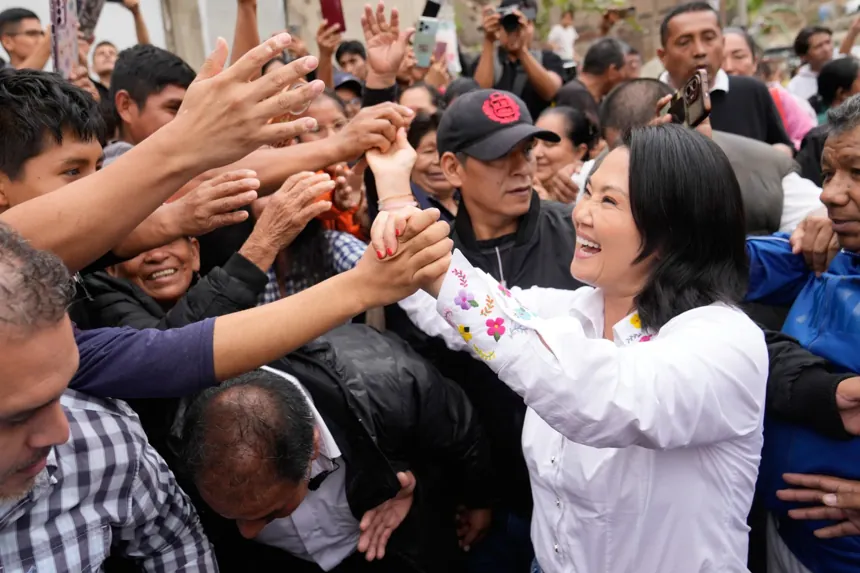
Fujimori, making her fourth attempt to win the presidency, has centered much of her campaign on combating crime through stronger enforcement measures.
■ Related News


Her proposals include expanding technological tools to track extortion networks, increasing security deployments in high-risk areas, strengthening border controls and requiring prison inmates to work as a form of restitution.
The 51-year-old candidate remains a polarizing figure due to her connection to the government of her late father, former President Alberto Fujimori, whose administration in the 1990s remains associated with both security gains and allegations of authoritarianism and corruption.
Sánchez, a former government minister and ally of jailed former President Pedro Castillo, has focused on anti-corruption measures and reforms within Peru’s security institutions.
He has proposed strengthening oversight of the police force while expanding the military’s role in supporting public security efforts. Sánchez has also emphasized economic development and job creation while signaling openness to continued foreign investment, including from China.
Voters Remain Divided
Official results from April’s first-round election showed Fujimori receiving 17% of the vote and Sánchez 12%, reflecting a fragmented political landscape in which neither candidate secured broad national support.
Polling conducted by Ipsos in the weeks leading up to the runoff suggested that roughly three in ten voters remained undecided, highlighting widespread dissatisfaction with the available choices.
Some voters expressed frustration with both candidates. Others reported making their final decision only shortly before casting their ballots.
Voting is mandatory in Peru for citizens between the ages of 18 and 70, with fines imposed on those who fail to participate. More than 27 million Peruvians were eligible to vote, including approximately 1.2 million citizens living abroad, primarily in the United States and Argentina.
International Attention on the Outcome
The election has attracted international attention due to Peru’s strategic role in South America and its importance as a major producer of minerals and natural resources.
Among observers present on election day was U.S. Ambassador Bernie Navarro, who visited a polling station in Lima. Speaking to local television, Navarro said he was observing the process and emphasized the importance of transparency.
He added that the United States was prepared to work with whichever candidate emerges victorious.
With political divisions deep and public frustration high, the next administration will face immediate pressure to address security concerns, restore confidence in public institutions and provide stability after a decade marked by frequent leadership changes.
The winning candidate is expected to be sworn into office next month.