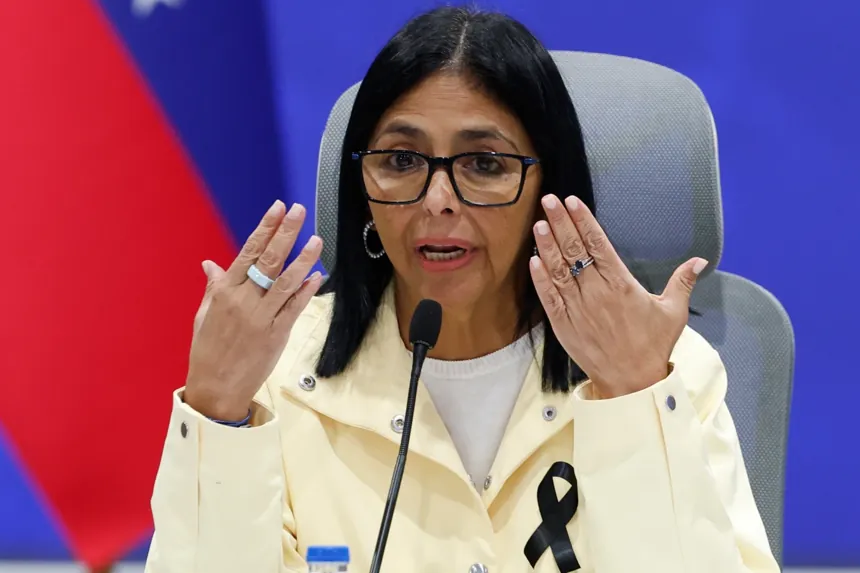
CARACAS, Venezuela — Venezuela’s response to the devastating June 24 earthquakes has become increasingly intertwined with the country’s political transition, as interim President Delcy Rodríguez faces growing scrutiny over relief efforts while opposition leader María Corina Machado has renewed calls to return to the country.
According to reporting by the Associated Press and Reuters, the humanitarian emergency has intensified pressure on Rodríguez’s administration as the official death toll rose to 2,645 on Friday, with more than 12,500 people reported injured. Thousands remain displaced, and search and recovery operations continue in the hardest-hit areas.
The political uncertainty has coincided with the expiration of Rodríguez’s 180-day interim mandate under Venezuela’s constitutional framework. Authorities had not immediately announced whether additional constitutional or legislative steps would follow.

Machado Calls for Return
Speaking from Panama, Machado said the earthquake had exposed weaknesses in the government’s emergency response and argued that she should return to Venezuela to help guide both recovery efforts and the country’s broader political transition.
She said the country needed trusted leadership at a time when many communities had criticized the pace and organization of official rescue operations. Machado’s political movement has also organized volunteers, collected humanitarian donations and established an online registry listing tens of thousands of people reported missing following the disaster.
Government Defends Emergency Response
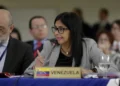
Rodríguez rejected allegations that authorities reacted too slowly after the earthquakes, insisting emergency protocols were activated immediately and that thousands of civilian and military personnel had been deployed to affected communities.
During her first major news conference since the disaster, she dismissed criticism of the government’s response as politically motivated and said search-and-rescue operations remained active in locations where officials still believed survivors could be found. She also announced the creation of a reconstruction fund to support long-term recovery.
Residents in several affected areas have described a different experience, telling reporters that many neighborhoods relied heavily on volunteers and local residents during the first days after the earthquakes while waiting for heavy equipment and organized rescue teams to arrive.
U.S. Position Adds to Political Tensions
The Associated Press reported that senior U.S. officials, speaking anonymously because they were discussing private diplomatic conversations, said the Trump administration discouraged Machado from returning immediately after the earthquakes.
According to the officials, Washington was concerned that her return during the emergency could trigger political instability while recovery efforts remained underway. The officials also said the United States was not prepared to facilitate her travel, although it could not prevent her from returning independently.
Humanitarian Challenges Continue
International governments and aid organizations have pledged emergency assistance as concerns grow over deteriorating sanitation, damaged infrastructure and the risk of disease outbreaks in affected communities.
Relief agencies continue working to provide medical care, clean water and temporary shelter while search teams recover victims from collapsed buildings. Aid workers have warned that the full humanitarian impact may take weeks or months to assess as recovery operations continue.
The earthquakes represent one of the deadliest natural disasters in Venezuela’s recent history, leaving authorities to balance urgent humanitarian needs with an increasingly complex political landscape as recovery efforts move into a prolonged phase.
Tags: Venezuela, Earthquake, Delcy Rodríguez, María Corina Machado, Humanitarian Crisis, Disaster Response, Caracas, La Guaira, Search and Rescue, Political Transition, Reuters, Associated Press