A violent attack on a suburban Detroit synagogue is drawing renewed scrutiny from federal investigators after newly released emergency call recordings suggested the suspect may have been experiencing a severe personal and psychological crisis shortly before the incident.
According to reporting by The Associated Press, the former wife of the suspect, identified as Ayman Ghazali, contacted police on the same day as the attack warning that he appeared suicidal and emotionally unstable.
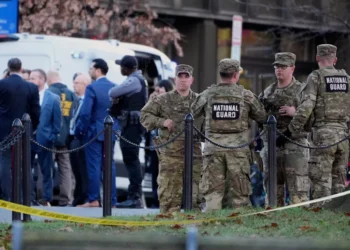
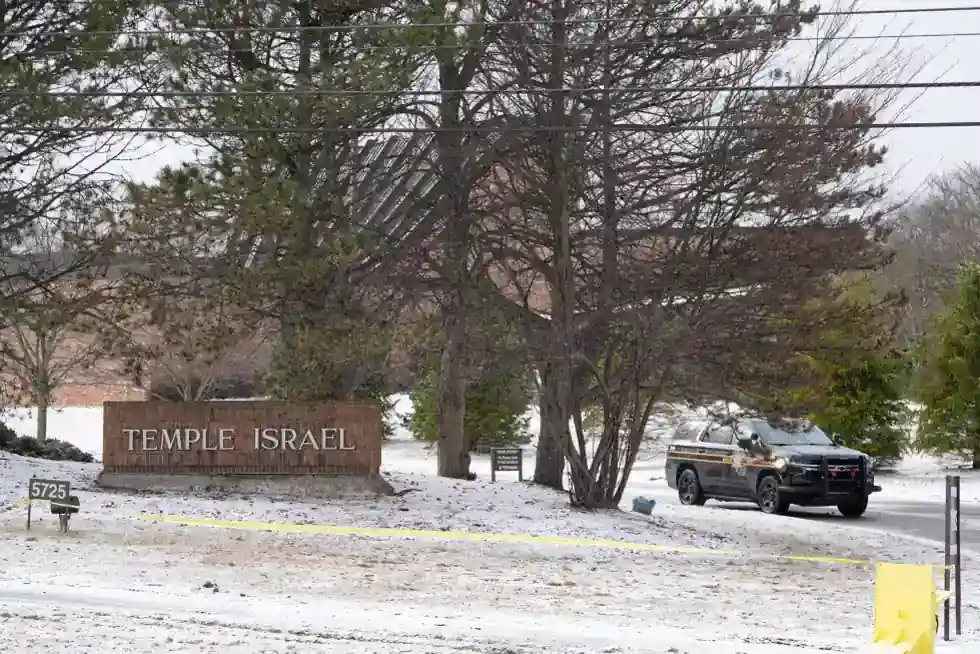
Authorities say Ghazali later drove a pickup truck into a synagogue complex in suburban Detroit before exchanging gunfire with a security guard and dying inside the vehicle. The incident occurred at Temple Israel in West Bloomfield Township, where dozens of children were present at an early learning center inside the building.

The case is now under investigation by the Federal Bureau of Investigation, which is examining whether the attack reflects a broader domestic security concern or a violent episode driven primarily by personal distress.
Warning Signs Surface Hours Before the Attack
Recordings obtained by Detroit television station WXYZ-TV reveal that Ghazali’s former spouse contacted police in Dearborn Heights shortly before the synagogue assault.
In the call, she expressed concern about his mental state, telling dispatchers that he appeared deeply distressed and emotionally unstable.
“I feel like he’s really upset,” she said in the call, according to the broadcast report.
She also warned officers that his condition appeared to be worsening, telling authorities that his “voice is not stable” and describing him as suicidal.
■ Related News


Police were dispatched to Ghazali’s residence, but officers found no one there.
At the time of the call, she indicated she did not know whether he possessed any weapons and said she had no indication he intended to target a religious institution.
Personal Loss and International Conflict Enter the Investigation
Investigators are also examining whether recent events overseas may have contributed to the suspect’s mental state.
According to the 911 call, Ghazali had recently lost relatives in an Israeli airstrike in Lebanon earlier this month. A memorial service for those killed was reportedly held at the Islamic Institute of America.
The Israeli military later stated that one of the individuals killed in the strike, Ghazali’s brother Ibrahim, was a commander affiliated with Hezbollah.
Officials at the FBI’s Detroit field office declined to comment on that characterization or whether it is relevant to the synagogue attack investigation.
For investigators, the overlapping timeline of personal loss, emotional distress, and the violent incident has added complexity to determining the motive behind the attack.
Security Response Prevented Potential Mass Casualties
Authorities say Ghazali waited outside the synagogue complex in his vehicle for approximately two hours before carrying out the attack.
He eventually drove the truck into the building housing the synagogue and its early childhood learning center, where numerous children were present.
A security guard stationed at the site exchanged gunfire with the suspect as the vehicle came to a stop. Ghazali died inside the vehicle, which subsequently caught fire.
Despite the scale of the incident and the presence of children in the building, no one inside the facility was injured.
The confrontation has drawn attention to the role of private security at religious institutions, which in recent years have increased protective measures amid rising concerns over targeted violence.
Investigators Weigh Personal Breakdown Against Broader Security Concerns
While the attack caused limited physical damage and no casualties, it has intensified discussion among law enforcement officials about how personal crises can escalate into violent incidents involving sensitive targets.
For federal investigators, the key question now is whether the event represents an isolated act tied primarily to Ghazali’s personal circumstances or reflects wider tensions connected to global conflicts that can reverberate within local communities.
Officials have so far indicated that the investigation remains ongoing, with authorities continuing to review communications, personal history, and the timeline leading up to the attack.
The case underscores a broader challenge facing domestic security agencies: distinguishing between isolated psychological crises and incidents that may signal wider ideological or geopolitical influences.