A large-scale labor stoppage at a major U.S. beef processing facility has placed new pressure on the country’s already strained meat supply chain, raising concerns about potential price increases for consumers and renewed tensions within the agricultural sector.
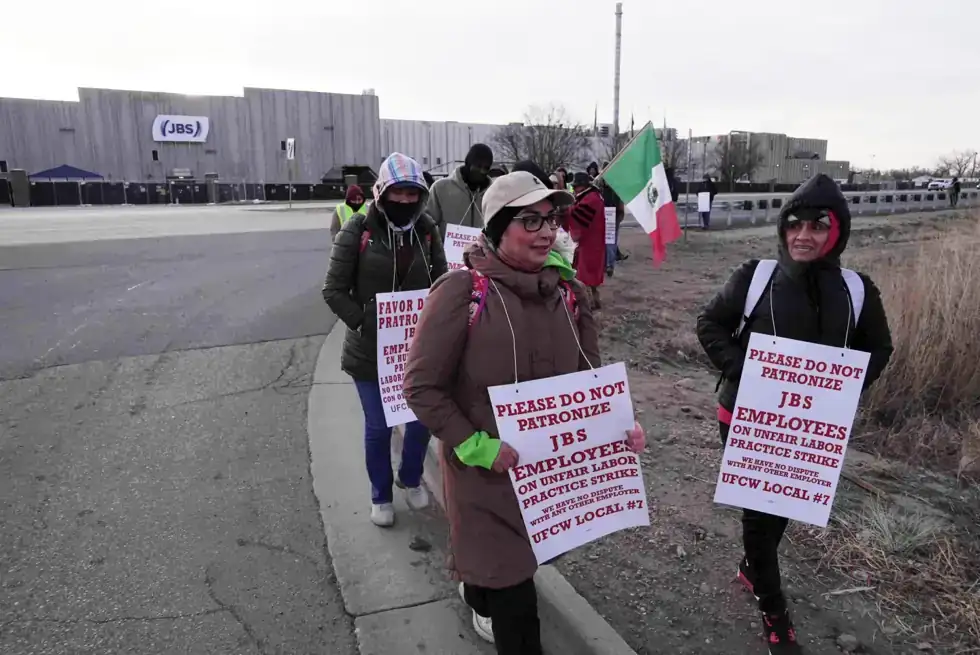
Thousands of workers walked off the job this week at a plant operated by JBS USA in Greeley, Colorado, launching a two-week strike that could reverberate across cattle markets and grocery store prices nationwide. According to reporting by The Associated Press, the action marks the first strike at a U.S. beef slaughterhouse in roughly four decades.
The facility—owned by JBS, the world’s largest meatpacker—accounts for a significant share of national beef processing capacity, making the dispute a potential flashpoint in an industry already grappling with limited cattle supplies and rising production costs.

Processing Capacity Faces Sudden Labor Shock
The strike centers on the Swift Beef plant in Greeley, one of the largest slaughterhouses in the United States and a key node in the national beef supply chain.
Union leaders say 99% of the facility’s roughly 3,800 unionized workers supported the walkout, with more than 2,600 workers appearing on picket lines during the first day. The workers are represented by the United Food and Commercial Workers International Union, which argues the company’s contract offer failed to keep pace with inflation and workplace demands.
According to Claire Poundstone, an attorney for the union’s Local 7 chapter, employees rejected proposed wage increases averaging less than two percent per year—figures union officials say fall short of Colorado’s rising cost of living.
Company representatives dispute the claims. In a statement, JBS said its proposal constituted a “historic offer” and argued that union leadership prevented employees from voting directly on the deal.
Despite the walkout, the company says some workers reported for duty and that production may be redistributed to other facilities if necessary.
■ Related News



Beef Market Pressures Intensify
The timing of the strike could amplify stress in the U.S. meat market.
The national cattle herd has fallen to its lowest level in roughly 75 years, according to federal agricultural data, reflecting drought conditions and shifting economics for ranchers. With fewer animals available for processing, slaughterhouse disruptions carry greater potential to influence retail prices.
Ground beef prices have already climbed sharply over the past two decades, rising from about $2.55 per pound to more than $6 per pound, according to the U.S. Bureau of Labor Statistics.
Additional policy factors are also shaping supply. Trade measures introduced by Donald Trump targeting Brazilian imports have reduced beef inflows from abroad, tightening availability in domestic markets.
In response to price pressures, the administration has also encouraged expanded agricultural trade discussions with Argentina to potentially increase food imports, including beef.
Regional Agricultural System Faces Ripple Effects
Industry analysts warn that prolonged disruption at the Greeley facility could create bottlenecks across cattle-producing regions in the western United States.
The plant alone accounts for roughly six percent of total U.S. beef slaughter capacity, according to livestock market advisers at consulting firm Ever.Ag. While other plants may temporarily absorb some production, capacity constraints could emerge if the strike continues.
Feedlots may feel the pressure first. Jennifer Martin, an animal sciences specialist at Colorado State University, says delays in processing cattle force feedlot operators to hold animals longer—raising feeding costs and reducing efficiency.
The longer cattle remain in holding patterns, she noted, the greater the likelihood that higher costs will eventually reach grocery store shelves.
Community and Industry Stakes Grow
The dispute also carries significant local consequences.
The Greeley plant is one of the largest employers in the city of roughly 114,000 residents, located northeast of Denver. For many workers, the job represents a critical source of income supporting extended families.
Union officials say employees are demanding improved pay, health benefits, and workplace protections in what they describe as one of the country’s most physically demanding industrial jobs.
Workers also allege that some employees have been required to cover significant costs—sometimes exceeding $1,000—for personal protective equipment used on the production line. JBS has not publicly confirmed those claims.
Historical Echoes Raise Stakes
Labor stoppages in U.S. meatpacking plants are rare, underscoring the significance of the Greeley strike.
Industry historians note that the last comparable walkout occurred in 1985, when workers at a Hormel Foods facility in Minnesota launched a strike that stretched more than a year and triggered intense clashes between workers, police, and replacement labor.
Although the current dispute has not escalated to that level, the precedent highlights how quickly tensions in the industry can deepen when supply chains and community livelihoods intersect.
Forward Outlook: Negotiations Under Pressure
For now, the strike has been announced as a two-week action, but union officials say additional walkouts could follow if labor complaints remain unresolved.
The broader significance lies beyond one facility. With cattle supplies tight, consumer prices elevated, and global trade factors reshaping the market, even a localized disruption can reverberate through the food system.
Negotiators on both sides now face increasing pressure—from workers, ranchers, retailers, and consumers—to prevent a labor conflict from compounding an already fragile U.S. beef supply.