Tensions between Afghanistan and Pakistan escalated sharply after authorities in Kabul accused Islamabad of carrying out a devastating airstrike in the Afghan capital that officials say killed hundreds of civilians, dramatically raising the stakes in a fast-expanding cross-border conflict.
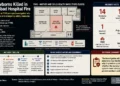
Afghan officials said the strike late Monday hit a large medical facility in Kabul used to treat people suffering from drug addiction. Government spokesmen claimed the attack destroyed significant portions of the complex and left at least 400 people dead with roughly 250 others injured. Pakistan rejected the accusation, insisting its air operations targeted militant infrastructure rather than civilian sites.
The dispute — reported by The Associated Press and other international media — underscores the rapid deterioration of relations between the two neighboring states, whose forces have exchanged fire repeatedly along their shared frontier over the past several weeks.

Civilian Casualty Claims Intensify Strategic Tensions
Afghanistan’s deputy government spokesman Hamdullah Fitrat said the strike occurred around 9 p.m. local time and caused severe damage to the hospital, a facility described by officials as capable of housing around 2,000 patients.
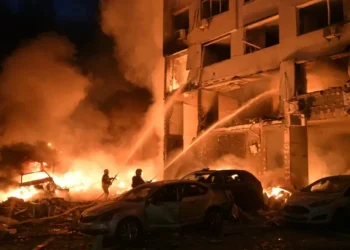
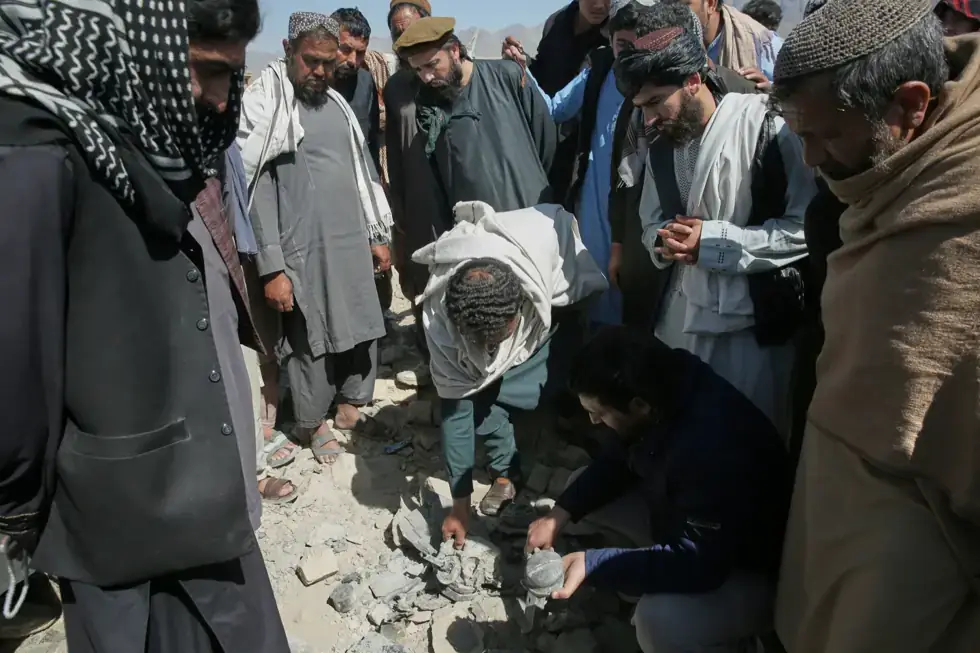
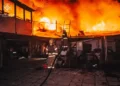
Images circulated by local television channels showed emergency workers moving through burning debris while rescuers attempted to retrieve victims under dim light and ongoing fires. Afghan officials said teams were still working through the rubble hours later to extinguish flames and recover bodies.
The Taliban government’s chief spokesman Zabihullah Mujahid condemned the attack in public statements, accusing Pakistan of deliberately striking a civilian medical facility and describing the incident as a violation of international humanitarian norms.
Islamabad Rejects Allegations, Points to Militant Targets
Officials in Islamabad swiftly denied the accusation. Pakistan’s government said its military operations were aimed at militant support infrastructure and weapons storage facilities connected to armed groups operating from Afghan territory.
According to Pakistan’s information ministry, the strikes targeted locations in Kabul and eastern Afghan provinces believed to be used by insurgents responsible for attacks inside Pakistan. Authorities insisted the operations were conducted with precision and avoided civilian locations.
A spokesman for Pakistani Prime Minister Shehbaz Sharif dismissed Kabul’s allegations as unfounded, arguing that Afghan leaders were attempting to deflect attention from what Islamabad describes as cross-border militant activity.
Border Clashes Push Rivalry Toward Open Conflict
The competing narratives emerge as military exchanges between the two countries intensify along their contested frontier.
Earlier Monday, Afghan officials said fighting along the border left at least four people dead inside Afghanistan. The clashes form part of a broader confrontation that has unfolded over several weeks, marking the most severe violence between the neighbors in years.
Pakistan has accused Afghanistan’s Taliban administration of allowing militants linked to the Pakistani Taliban to operate from Afghan soil. Kabul has repeatedly denied those claims.
Pakistani authorities say militant groups based across the border have carried out attacks targeting civilians and security forces inside Pakistan. Afghan officials counter that recent Pakistani airstrikes have killed civilians and violated Afghan sovereignty.
International Community Warns of Expanding Security Threat
The crisis unfolded only hours after the United Nations Security Council adopted a resolution urging Afghanistan’s rulers to intensify efforts against terrorist groups operating within the country.
The measure also extended the mandate of the U.N. political mission in Afghanistan, United Nations Assistance Mission in Afghanistan (UNAMA), for an additional three months.
Diplomats warn that escalating hostilities between Kabul and Islamabad risk destabilizing a region where militant networks — including groups linked to al-Qaida and the Islamic State — have historically maintained a presence.
Military Claims and Counterclaims Deepen Confrontation
The war of narratives between the two governments has expanded alongside the battlefield confrontation.
Pakistani Information Minister Attaullah Tarar recently said Pakistan’s military had killed hundreds of Afghan Taliban fighters in recent operations, a claim Kabul strongly disputes.
Afghan officials say their forces have inflicted significant casualties on Pakistani troops during border clashes, though those figures remain difficult to independently verify.
Meanwhile, Pakistani President Asif Ali Zardari accused Afghanistan’s Taliban administration of crossing a “red line” after drones allegedly launched from Afghan territory injured civilians in Pakistan.
Regional Stability Faces Growing Pressure
The current confrontation traces back to late February, when cross-border strikes and retaliatory attacks shattered a ceasefire that had been brokered months earlier through mediation by Qatar.
Since then, both sides have expanded their operations, including airstrikes and artillery exchanges that have drawn concern from international observers.
With neither government signaling a willingness to de-escalate and accusations continuing to mount, the confrontation between Afghanistan and Pakistan increasingly threatens to evolve from localized border clashes into a broader regional security crisis.