Published: October 14, 2025, 21:45 EDT
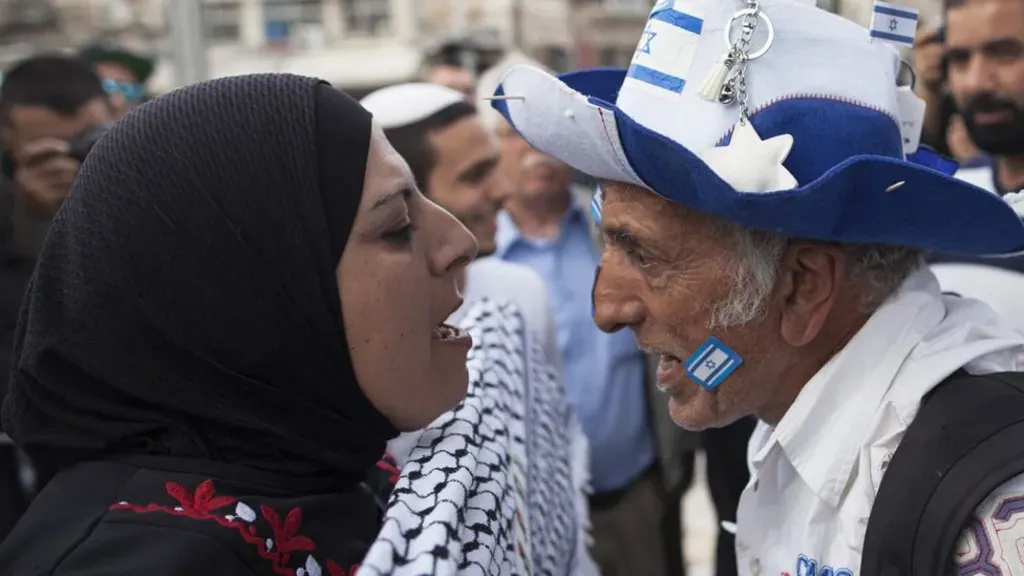
The Israeli-Palestinian conflict is among the world’s longest and most deeply rooted disputes, defined by over a century of war, displacement, and diplomatic struggle. From the collapse of empires to modern-day ceasefires, its history continues to influence regional and global politics.
Origins of the Conflict
The territory historically known as Palestine was ruled by the Ottoman Empire until its defeat in World War I, after which Britain assumed control under a League of Nations mandate. The area was home to an Arab majority and a Jewish minority.

In 1917, Britain issued the Balfour Declaration, expressing support for a “national home for the Jewish people” in Palestine. The declaration deepened divisions between Jewish immigrants and Palestinian Arabs, who opposed the policy, fearing displacement.
Between the 1920s and 1940s, waves of Jewish refugees fleeing persecution in Europe — particularly after the Holocaust — increased the Jewish population to about 630,000, or roughly 30% of the region’s inhabitants by 1947.
The Creation of Israel in 1948
In 1947, amid mounting violence, the United Nations proposed partitioning Palestine into separate Jewish and Arab states, with Jerusalem as an international city. Jewish leaders accepted the plan, but Arab nations rejected it, arguing it unfairly favored the Jewish minority.
Britain withdrew in May 1948, and Jewish leaders declared the establishment of the State of Israel. The following day, neighboring Arab armies launched an invasion, triggering the 1948 Arab-Israeli War — known in Israel as the War of Independence and in the Arab world as the Nakba, or “Catastrophe.”
By the war’s end in 1949, Israel controlled most of the territory. Egypt occupied Gaza, while Jordan held the West Bank and East Jerusalem. Roughly 750,000 Palestinians fled or were expelled, becoming refugees across the region.
■ Related News



In the years following, hundreds of thousands of Jews fled or were expelled from Arab countries, many resettling in Israel.
The Six-Day War and Occupation
Tensions escalated again in 1967 when Israel fought Egypt, Syria, and Jordan in what became known as the Six-Day War. Israel captured the Sinai Peninsula, Gaza Strip, East Jerusalem, the West Bank, and the Golan Heights, dramatically altering regional borders.
The war brought about one million Palestinians under Israeli control — a situation that continues to shape the conflict. Israel later signed a peace treaty with Egypt in 1979 and returned the Sinai Peninsula, but it retained control of other territories. The international community largely considers Israel’s annexation of East Jerusalem and the Golan Heights illegal under international law.
The West Bank and Settlements
Today, about three million Palestinians live in the West Bank, part of the Occupied Palestinian Territories alongside Gaza and East Jerusalem. Since the 1990s, the Palestinian Authority has administered parts of the West Bank, though Israel maintains overall control.
More than 160 Israeli settlements now exist in the West Bank and East Jerusalem, housing about 700,000 Israelis. These settlements are deemed illegal under international law, but Israel disputes this, citing historical and biblical ties to the land.
In July 2024, the International Court of Justice (ICJ) ruled that Israel’s continued presence in occupied territories was illegal and violated international conventions. Violence by settlers against Palestinians has surged since the October 7, 2023 Hamas attack, with the UN reporting over 2,200 incidents of violence or property damage through mid-2025.
Jerusalem: A Divided Capital
Both Israelis and Palestinians claim Jerusalem as their capital. Israel, which seized East Jerusalem in 1967, considers the entire city its “eternal capital.” Palestinians, however, envision East Jerusalem as the future capital of their independent state.
The city’s religious significance compounds the tension. The Al-Aqsa Mosque compound (Haram al-Sharif to Muslims, Temple Mount to Jews) is revered in both faiths and lies at the heart of the conflict. The United Nations regards East Jerusalem as occupied Palestinian territory.
The Gaza Strip and Humanitarian Crisis
The Gaza Strip, a densely populated coastal enclave bordered by Israel and Egypt, is home to about 2.1 million people. Following Israel’s withdrawal of troops and settlers in 2005, Hamas took control after winning elections in 2006 and ousting rival factions in 2007.
Since then, Israel and Egypt have imposed a blockade, restricting the flow of goods and people. Multiple wars have erupted between Hamas and Israel, notably in 2008–09, 2012, 2014, and 2021, each leaving widespread devastation.
The most recent conflict began after Hamas’s October 2023 attack, which killed about 1,200 Israelis and led to a large-scale Israeli military response. By mid-2025, Gaza’s health ministry reported over 67,000 deaths, mostly civilians.
UN agencies have warned of famine-like conditions and widespread hunger, blaming the crisis on Israeli restrictions. Israel denies blocking aid, saying there are “no limits” on humanitarian assistance.
In October 2025, Israel accepted the first phase of a U.S.-brokered peace plan, leading to a ceasefire, prisoner exchanges, and increased aid access to Gaza.
Global Recognition and the Two-State Debate
More than 150 countries now recognize the State of Palestine, which holds a “Permanent Observer” seat at the United Nations. In September 2025, several Western countries — including the UK, France, Canada, and Australia — formally extended recognition to Palestine.
Israeli Prime Minister Benjamin Netanyahu condemned the move, arguing it rewarded Hamas. The U.S. and the Trump administration maintain that Palestinian statehood should result from direct negotiations, not unilateral recognition.
The two-state solution, supported by the UN and most international actors, envisions an independent Palestinian state alongside Israel, with East Jerusalem as its capital. However, political realities and mistrust continue to stall progress.
Palestinian Refugees and the Right of Return
There are about 5.9 million registered Palestinian refugees, descendants of those displaced during the 1948 war. Most live in Jordan, Lebanon, Syria, the West Bank, and Gaza.
Palestinians insist on the right of return, while Israel rejects this, saying it would threaten its Jewish majority. Israel also criticizes the UN Relief and Works Agency (UNRWA) for granting refugee status to successive generations.
A Conflict Without Resolution
After decades of wars, peace talks, and shifting alliances, the Israeli-Palestinian conflict remains unresolved. Each new ceasefire offers only temporary calm as political, territorial, and humanitarian challenges persist.
Efforts toward a two-state solution continue to face opposition, but global leaders say it remains the most viable path to ending one of the world’s most protracted conflicts.
Source: BBC – Israel and the Palestinians: History of the conflict explained