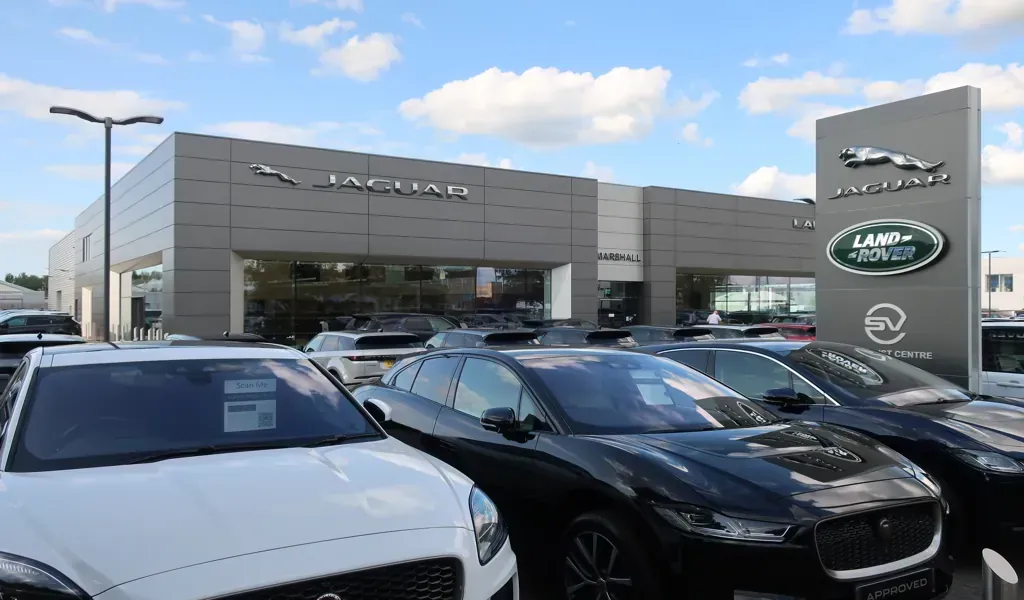
Jaguar Land Rover plans to cut around 4,000 jobs over the next two years as the luxury automaker seeks to reduce costs, lower its break-even point and strengthen its position against intensifying global competition.
The workforce reduction will primarily use voluntary redundancies and represents about 10% of JLR’s global workforce. The company is targeting approximately £1.7 billion ($2.3 billion) in savings over two years as it restructures its cost base.
The move comes as JLR faces weaker demand in key markets, higher production and input costs, U.S. tariffs, disruption from a major 2025 cyberattack and growing competition in electric vehicles, particularly from Chinese manufacturers.

Cost Reduction Becomes a Strategic Priority
JLR employs about 43,000 people worldwide, including roughly 34,000 in Britain. The planned reductions are expected to fall mainly on salaried and management positions rather than production-line workers.
The company has not fully disclosed the locations or individual positions that will be affected. The use of voluntary redundancies indicates that JLR is seeking to reduce its fixed cost base while maintaining its manufacturing operations.
JLR also aims to reduce its break-even point to approximately 300,000 vehicles a year. A lower threshold would reduce the number of vehicles the company needs to sell to cover its costs if demand remains weaker than previously expected.
Chinese Competition Raises Pressure
Competition from Chinese automakers has become a significant challenge for established manufacturers, particularly in electric vehicles.
Chinese companies have expanded internationally with lower-cost electric vehicles and increasingly advanced battery, drivetrain and software technologies. That has increased pressure on European manufacturers to control costs while accelerating investment in electrification.
■ Related News




The challenge is especially important for JLR because China has historically been an important market for the company. JLR therefore faces pressure to defend its established luxury business while developing products that can compete in an increasingly technology-driven vehicle market.
The competitive issue extends beyond pricing. Chinese manufacturers have built increasingly integrated electric-vehicle supply chains, creating pressure on established automakers that are simultaneously managing legacy production systems and the costs of transitioning to new technologies.
Tariffs and the Cost of Global Trade
JLR is also exposed to changes in international trade conditions.
U.S. tariffs on imported vehicles have increased costs for manufacturers selling vehicles into the American market. JLR does not have a major U.S. manufacturing base, leaving the company exposed to changes in the economics of exporting vehicles to one of its key markets.
The company has identified geopolitical uncertainty, competition and changing market conditions among the pressures affecting its business.
Those challenges come alongside significant spending requirements for electric vehicles, batteries, software and advanced manufacturing systems.
Cyberattack Added to Financial Pressure
The restructuring follows a major cyberattack in 2025 that disrupted JLR’s operations and temporarily halted production.
The disruption caused significant operational and financial damage during an already difficult period for the automotive industry. JLR is now attempting to strengthen its financial position while continuing to fund its next generation of vehicles.
Reducing the company’s fixed cost base has consequently become an important part of its turnaround strategy.
Investment Continues Despite Job Cuts
The planned workforce reduction does not mean JLR is abandoning its technology investment program.
The company plans to invest approximately £15 billion to £18 billion over five years in electrification, digital technologies and advanced manufacturing. It also expects to introduce five new products during the next year.
That creates a central challenge for the restructuring. JLR is cutting costs and reducing headcount while maintaining substantial investment in technologies intended to support its future product range.
The strategy aims to make current operations more efficient while directing resources toward future vehicles and manufacturing capabilities.
Luxury Positioning Remains Central
JLR’s portfolio includes Range Rover, Defender, Discovery and Jaguar, placing the company primarily in premium and luxury vehicle segments.
That positioning can support higher margins than mass-market vehicles but can also leave demand sensitive to economic conditions affecting discretionary purchases. Interest rates, tariffs and broader uncertainty can influence consumer spending on higher-priced vehicles.
JLR’s restructuring therefore seeks to reduce overhead while preserving its premium positioning and continued investment in its brands.
Impact on Britain’s Automotive Workforce
The job reductions will also affect Britain’s automotive industry because JLR has a large domestic workforce concentrated in the United Kingdom.
Much of its British operation is located in the West Midlands, where automotive manufacturing is an important part of the regional economy.
The British government has said it will engage with JLR over the consequences of the restructuring while ruling out a direct bailout. Government support is instead expected to focus on economic growth, investment and assistance for workers affected by changes in the automotive sector.
A Broader Test for Established Automakers
JLR’s restructuring reflects a wider financial challenge for established carmakers. Automakers must fund the transition to electric vehicles while facing intense competition, shifting consumer demand and uncertainty over international trade.
For JLR, the response is to lower fixed costs and reduce the number of vehicles needed to reach profitability. The £1.7 billion savings target is therefore closely linked to the company’s effort to make its business more resilient while maintaining investment in future products.
The outcome will depend on whether JLR can translate that investment into competitive electric and luxury vehicles while maintaining sufficient demand and margins across its major markets.
For now, the planned job cuts represent a significant restructuring at one of Britain’s best-known manufacturers as the global automotive industry undergoes a major shift toward electrification and faces stronger competition from Chinese producers.
Reporting Credit: Jaguar Land Rover (JLR) — official corporate announcement concerning the planned reduction of around 4,000 roles, voluntary-redundancy program, £1.7 billion savings target, workforce strategy and continued investment in electrification, digital technologies and advanced manufacturing; Tata Motors — parent-company corporate and financial disclosures concerning JLR’s performance, restructuring and strategic position within the Tata Motors group; Jaguar Land Rover financial and investor materials — company financial information concerning sales, profitability, break-even targets, investment plans and market conditions; UK Department for Business and Trade — government response to JLR’s restructuring, automotive-industry policy and engagement with the company over its workforce and investment position; UK Government — official information concerning economic and workforce-support measures relevant to affected automotive workers.