The CIA–Israel intelligence operation that preceded the strikes on Iran reflects a model of modern intelligence cooperation in which surveillance, data fusion, and military planning converge. According to U.S. and Israeli officials, months of tracking senior Iranian leaders enabled a coordinated assault that began with three nearly simultaneous strikes within 60 seconds.
The operation matters not only for its immediate military impact but also for what it reveals about intelligence-sharing systems, escalation risks, and the fragile balance between covert monitoring and open conflict. As regional tensions persist, understanding how such operations are prepared and executed offers insight into how contemporary warfare is conducted — and how it reshapes geopolitical stability.
In recent years, intelligence cooperation between the United States and Israel has deepened across cyber, signals, and human intelligence domains. The reported tracking of senior Iranian officials illustrates how modern surveillance systems allow militaries to compress decision-making timelines, enabling strikes to unfold with unprecedented speed. It also underscores the strategic calculations behind targeting leadership structures rather than only infrastructure.

The reported killing of Iran’s Supreme Leader, Ali Khamenei, along with other senior figures, marks a turning point in regional dynamics. Leadership targeting carries implications that extend beyond the battlefield, affecting succession mechanisms, diplomatic channels, and deterrence frameworks.
The CIA–Israel intelligence operation and how it worked
At the center of the operation was sustained intelligence tracking. U.S. intelligence agencies, including the CIA, routinely monitor senior officials of adversarial states using satellite imagery, signals intelligence, cyber tools, and allied reporting. Israeli intelligence services, notably Mossad, maintain long-standing capabilities focused on Iran.
Such cooperation is not unusual. The United States regularly shares intelligence assessments with close allies when security interests align. In this case, officials indicated that surveillance data regarding the location and movement of senior Iranian leaders was shared in real time, allowing operational planners to adjust timing.
Modern military operations increasingly depend on what defense analysts describe as “sensor-to-shooter” integration — linking surveillance platforms directly to strike systems. When three locations were reportedly struck within 60 seconds, it reflected an effort to minimize warning time and prevent dispersal.
Daylight execution added an additional element of surprise, according to officials, suggesting that predictability itself can be manipulated. Rather than relying on the assumption that attacks occur at night, planners may choose unexpected timing to exploit routine behaviors.



Leadership targeting as a military doctrine
Targeting senior leadership is a controversial but established military tactic. The objective is often to disrupt command-and-control structures, reduce coordination capacity, and create strategic shock. However, such actions carry legal and diplomatic complexity.
International humanitarian law distinguishes between military objectives and civilian leadership. When leaders also serve as military commanders — as is the case in some systems — classification becomes more complex. Iran’s political-military structure intertwines clerical authority with security command, especially through the Islamic Revolutionary Guard Corps.
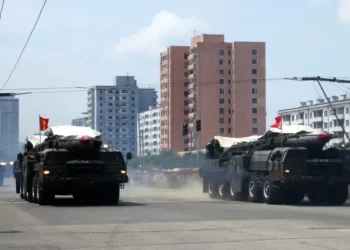
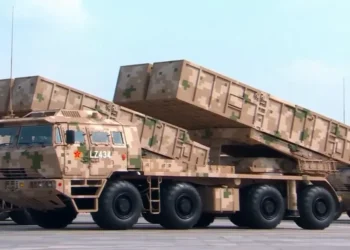
The reported strikes also included facilities associated with Iran’s Revolutionary Guard and ballistic missile systems. U.S. Central Command, or United States Central Command, confirmed that B-2 stealth bombers were used against missile facilities. Such aircraft are designed for precision strikes against heavily defended targets.
The speed of the operation appears designed to prevent retaliatory coordination in its early phase. Historically, rapid decapitation-style operations aim to create confusion that delays counter-response.
Intelligence-sharing systems between Washington and Jerusalem
U.S.–Israel intelligence cooperation dates back decades, particularly on Iran’s nuclear and missile programs. Joint task forces, data-sharing platforms, and liaison channels allow near-continuous coordination.
Members of the U.S. Congress have publicly described intelligence monitoring of adversarial leaders as a priority function of American agencies. Such tracking does not necessarily imply imminent military action but forms part of ongoing strategic awareness.
The effectiveness of such systems depends on verification and redundancy. Intelligence agencies often cross-check satellite imagery with intercepted communications and human sources. Only when multiple streams align does actionable confidence increase.
The reported months-long tracking campaign suggests preparation rather than spontaneity. Military planners typically develop contingency strike packages in advance, updating them as intelligence evolves.
Ballistic missile concerns and strategic justification
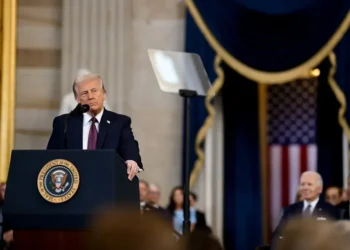
U.S. officials have cited concerns over Iran’s ballistic missile development. During a recent address, President Donald Trump reiterated claims that Iran was building longer-range missile capabilities. Iran has denied seeking intercontinental ballistic missiles capable of reaching the United States.
A publicly released assessment by the U.S. Defense Intelligence Agency in recent years stated that Iran could develop an intercontinental ballistic missile by 2035 if it chose to pursue that capability. Such assessments shape strategic debates in Washington and allied capitals.
Ballistic missile facilities are considered high-value targets because they directly affect deterrence balances. Striking them aims to reduce future threat potential, though it may also provoke retaliation.
Regional implications and escalation risks
Leadership elimination can create both disruption and instability. Iran’s political system includes constitutional mechanisms for succession, but transitions during conflict are inherently uncertain.
Regional actors — including Gulf states, Israel, and U.S. forces stationed across the Middle East — must now assess retaliation risks. Iran has historically relied on a network of allied non-state actors across Lebanon, Iraq, Syria, and Yemen.
Military analysts note that escalation does not unfold automatically but depends on strategic signaling. Public statements suggesting openness to talks, reportedly conveyed through intermediaries, indicate that diplomatic channels may remain active even during hostilities.
At the same time, the deaths of U.S. service members during the operation underscore the costs of direct engagement. Military operations of this scale rarely remain contained without broader regional impact.
The role of surprise and compression of time
One defining feature of the reported operation was temporal compression — three strikes within a minute. Advances in satellite targeting, encrypted communications, and precision-guided munitions have reduced the gap between intelligence confirmation and strike authorization.
This compression alters escalation dynamics. In earlier eras, military mobilization unfolded over days or weeks. Today, decisive actions can occur in minutes, leaving limited space for de-escalatory diplomacy before facts on the ground change irreversibly.
Such speed may enhance operational success but can complicate crisis management. Allies and adversaries alike must respond to rapidly shifting realities.
What remains uncertain
Despite official statements, many operational details remain classified. Independent verification of casualty figures and the full extent of infrastructure damage is limited. Iran has not publicly confirmed all aspects of the strikes described by U.S. and Israeli officials.
It also remains unclear how leadership succession will unfold or how Iran’s regional partners will respond. Diplomatic signals suggesting possible talks have not yet produced formal negotiations.
Conclusion
The CIA–Israel intelligence operation preceding the Iran strikes illustrates how modern warfare integrates surveillance, alliance coordination, and rapid execution. Months of tracking reportedly enabled near-simultaneous attacks designed to prevent dispersal and disrupt leadership structures. Ballistic missile concerns formed part of the strategic justification, while intelligence-sharing systems between Washington and Jerusalem underpinned operational timing. Yet significant uncertainties remain — from succession inside Iran to the risk of broader escalation. As diplomacy and military posture evolve in parallel, the episode underscores how intelligence preparation shapes not only battlefield outcomes but also the trajectory of regional stability.