Dubai’s reputation as a secure, tax-free refuge in a turbulent region was jolted over the weekend after Iranian airstrikes targeted the United Arab Emirates, igniting fires near some of the country’s most recognizable landmarks and disrupting air travel across the federation.
The attacks — part of Iran’s retaliation following major strikes by U.S. and Israeli forces — marked one of the most direct security challenges the UAE has faced in years. Emirati authorities said air defenses intercepted the majority of incoming threats, but falling debris caused fires and casualties, including one death and several injuries at an airport in the capital, Abu Dhabi.
For a country that has carefully cultivated an image of stability and openness to global capital, the strikes carry implications that extend beyond immediate security concerns.

Air defenses activated as missiles and drones approach
According to the UAE Ministry of Defense, air defense systems engaged 165 ballistic missiles, two cruise missiles and more than 540 drones over a two-day period. Officials said most incoming projectiles were intercepted before reaching their intended targets.
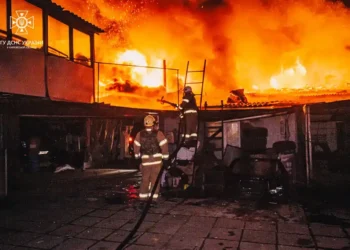
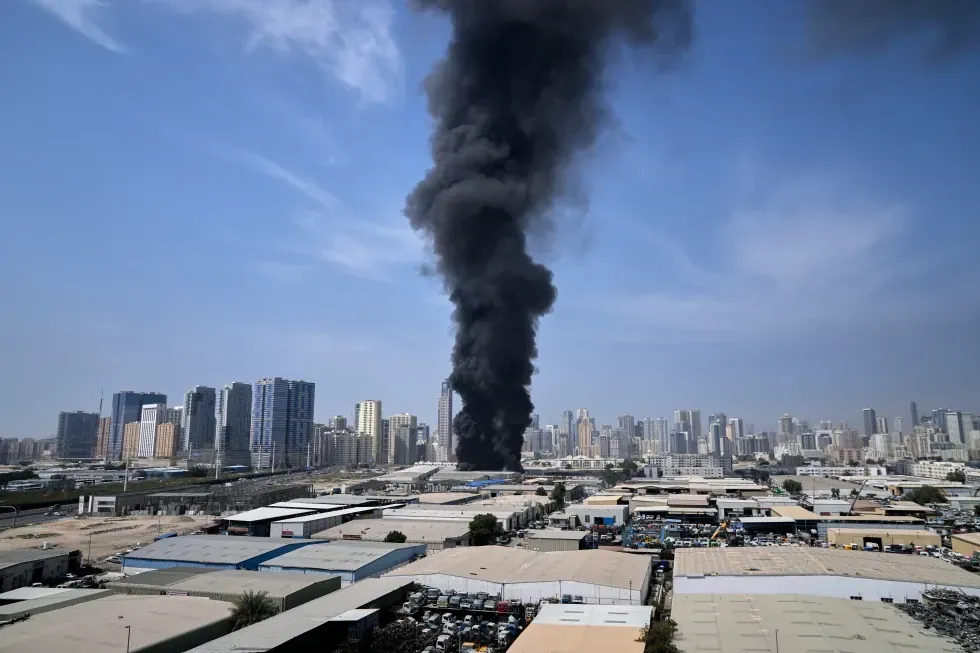
Even so, debris from intercepted weapons sparked fires in parts of Dubai. Social media footage and local reports showed flames near the Fairmont The Palm on the man-made Palm Jumeirah, damage near the sail-shaped Burj Al Arab, and smoke rising in the vicinity of Burj Khalifa, the world’s tallest building.
A fire was also reported at Jebel Ali Port, one of the Middle East’s busiest shipping hubs. Authorities said Dubai International Airport sustained damage, and four employees were injured. In Abu Dhabi, one person was killed and seven others were wounded in an incident at the airport, according to officials.
Reem Al Hashimy, the UAE’s minister of state for international cooperation, told CNN that while the explosions were alarming, many were the result of interceptions. “Those are sounds of interception,” she said, adding that much of the damage stemmed from debris.
A carefully built image under strain
For decades, the UAE — and Dubai in particular — has marketed itself as a haven of stability in a region often marked by conflict. Nearly 90% of the country’s roughly 11 million residents are foreign nationals, drawn by tax-free salaries, business-friendly regulations and a perception of safety.




Luxury real estate developments, five-star resorts and global events have reinforced that image. The skyline of Dubai, anchored by landmarks such as the Burj Khalifa, has become shorthand for economic ambition and insulation from regional turmoil.
Saturday’s events challenged that perception. British racehorse trainer Jamie Osborne, in Dubai for the Emirates Super Saturday event, described watching missiles streak across the sky from a racetrack paddock. “Last night was pretty surreal,” he said.
For residents and visitors, the psychological impact may prove as significant as the physical damage. Several travelers said the blasts were unsettling in a city where such sounds are rare.
Diplomatic fallout and regional tensions
The strikes come despite recent Emirati efforts to manage tensions with Iran, its neighbor across the Gulf. While relations have long been marked by suspicion, the UAE in recent years pursued cautious diplomatic engagement aimed at de-escalation.
In response to the attacks, the UAE closed its airspace, shuttered its embassy in Tehran and withdrew diplomatic staff. The Foreign Ministry described the strikes as an “aggressive and provocative approach” that threatens regional security and sovereignty.
Security analysts note that the UAE’s strategic position — home to major ports, financial centers and expatriate communities — makes it both economically vital and geopolitically exposed. The federation’s advanced air defense systems are widely regarded as among the most capable in the region, but the scale of the barrage underscored the risks posed by escalating confrontation between Iran, the United States and Israel.
Economic and travel implications
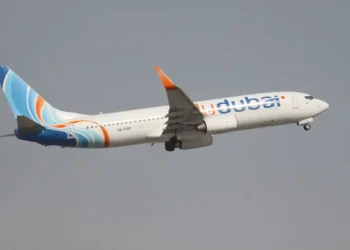
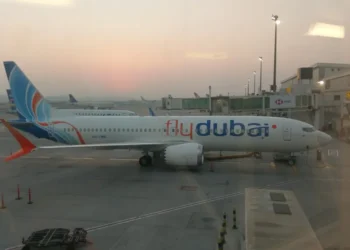
Dubai International Airport, one of the world’s busiest for international passengers, plays a central role in connecting Europe, Asia and Africa. Any sustained disruption could reverberate through global travel and trade networks.
The closure of airspace and temporary suspension of flights left some travelers stranded. Louise Herrle, an American tourist whose return flight was canceled, said she would likely avoid the region during periods of heightened tension. “It just explodes so quickly,” she said, reflecting a concern that regional crises can escalate with little warning.
The UAE’s economy is diversified compared with many of its Gulf neighbors, with trade, tourism, aviation and financial services forming key pillars alongside oil revenues. Officials have sought to reassure investors and residents that security remains robust and that normal operations will resume swiftly.
Whether confidence can be restored as quickly as physical damage is repaired remains an open question. For now, authorities are emphasizing resilience and continuity, projecting stability even as the region faces one of its most volatile moments in years.
Source: AP News – Dubai’s image as a safe, tax-free haven is rocked by blasts from Iranian airstrikes