


Journos News - Breaking News, World News, Top Stories, Todays Headlines and Flash Reports
Monday, July 13, 2026
  • Login
  • Home
  • World
    • Africa
    • Americas
    • Asia
    • Europe
    • Middle East
    • Oceania
  • Politics
  • Business
  • Technology
  • Health
  • Science
  • Sports
  • Entertainment
  • Culture
No Result
View All Result
  • Home
  • World
    • Africa
    • Americas
    • Asia
    • Europe
    • Middle East
    • Oceania
  • Politics
  • Business
  • Technology
  • Health
  • Science
  • Sports
  • Entertainment
  • Culture
No Result
View All Result
Journos News - Breaking News, World News, Top Stories, Todays Headlines and Flash Reports
No Result
View All Result
Home Health

Can You Catch Diseases From Toilet Seats? Experts Explain the Risks

Understanding how germs spread in public and home bathrooms and practical ways to stay safe

The Daily Desk by The Daily Desk
June 15, 2026
in Health, Lifestyle & Wellness
0
Public Toilet Hygiene Explained Microbiologists Share What Surfaces Pose Infection Risks and How to Minimize Exposure Safely - Getty Images/BBC

Toilet Plumes and Bathroom Germs What Science Reveals About Infection Risks and Practical Tips for Safer Public Restroom Use - Getty Images/BBC

Can You Catch Illnesses From Public Toilet Seats? What Science Says

Published Time: 08-19-2025, 16:20

Public toilets often provoke an instinctive sense of disgust, but the risk of catching a disease from a toilet seat is generally very low. Experts say proper hygiene, handwashing, and awareness of high-risk surfaces are the key ways to prevent infections.

The Low Risk of Catching Diseases From Toilet Seats

Microbiologists emphasize that the risk of contracting diseases from merely sitting on a toilet seat is extremely small. Jill Roberts, a professor of public health and microbiology at the University of South Florida, notes:
“Theoretically, yes, you can catch diseases from a toilet seat, but the risk is vanishingly low.”

Sexually transmitted infections (STIs), including gonorrhea and chlamydia, require direct contact with genital fluids to transmit. Roberts explains that transmission from a toilet seat would involve the immediate transfer of fresh bodily fluids from the seat to the genital area—a highly unlikely scenario.

“If toilet seats could easily transfer STDs, we would see them across all age groups, even in people with no sexual activity history,” she adds.

RELATED POSTS

Why Scratching Bug Bites Makes Them Worse, According to New Research

WHO Launches Clinical Trial of Two Ebola Treatments as Congo’s Bundibugyo Outbreak Grows

New Jersey Targets Employers With New Medicaid Fee as Other States Consider Similar Policies

Medicaid Work Requirement Guidance Raises Concerns for Patients With Chronic Illnesses

Extreme Weather Anxiety on the Rise as Experts Urge Preparedness and Support

Genomic Test Could Help Millions of Breast Cancer Patients Avoid Chemotherapy

Similarly, bloodborne pathogens and urinary tract infections (UTIs) are rarely transmitted via toilet seats. Transmission would require significant contamination and direct contact with broken skin, which is uncommon in public restroom use.

Exceptions: Some Viruses Can Persist on Surfaces

Some viruses, such as human papillomavirus (HPV), can survive on surfaces for several days under certain conditions. Karen Duus, professor of microbiology and immunology at Touro University in Nevada, explains that HPV has a particularly stable protein shell, making it resistant to hand sanitizers and requiring strong disinfectants like 10% bleach to inactivate.

However, these viruses typically require broken skin or mucous membranes to infect a person. Thus, even for HPV, transmission via toilet seats remains extremely rare. Similarly, genital herpes could theoretically be transferred if a person has active lesions, but the risk remains minimal for most healthy individuals, according to Daniel Atkinson, clinical lead at Treated.com.

Toilet Seat Covers and Squatting: Are They Necessary?

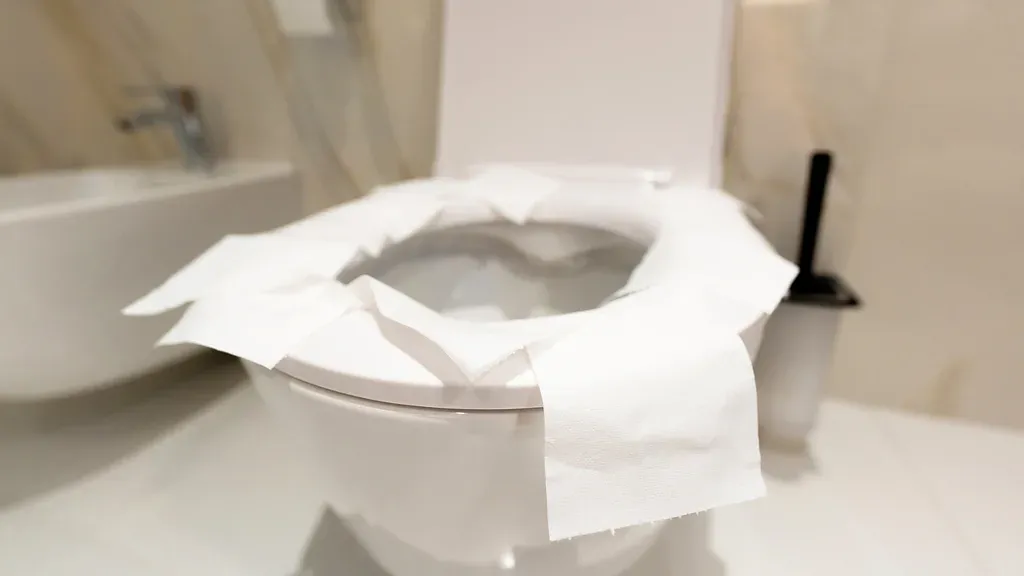
Many people use toilet paper layers, disposable seat covers, or even hover over the seat to avoid contact. According to a 2023 YouGov poll, about 63% of Americans sit directly on public toilets, and nearly half line the seat with paper, while around 20% squat.

Stephanie Bobinger, a clinical specialist in pelvic health at Ohio State University, warns that hovering can strain pelvic muscles and prevent complete bladder emptying, potentially increasing the risk of UTIs. Toilet paper layers or covers, being porous, do little to block pathogens from surfaces, she adds.

The Real Source of Infection: Hands and Surfaces

The primary risk of contracting infections in bathrooms comes from contaminated hands rather than direct contact with the toilet seat. Pathogens from fecal matter—such as Escherichia coli, Salmonella, Shigella, Staphylococcus, Streptococcus, and norovirus—can survive on surfaces and cause gastrointestinal illnesses if transferred to the mouth.

Norovirus, in particular, is highly contagious. Even small amounts—between 10 and 100 viral particles—can cause infection, and the virus can persist on surfaces for weeks. However, regular cleaning of public bathrooms significantly reduces contamination risk.

Charles Gerba, professor of virology at the University of Arizona, notes:
“In the United States, home restrooms are often far germier than public restrooms. Public facilities are typically cleaned multiple times a day, whereas home bathrooms are cleaned less frequently.”

Toilet Plumes: When Flushing Spreads Germs

Flushing a toilet can release aerosols, known as toilet plumes, that spread pathogens into the surrounding air and onto surfaces. Studies suggest that 40–60% of particles can travel beyond the bowl. While closing the lid helps slightly, it does not completely prevent aerosols from escaping, particularly in high-pressure public toilets.

High-risk surfaces include toilet flush handles, doorknobs, sink faucets, towel dispensers, and even the floor. Clostridium difficile, a bacterium common in healthcare settings, can travel via spores and pose a risk when inhaled. Viruses like influenza can also survive on bathroom surfaces, highlighting the importance of hand hygiene.

Practical Tips to Minimize Risk

Experts recommend several simple measures to reduce the risk of infections in bathrooms:

  • Wash hands thoroughly: Use soap and warm water for at least 20 seconds and consider using hand sanitizer afterward.
  • Limit contact with surfaces: Touch as few surfaces as possible and avoid placing personal items, like phones, on counters or floors.
  • Flush and leave: Consider flushing and exiting the stall promptly to reduce exposure to toilet plumes.
  • Consider protective designs: Touchless flush mechanisms, air sanitizers, and shielded toilet bowls can minimize germ spread in public restrooms.

Elizabeth Paddy, a water hygiene engineer at Loughborough University, emphasizes that reducing hand contact and improving bathroom design are more effective than obsessively covering toilet seats.

Bottom Line

While public toilets can trigger feelings of disgust, the likelihood of contracting diseases from the toilet seat itself is very low. The real risk comes from hand-to-mouth transmission of bacteria and viruses from contaminated surfaces. Regular handwashing, good hygiene practices, and awareness of high-risk areas are the most reliable ways to protect yourself.

“Your risk is probably lower than you think,” says Gerba, reassuring bathroom users that reasonable precautions are sufficient to stay healthy.

Source: BBC – Can you catch diseases from toilet seats?

Tags: #BathroomHealth#BathroomSafety#GermPrevention#HandwashingTips#HealthyRestrooms#HygieneAwareness#InfectionControl#MicrobiologyTips#NorovirusPrevention#PublicToiletHygiene#ToiletPlume#ToiletSeatGerms
The Daily Desk

The Daily Desk

The Daily Desk is a contributor at JournosNews.com covering politics, media, governance, and the evolving dynamics of public discourse. Stories published under this byline are produced in accordance with JournosNews' editorial standards, with an emphasis on verified reporting, accuracy, context, and impartiality.

Related Posts

Why Scratching Bug Bites Makes Them Worse, According to New Research

by The Daily Desk
July 3, 2026
0
Person scratching a mosquito bite on their arm outdoors - AP Photo/Rick Bowmer, File

WASHINGTON - Many people instinctively scratch a mosquito bite, poison ivy rash, or other itchy skin irritation for immediate relief....

Read moreDetails

WHO Launches Clinical Trial of Two Ebola Treatments as Congo’s Bundibugyo Outbreak Grows

by The Daily Desk
July 3, 2026
0
Healthcare workers at an Ebola treatment center during Congo clinical trial - AP Photo/Moses Sawasawa, File

The World Health Organization (WHO) has launched a clinical trial in the Democratic Republic of Congo to evaluate two potential...

Read moreDetails

New Jersey Targets Employers With New Medicaid Fee as Other States Consider Similar Policies

by The Daily Desk
July 2, 2026
0
New Jersey State House as lawmakers approve Medicaid employer fee policy - AP Photo/Seth Wenig, File

New Jersey has become the latest state to require certain employers to help offset Medicaid costs by introducing a new...

Read moreDetails

Medicaid Work Requirement Guidance Raises Concerns for Patients With Chronic Illnesses

by The Daily Desk
June 15, 2026
0
Patient reviewing Medicaid coverage requirements after federal policy changes - AP Photo/Rebecca, Blackwell, File

NEW YORK - Patients living with serious health conditions and disabilities may face new challenges proving they qualify for exemptions...

Read moreDetails

Extreme Weather Anxiety on the Rise as Experts Urge Preparedness and Support

by The Daily Desk
June 15, 2026
0
Residents facing severe weather prepare emergency plans to reduce stress - AP Photo/Gerald Herbert

As hurricanes, wildfires, floods, tornadoes and other extreme weather events become increasingly common, mental health experts are drawing attention to...

Read moreDetails

Genomic Test Could Help Millions of Breast Cancer Patients Avoid Chemotherapy

by The Daily Desk
June 15, 2026
0
Researcher reviewing breast cancer genomic testing results in laboratory - Credit: Getty Images

Millions of people with hormone-sensitive breast cancer may be able to avoid chemotherapy without reducing their chances of remaining cancer-free,...

Read moreDetails

Why Brain Freeze Continues to Fascinate Scientists Beyond the Ice Cream Cone

by The Daily Desk
June 15, 2026
0
Person experiencing brain freeze after eating ice cream quickly - Credit: Getty Images

Why Brain Freeze May Reveal More About the Brain Than Ice Cream Scientists say the common cold-triggered headache offers clues...

Read moreDetails

France Permits Healthy Cruise Passengers to Disembark After Gastrointestinal Illness Outbreak

by The Daily Desk
May 15, 2026
0
Cruise ship passengers disembarking after gastroenteritis outbreak in France - AP Photo/Caroline Blumberg

French authorities allowed asymptomatic passengers to leave a cruise ship near Bordeaux after a gastrointestinal illness outbreak sickened hundreds aboard...

Read moreDetails

Global Health Coordination Intensifies After U.S. Passenger Tests Positive for Hantavirus

by The Daily Desk
June 15, 2026
0
Passengers evacuated from MV Hondius during hantavirus containment operation - AP Photo

A U.S. passenger evacuated from the Dutch-operated cruise ship MV Hondius after a hantavirus outbreak has tested mildly positive for...

Read moreDetails
Load More
Next Post
Understanding America’s Summer Climate Divide How Rainfall, Land Use, and Ocean Patterns Create Regional Temperature Differences - Spencer Platt/Getty Images

Understanding America’s Summer “Warming Hole” and Regional Temperature Differences

Walmart Shrimp Recall: FDA Confirms Cesium-137 Contamination in Imported Seafood, Issues Nationwide Consumer Safety Warning - FOX News / Fox Business

FDA Probes Radioactive Contamination in Walmart Shrimp Shipment

Trump Administration Border Wall Strategy Adds Black Paint for Deterrence as Kristi Noem Highlights Security Gains at U.S. Southern Border - Alex Brandon/Pool via REUTERS and Fox News Photo/Joshua Comins

Kristi Noem Outlines New Border Wall Strategy Under Trump Administration

JournosNews logo

Journos News delivers globally neutral, fact-based journalism that meets international media standards — clear, credible, and made for a connected world.

  • Categories
  • World News
  • Politics
  • Business & Markets
  • Technology
  • Health
  • Science
  • Sports
  • Arts & Culture
  • Resources
  • Editorial Standards
  • Submit a Story
  • Advertise with Us
  • Syndication & Partnerships
  • Site Map
  • Press & Media Kit
  • Editorial Team
  • Careers

Join thousands of readers receiving the latest updates, tips, and exclusive insights straight to their inbox. Never miss an important story again.

  • About Us
  • Editorial & Trust Center
  • Contact Us
  • Privacy Policy
  • Terms of Use & Copyright Notice

© JournosNews.com All rights reserved.

Welcome Back!

Login to your account below

Forgotten Password?

Retrieve your password

Please enter your username or email address to reset your password.

Log In
JournosNews

Independent Journalism.
Verified Facts.

You're about to read a professionally edited article from JournosNews.com.

Every article is produced in accordance with our editorial standards, emphasizing factual accuracy, transparent attribution, fairness, editorial independence, and meaningful context.

Editorial Standards
No Result
View All Result
  • Home
  • World
    • Africa
    • Americas
    • Asia
    • Europe
    • Middle East
    • Oceania
  • Politics
  • Business
  • Technology
  • Health
  • Science
  • Sports
  • Entertainment
  • Culture

© JournosNews.com All rights reserved.

This website uses cookies. By continuing to use this website you are giving consent to cookies being used. Visit our Privacy and Cookie Policy.
