A survey of audiophile sentiment highlights brands that helped define modern sound reproduction but receive limited mainstream recognition. Their histories reveal how innovation, distribution, and branding shape perception as much as performance.
The audio industry tends to celebrate a familiar group of headline brands — companies whose marketing visibility often mirrors their technical achievements. Yet thousands of enthusiasts recently pointed to a different roster: manufacturers whose engineering influence, historical breakthroughs, or enduring product lines arguably outweigh their public profile.
The resulting list spans early 20th-century loudspeaker pioneers, post-war Japanese engineering houses, British digital innovators, and modern value-driven disruptors. Some transformed entire formats. Others built reputations on reliability rather than spectacle. Many illustrate a recurring theme in hi-fi: technical contribution and brand prestige do not always align.

What follows is not a ranking of performance, but an examination of why these companies matter — and why they often sit outside the mainstream spotlight.
Legacy Beyond Branding: When Innovation Outpaces Recognition
Several names on the list helped establish the foundations of modern audio reproduction, yet today are more closely associated with mass-market electronics.
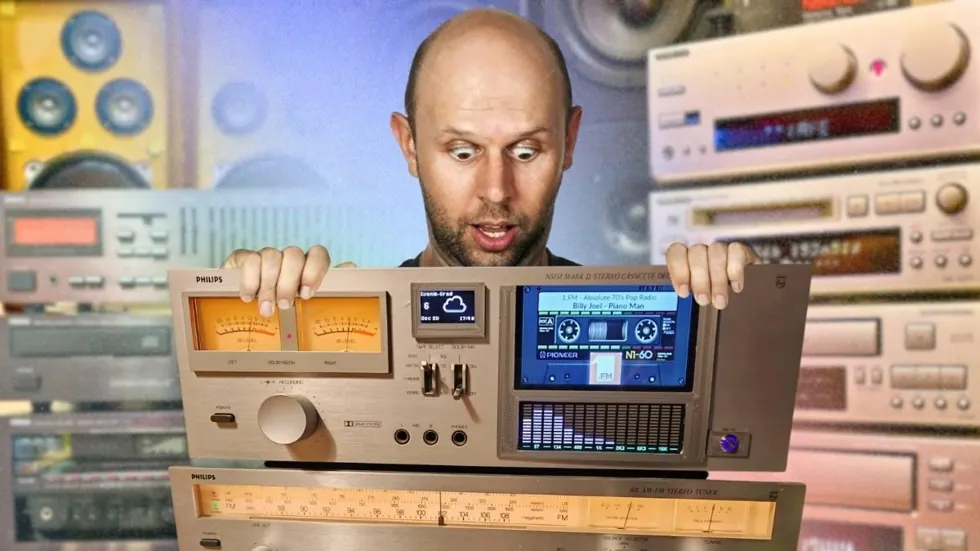
Philips co-developed the compact cassette in 1963 and, with Sony, introduced the compact disc in the early 1980s — two of the most consequential consumer audio formats of the 20th century. Behind the scenes, Philips’ TDA1541 DAC chips and CDM swing-arm transports powered numerous early high-end CD players, often under different brand badges.
Yet the company’s diversified portfolio — spanning lighting, healthcare, and appliances — diluted its identity as a hi-fi innovator. Its audio engineering achievements remain embedded in history rather than front-of-mind for contemporary buyers.
A similar dynamic surrounds Denon. Long before becoming synonymous with AV receivers, Denon developed one of the earliest professional digital PCM recorders in 1972 and released consumer CD players alongside the format’s debut. Its DL-103 moving-coil cartridge, introduced in 1964, remains in production — a rare example of continuous manufacturing across six decades.
■ Related News




Brand positioning in the home-theater era, however, shifted attention away from its two-channel heritage.
The Engineering-First Companies
Some firms remain understated by design. They invest in internal component quality and circuit topology rather than external spectacle.
Rotel has long emphasized oversized in-house toroidal transformers and conservative power ratings, packaged in visually restrained enclosures. It occupies a space between mid-market and high-end, a positioning that can limit visibility in both categories despite consistent technical credibility.
Bryston takes a similarly utilitarian approach. Known for a 20-year warranty on analog electronics, Bryston amplifiers appear in professional environments including Abbey Road Studios. Its 4B amplifier series has been refined for decades with minimal aesthetic flourish, underscoring a philosophy centered on neutrality and durability rather than brand mystique.
Yamaha illustrates another tension. The company produces everything from pianos to motorcycles, which can obscure its hi-fi credentials. Yet its NS-1000 loudspeakers — among the first to use beryllium domes — and early VFET transistor amplifiers remain technically significant. The breadth of Yamaha’s catalog, however, makes it difficult for casual observers to distinguish entry-level products from reference-tier designs.
Retail Labels and the Problem of Perception
Brand perception can be shaped less by engineering quality than by retail context.
Realistic, sold through RadioShack, relied on original equipment manufacturers including respected Japanese firms. Certain receivers and loudspeakers achieved strong measured and subjective performance, yet association with a department-store chain created stigma that lingers among collectors.
Likewise, MCS products were often manufactured by established companies such as Technics or NEC. The technical pedigree existed; the branding did not always communicate it effectively.
The case of Magnavox demonstrates how long-term brand dilution can obscure early innovation. The company publicly demonstrated one of the first practical moving-coil loudspeakers in 1915 and later built respected tube amplifiers. Today, the name is more commonly associated with budget televisions than audio breakthroughs.
Boutique Persistence in a Consolidating Industry
Other companies remained small by choice or necessity, limiting global exposure but preserving technical focus.
Luxman, founded in the 1920s, continues to produce heavy, meticulously engineered integrated amplifiers and separates. Distribution outside Japan has historically been limited, which constrained broader awareness despite consistent praise in specialist media.
Electrocompaniet gained early recognition after favorable coverage in specialist publications during the 1970s. Its dual-mono designs and high-bias Class AB topology retain a niche following, yet modest production scale and geographic concentration restricted mainstream exposure.
Tandberg, known for highly regarded cassette decks such as the TCD 3014, illustrates how financial instability can interrupt brand continuity. Its exit from consumer audio coincided with the rise of home theater, removing it from later generations’ awareness.
System Philosophy Versus Market Norms
Some brands diverged from prevailing industry assumptions about how hi-fi systems should be assembled.
Meridian championed digital active loudspeakers that integrated amplification, digital-to-analog conversion, and crossover processing within a single enclosure. This approach challenged the traditional separates-plus-passive-speaker model. While technically forward-looking, it required consumers to embrace a system-centric ecosystem, narrowing adoption.
Naim built its reputation around an emphasis on pace, rhythm, and timing — sometimes abbreviated as PRaT in enthusiast circles. Its modular upgrade path and proprietary connections fostered strong brand loyalty, though the ecosystem commitment could deter newcomers accustomed to mix-and-match flexibility.
Value Engineering and Measurement Transparency
A different group gained attention by delivering strong measured performance at comparatively accessible prices.
Parasound collaborates with designers such as John Curl and supplies amplification to film studios including Skywalker Sound. Its Halo series positions itself as high-performance yet comparatively attainable, challenging assumptions that studio-grade amplification must carry ultra-luxury pricing.
NAD demonstrated in the late 1970s that modest power ratings could coexist with substantial dynamic headroom. The NAD 3020 integrated amplifier became one of the best-selling hi-fi amplifiers in history, reinforcing the idea that power supply design often matters more than headline wattage.
Emotiva operates within a direct-to-consumer model, manufacturing offshore while designing domestically. Independent laboratory measurements have at times shown output exceeding rated specifications, suggesting that lower pricing does not necessarily imply compromised engineering.
Cambridge Audio has long occupied the “best value” segment, balancing in-house design with outsourced production under strict quality control. Its network streaming products expanded access to high-resolution digital playback without entering ultra-luxury pricing tiers.
Corporate Turbulence and Category Drift
For some brands, structural change reshaped perception.
Onkyo once produced heavyweight two-channel amplifiers such as the Grand Integra series, competing with established high-end names. Over time, however, home-theater receivers defined its public identity. Corporate bankruptcy proceedings in 2022 further complicated brand perception, even as vintage models remain sought after.
Amstrad helped democratize hi-fi in the UK during the 1980s by lowering cost barriers. While build quality varied, its market impact lay in accessibility rather than audiophile prestige — an achievement that rarely garners long-term acclaim.
Jensen and the early Magnavox loudspeaker work underscore how brand transitions across decades can obscure foundational innovation.
Why Recognition Lags Contribution
Three recurring patterns emerge across these twenty companies.
First, diversification dilutes identity. Firms that expand into mass-market or non-audio sectors often see their specialist achievements overshadowed.
Second, retail context and branding matter. Store labels and modest aesthetics can depress perceived status irrespective of engineering merit.
Third, ecosystem strategy shapes adoption. Brands that require commitment to proprietary systems may achieve deep loyalty within a smaller base rather than broad visibility.
The broader implication is that hi-fi reputation is shaped as much by narrative and positioning as by circuit topology or component quality. Enthusiast communities frequently reassess overlooked equipment decades later, suggesting that technical merit can resurface independent of contemporary marketing cycles.
Recognition, in audio as in many industries, tends to follow visibility. Innovation, however, does not always do the same.
Source: Headphonesty – 20 Audio Brands That Deserve More Recognition, According to Thousands of Audiophiles