Authorities in Argentina’s southern Tierra del Fuego province are pushing back against suggestions that a deadly hantavirus outbreak linked to an Antarctic cruise ship began in the region, as health investigators race to determine the source of infections that have triggered international concern.
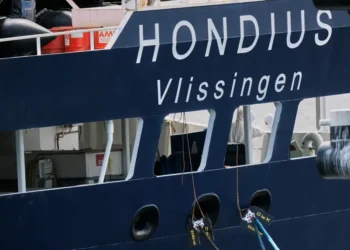
The dispute centers on the Dutch-flagged expedition vessel MV Hondius, where at least three passengers died and several others became infected during a voyage that departed from Ushuaia, Argentina’s main Antarctic cruise gateway. Federal health officials have identified Ushuaia as a possible origin point for the outbreak, but local authorities strongly deny the claim.
Provincial officials argue that Tierra del Fuego has never recorded a case of the Andes strain of hantavirus associated with the outbreak and say the infected passengers had traveled extensively through Argentina, Chile and Uruguay before boarding the cruise. They accuse national authorities of prematurely linking the province to the outbreak without conclusive scientific evidence.

The controversy has emerged as Argentina faces increasing international scrutiny over a broader rise in hantavirus infections. Associated Press reporting earlier this week indicated the country has recorded more than 100 infections since mid-2025, roughly double previous annual figures.
Antarctic Tourism Industry Faces Growing Pressure
Ushuaia, often marketed as the “gateway to Antarctica,” depends heavily on polar tourism, which has become a major source of regional employment and foreign revenue.
Local leaders warned that linking the outbreak to Tierra del Fuego without definitive proof could severely damage the province’s tourism industry during a period of economic uncertainty under President Javier Milei’s austerity-driven reforms. Provincial officials also criticized what they described as poor coordination between federal and local health agencies.
Argentina’s Health Ministry announced plans to send experts from the Malbrán Institute to trap rodents and test for the Andes virus near a landfill outside Ushuaia, where investigators believe two Dutch tourists may have been exposed during a birdwatching excursion before boarding the ship. However, local officials noted that investigators had not yet arrived several days after the announcement.
The outbreak has intensified broader concerns about the rapid expansion of Antarctic cruise tourism, which environmental and public health experts say may outpace existing oversight systems. Reuters reported that more than 117,000 tourists visited Antarctica in 2025, nearly triple the number recorded a decade earlier.
■ Related News




International Health Investigation Expands
Health authorities across several countries are now tracing passengers and contacts linked to the cruise ship as concerns grow over possible human-to-human transmission of the Andes hantavirus strain, one of the few hantaviruses known to spread between people in rare circumstances.
The World Health Organization has classified the overall public health risk as low, though international agencies continue monitoring exposed passengers who traveled through South Africa, Cape Verde and other transit points after leaving the ship.
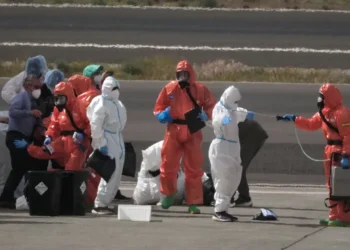
The MV Hondius remained under international medical supervision while traveling toward Spain’s Canary Islands, where authorities planned coordinated evacuations and quarantine procedures for passengers. Reuters and AP reporting indicated that epidemiologists from Europe boarded the vessel to assess the extent of transmission during the voyage.
Scientists say determining the precise source of the outbreak is critical because it may indicate whether the virus is spreading into previously unaffected regions of Argentina. Several epidemiologists interviewed by international media suggested the infections may have originated further north in Patagonia, where rodent carriers associated with hantavirus are more common.
Public Health Concerns Intersect With Political Tensions
The outbreak has also fueled debate over Argentina’s public health capacity following deep government spending cuts introduced under Milei’s administration.
Provincial authorities and some health specialists have warned that reductions in scientific and healthcare funding could weaken outbreak surveillance and response systems at a time when climate-related environmental changes may be increasing rodent populations linked to hantavirus transmission.
Analysts note that the dispute between federal and provincial authorities reflects wider tensions over economic priorities, tourism protection and public health accountability. Tierra del Fuego officials insist the province should not become the focus of international blame until scientific investigations conclusively establish the outbreak’s origin.
As investigators continue testing rodents and tracing passenger movements, the case has become an international test of outbreak coordination involving Argentina, European governments and global health agencies. Experts warn that the final findings could carry significant implications not only for public health policy but also for the future regulation of Antarctic tourism routes.