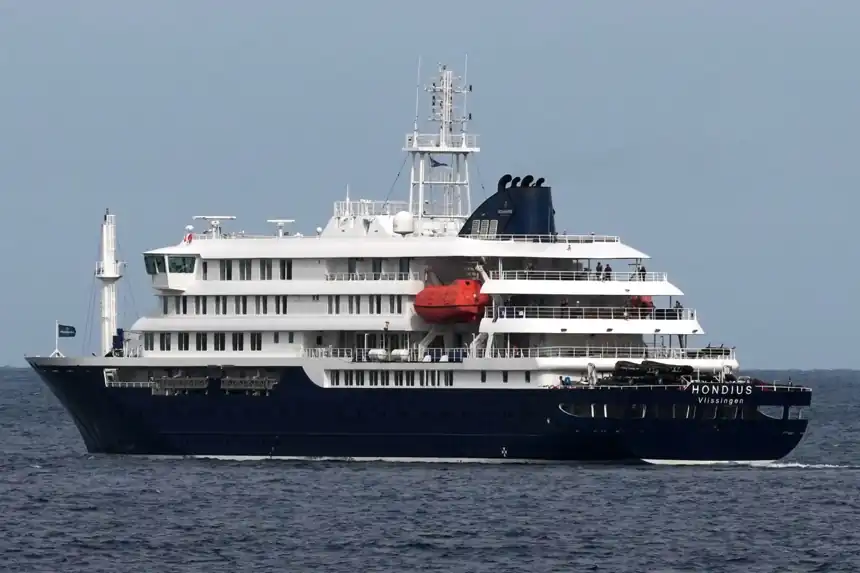
A rare hantavirus outbreak aboard the Dutch-flagged expedition cruise ship MV Hondius has triggered a multinational health response after investigators determined passengers and crew were exposed for weeks before the virus was identified, raising concerns over international disease tracing and maritime outbreak management.
According to reporting from The Associated Press, Reuters and the World Health Organization (WHO), the outbreak involved the Andes strain of hantavirus — one of the few variants known to allow limited human-to-human transmission. At least three passengers have died and several others have fallen ill after the vessel traveled from Argentina through the South Atlantic toward Europe.
The ship departed Ushuaia, Argentina, on April 1 for a polar expedition route that included Antarctica and remote Atlantic islands. Health authorities later determined that the first known infected passenger, a 70-year-old Dutch man, began showing symptoms on April 6 before dying aboard the ship five days later. Initially, the illness was not recognized as hantavirus.

Timeline Reveals Delayed Identification of Outbreak
The evolving timeline has become central to international investigations examining how the virus spread undetected among passengers from multiple countries.
April 1:
The MV Hondius departed Ushuaia with approximately 150 passengers and crew members onboard. Argentine authorities later said no passengers showed symptoms before departure.
April 6:
The first passenger developed symptoms including fever and respiratory illness. The Andes virus often begins with flu-like symptoms before rapidly progressing to severe lung complications.
April 11:
The first passenger died aboard the vessel. At the time, the death was reportedly attributed to natural causes, and the possibility of hantavirus was not yet publicly identified.
April 13–15:
The ship continued its itinerary with a stop at Tristan da Cunha, one of the world’s most isolated inhabited islands, while other passengers reportedly began experiencing symptoms.
■ Related News




April 24:
The vessel reached St. Helena, where the first victim’s body was removed from the ship. Around 30 to 40 passengers also disembarked there before the outbreak had been formally confirmed, prompting later international tracing efforts. The dead man’s wife, who had also become ill, left the vessel and traveled onward to South Africa.
April 26:
The wife of the first victim died in a Johannesburg hospital after collapsing before a planned flight to Amsterdam. Health officials later confirmed the Andes strain of hantavirus in South Africa.
Late April to Early May:
Additional passengers developed symptoms including pneumonia and acute respiratory distress. A British passenger was evacuated to intensive care in Johannesburg, while a German passenger later died aboard the vessel on May 2.
May 3–7:
The ship arrived near Cape Verde but faced restrictions before eventually being cleared to continue toward Spain’s Canary Islands under strict health protocols. By May 6, WHO confirmed at least five laboratory-confirmed cases and several suspected infections across multiple countries, including Switzerland, the Netherlands and South Africa.
International Contact Tracing Efforts Intensify
The delayed recognition of the outbreak has complicated international containment efforts because passengers dispersed across several continents before authorities confirmed the virus.
WHO officials said exposed passengers and close contacts in Europe, Africa, North America and Asia are now being monitored due to the Andes strain’s rare ability to spread between humans through close contact. However, WHO stressed that the broader public health threat remains low compared with airborne respiratory pandemics such as COVID-19.
Health authorities are particularly focused on tracking passengers who left the ship at St. Helena before the outbreak was publicly identified. Reuters reported that several symptomatic individuals later traveled internationally, complicating cross-border surveillance operations.
Investigators are also examining whether the virus may have originated during a birdwatching excursion in Argentina before embarkation, where passengers could have encountered rodent-contaminated environments linked to hantavirus transmission.
Maritime Health Protocols Face Renewed Scrutiny
The outbreak has reignited international debate over health preparedness aboard remote expedition cruises, where medical isolation and laboratory testing can be difficult during long voyages far from major ports.
Passengers interviewed by AP and other outlets described confusion and delayed communication onboard as illnesses spread over several weeks before authorities publicly confirmed the outbreak. Some travelers reported that bodies remained aboard the ship for days due to logistical challenges involving remote Atlantic stops.
Experts say the case highlights vulnerabilities in managing rare infectious diseases aboard expedition vessels operating across isolated maritime routes. The incident also underscores how modern cruise travel can rapidly internationalize localized outbreaks before symptoms become fully recognized.
As the MV Hondius continues toward the Canary Islands under international monitoring, health authorities worldwide are expected to continue tracing contacts and assessing whether additional infections emerge during the virus’s incubation period, which can extend for several weeks.