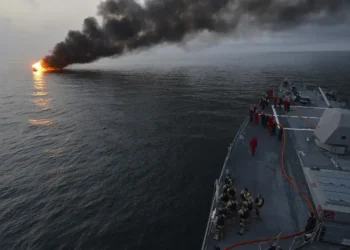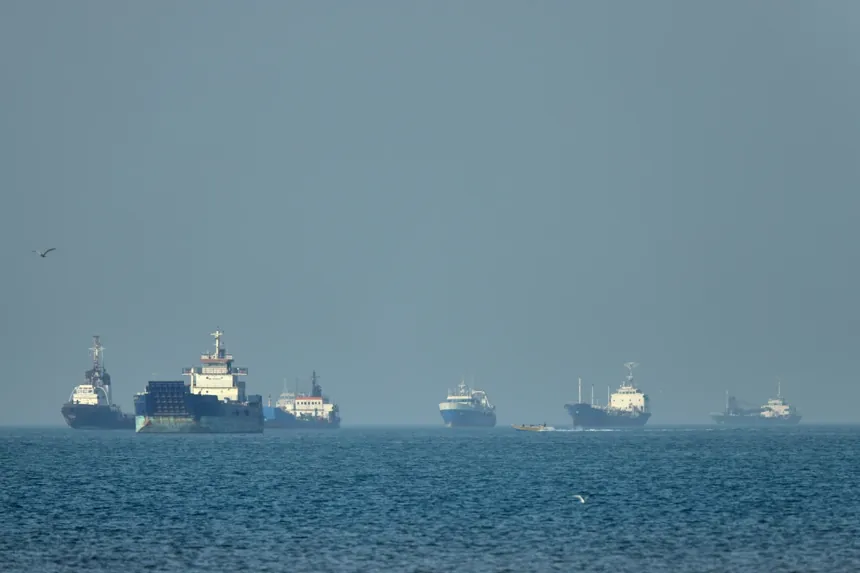
The United States disabled two additional Iranian oil tankers in the Strait of Hormuz on Friday after overnight exchanges of fire between American and Iranian forces, marking another escalation in the widening maritime confrontation threatening one of the world’s most critical energy corridors.
According to U.S. Central Command, American forces targeted the tankers after they allegedly attempted to breach a U.S.-enforced blockade on Iranian ports. The military said no U.S. ships were damaged during the latest confrontation, though officials confirmed Iranian forces launched attacks against three American Navy vessels operating in the strait.
The incidents further strained an already fragile ceasefire framework between Washington and Tehran that emerged following months of military escalation tied to the broader Iran-Israel conflict. President Donald Trump insisted Friday that the ceasefire remained in effect but warned Iran against additional provocations, while Secretary of State Marco Rubio said the United States would respond forcefully to threats against American personnel.

Iranian state media confirmed exchanges of fire near Qeshm Island but provided limited operational details. Tehran has accused Washington of undermining ongoing diplomatic efforts through military escalation in the Gulf region.
Global Energy Security Faces Renewed Pressure
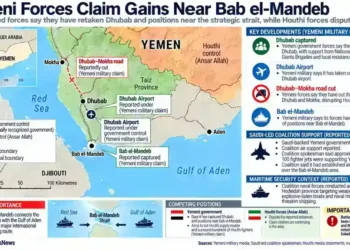
The Strait of Hormuz remains one of the world’s most strategically important maritime chokepoints, handling roughly a fifth of global oil and liquefied natural gas shipments before the crisis severely disrupted traffic.
Since the outbreak of the 2026 Iran conflict, commercial shipping through the strait has sharply declined amid Iranian restrictions, naval confrontations and rising insurance risks for shipping operators. Analysts say the latest clashes could intensify fears of prolonged supply disruption affecting global fuel markets and inflation.
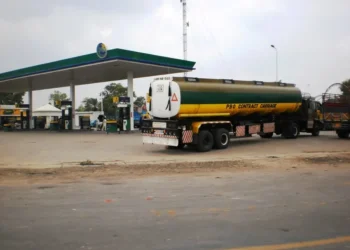
U.S. officials said Friday’s actions were intended to enforce the naval blockade imposed on Iran in April after negotiations failed to reopen maritime transit routes. American military footage released publicly showed fighter aircraft striking the smokestacks of the two Iranian tankers identified in reports as the M/T Sea Star III and M/T Sevda.
Regional governments and major energy-importing nations have become increasingly alarmed by the possibility of a prolonged disruption in Gulf shipping. South Korea confirmed this week that one crude tanker successfully completed passage through the strait after weeks of uncertainty surrounding commercial transit safety.
■ Related News


Diplomatic Efforts Struggle to Contain Escalation
The latest military exchanges occurred as Washington awaited Tehran’s response to a proposed agreement aimed at easing hostilities, reopening the Strait of Hormuz and addressing Iran’s nuclear activities.
Diplomatic mediation efforts involving Qatar and Gulf states continue behind closed doors, though multiple international observers say prospects for a durable settlement remain uncertain. Iranian officials accused the United States of jeopardizing negotiations through continued military operations targeting Iranian vessels and infrastructure.
At the same time, the United Arab Emirates reported intercepting another barrage of Iranian drones and missiles on Friday, suggesting the conflict’s regional dimensions continue expanding beyond maritime confrontations alone.
China and several European governments have meanwhile urged restraint, warning that sustained instability in the Gulf could produce broader consequences for global trade, shipping insurance markets and energy supply chains. Reuters and AP reporting over recent weeks indicated that more than 150 vessels had at times remained stranded or anchored outside the strait because of security concerns.
Environmental and Strategic Risks Continue to Grow
Beyond military tensions, satellite imagery released this week revealed a significant oil spill near Iran’s Kharg Island export terminal, adding environmental concerns to the growing geopolitical crisis.
Experts cited in international reporting warned that continued attacks involving oil infrastructure and tankers raise the risk of ecological damage affecting Gulf coastlines and regional fisheries. The precise cause of the spill has not been independently confirmed.
Security analysts say the confrontation increasingly reflects a broader struggle over control of global maritime trade routes and regional influence in the Gulf. The U.S. blockade, Iranian restrictions on shipping and repeated naval clashes have transformed the Strait of Hormuz into one of the world’s most volatile geopolitical flashpoints.
While officials on both sides publicly continue referring to ceasefire discussions, Friday’s incidents demonstrated how quickly maritime confrontations could trigger wider escalation with global economic implications. Diplomatic observers warn that unless negotiations produce tangible progress soon, the Gulf crisis may evolve into a prolonged conflict affecting international energy markets and regional security architecture for months to come.