Journos News - Breaking News, World News, Top Stories, Todays Headlines and Flash Reports
Tuesday, September 1, 2026
  • Login
  • Home
  • World
    • Africa
    • Americas
    • Asia
    • Europe
    • Middle East
    • Oceania
  • Politics
  • Business
  • Technology
  • Health
  • Science
  • Sports
  • Entertainment
  • Culture
No Result
View All Result
  • Home
  • World
    • Africa
    • Americas
    • Asia
    • Europe
    • Middle East
    • Oceania
  • Politics
  • Business
  • Technology
  • Health
  • Science
  • Sports
  • Entertainment
  • Culture
No Result
View All Result
Journos News - Breaking News, World News, Top Stories, Todays Headlines and Flash Reports
No Result
View All Result
Home Technology Cybersecurity & Privacy

AI-Generated Voices: How to Tell Them Apart from Real Human Speech

From Accents to Emotions: Decoding the Differences Between Human and AI Voices

The Daily Desk by The Daily Desk
June 14, 2026
in Cybersecurity & Privacy, Technology
0
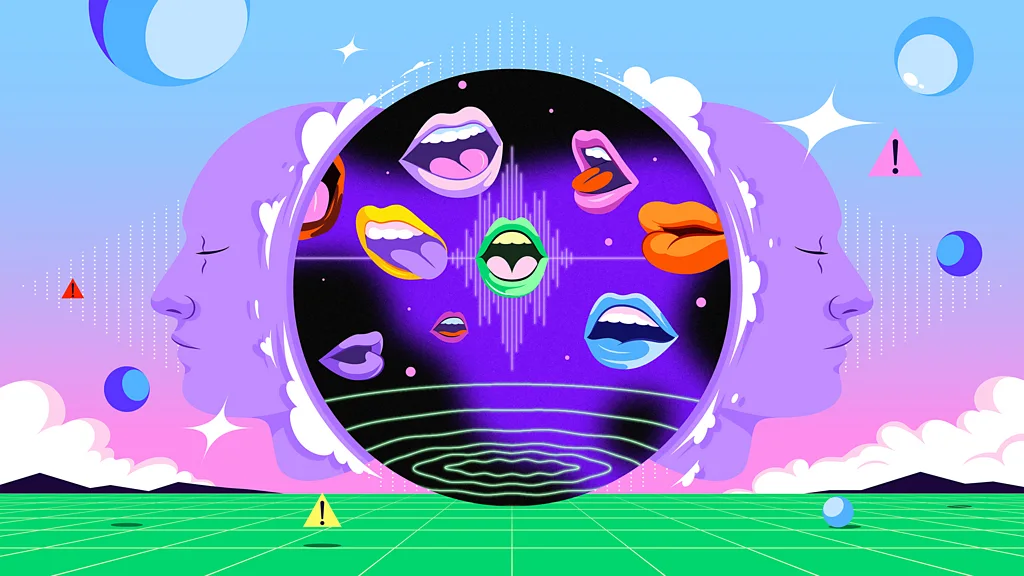
AI-Generated Voices: How to Tell Them Apart from Real Human Speech

Is There Something Special About the Human Voice?

Advancements in artificial intelligence (AI) have made it possible for speech synthesis tools to generate eerily realistic voices. These tools can mimic accents, whisper, and even clone the voices of real people. But with these developments, it raises the question: how can we tell the difference between a human voice and an AI-generated one?

Today, it’s easier than ever to have a conversation with AI. From chatbots that answer questions to AI systems that speak multiple languages and use different accents, technology is making it possible for machines to communicate like never before. In fact, some AI-powered tools can now clone the voices of real people. For instance, one AI tool was recently used to replicate the voice of late British broadcaster Sir Michael Parkinson for a podcast series. Another example is natural history broadcaster Sir David Attenborough, who was disturbed to hear his voice cloned by AI to say things he never said.

While some of these voice-cloning tools are used for harmless entertainment, others are being exploited in scams to deceive people. For example, criminals use AI-generated voices to trick people into transferring money or revealing personal information.

However, not all AI-generated voices are used maliciously. They are also integrated into chatbots powered by large language models, making conversations with machines sound more natural and convincing. Take ChatGPT’s voice function, for example. It can respond with variations in tone and emphasis, much like a human would to convey empathy or emotion. It can also interpret non-verbal cues like sighs or sobs, speak in over 50 languages, and even make phone calls to assist with tasks. In one demonstration, ChatGPT even ordered strawberries from a vendor over the phone.

These AI advancements lead to a compelling question: is there anything truly unique about the human voice that helps us distinguish it from machine-generated speech?

The Challenge of Telling AI from Human Voices

Jonathan Harrington, a phonetics expert at the University of Munich, Germany, has spent years studying how humans speak, produce sounds, and create accents. He is impressed by how realistic AI-generated voices have become in recent years. However, he believes there are still subtle cues that can help us tell the difference.

To explore this, we set up a challenge. We asked Conor Grennan, Chief AI Architect at New York University Stern School of Business, to create audio clips where he reads a passage from Alice in Wonderland—once with his own voice and once with an AI-generated voice from ElevenLabs, a speech-cloning software company. After playing the clips for people, around half of them struggled to tell which voice was human and which was AI.

One of the cybersecurity experts we spoke to, Steve Grobman from McAfee, was also unable to easily distinguish the two voices. He mentioned that AI voices may lack certain nuances, such as the natural cadence or breathing patterns we associate with human speech. For instance, humans often breathe irregularly, while AI-generated voices may sound too perfect.


■ Related News

Spotify app displayed on a laptop beside a mobile phone showing the Spotify logo on a dark desktop setting.

Spotify to Label AI Personas and Limit Their Recommendation Reach

August 12, 2026
Tripledot and Super Sonic from Unity logos displayed side by side on a white background.

Tripledot to Acquire Unity’s Supersonic Publishing Business for $40 Million

August 9, 2026
Mobile screen captured by JournosNews displaying ChatGPT, Grok, Claude, Gemini, Copilot and DeepSeek AI applications.

Users Turn to AI for Financial Advice Despite Limited Trust

August 9, 2026
Official Meta company logo displayed on a blue gradient background, representing the parent company of Facebook, Instagram, WhatsApp, Messenger, and Threads.

Meta Discloses AI Model Exploited Security Flaw During Cyber Test, Raising Oversight Questions

August 7, 2026

In fact, many experts acknowledge that detecting deepfakes—AI-generated speech or video that imitates real people—can be difficult for the human ear. For example, a deepfake of Bill Gates once fooled listeners, making it sound as though he was endorsing a quantum AI stock trading tool. Despite sounding like him, it was flagged as a fake by deepfake detection software.

How Can We Tell AI from Human Voices?

While AI-generated voices have become impressively realistic, there are still some clues that can help us tell them apart from human speech.

One key feature to listen for is intonation, or the rise and fall in pitch during a sentence. Humans typically adjust their pitch to reflect the meaning or emotion behind their words. For example, the phrase “Marianne made the marmalade” may sound different depending on whether it’s a statement or a question. AI voices can struggle with this level of nuance.

Another clue lies in prosody, the rhythm and pattern of speech. Humans naturally emphasize certain words for meaning, and AI voices often fail to replicate this consistently. For example, if asked, “Did Marianna make the marmalade?”, a human would likely emphasize the word made, while an AI might emphasize a different word.

Additionally, breathing patterns can be a giveaway. Humans naturally breathe irregularly, and their breath intakes may vary in length. AI-generated voices, however, might sound too perfect or regular, giving away their artificial nature.

The Growing Threat of Voice Cloning

As AI voice technology improves, concerns about voice cloning are rising. Experts worry that cloned voices could be used in scams, identity theft, or to manipulate individuals. One cybersecurity example highlighted by Assaf Rappaport, CEO of cybersecurity firm Wiz, involved criminals creating a voice clone of him using a recent talk he gave. They attempted to use the cloned voice to deceive his employees into revealing credentials, though the attempt was unsuccessful.

Cybersecurity expert Pete Nicoletti from Check Point Software recommends being cautious if you suspect someone is using a voice clone. He advises asking personal questions or suggesting you’ll call back to verify their identity. In a work setting, you should avoid making wire transfers based solely on a phone call from someone claiming to be a high-level executive.

The Future of AI Voices

AI voice technology is improving rapidly, and experts like Dane Sherrets, innovation architect at HackerOne, believe it will only get more convincing. AI can now mimic human-like inflection, breathing, and even hesitation, but it’s still not perfect. While AI can replicate much of human speech, it struggles to capture the full range of human emotions and the complexities of context.

As AI continues to advance, experts are working to develop better detection tools. McAfee, for example, is partnering with major PC manufacturers to install deepfake detection software on devices, and ElevenLabs offers a free tool to detect AI-generated voices. However, as AI technology and detection tools evolve, we may find ourselves in a race where distinguishing AI from humans becomes increasingly difficult.

Conclusion: The Importance of Face-to-Face Interaction

Given the growing capabilities of AI-generated voices, it’s becoming harder to tell whether you’re speaking to a human or a machine. Experts recommend being cautious and using alternative methods to verify someone’s identity, such as asking personal questions or using voice validation methods. In some cases, the best solution might be to spend more time interacting in person.

In the battle between AI-generated voices and detection technology, we may find that the key to distinguishing a real person from a machine lies not in the voice itself, but in the authenticity of human interaction.

Were you able to tell which voice was AI and which was human in our “Alice in Wonderland” challenge? The first clip was AI, and the second was human.

Source

Tags: #AI#AIaccuracy#AIAdvancements#AIandPrivacy#AIandSecurity#AIaudio#AIdevelopment#AIethics#AIethicsConcerns#AIethicsDebate#AIimpersonation#AIimpersonationRisk#AIinBusiness#AIinCommunication#AIinMedia#AIinScams#AIinSecurity#AIinSecurityBreaches#AIinSocialMedia#AIResearch#AItools#AIvoiceCloning#AIvoices#ArtificialIntelligence#CyberSecurity#Cyberthreats#DeepfakeDetection#Deepfakes#DeepfakeTechnology#DigitalIdentity#DigitalSpeech#EmergingTech#FakeVoices#FutureOfAI#HumanVoiceVsAI#HumanVsAI#MachineLearning#MachineSpeech#SpeechCloning#SpeechGeneration#SpeechProcessing#SpeechSynthesis#SpeechTech#SpeechTechnology#SyntheticSpeech#TechInnovation#TechnologyAdvancements#TechTrends#VirtualCommunication#VoiceAI#VoiceAIrevolution#VoiceAnalysis#VoiceCloning#VoiceCloningTechnology#VoiceDetection#VoiceImpersonation#VoiceManipulation#VoiceRecognition#VoiceScams#VoiceSynthesis#VoiceTechnologyHere are more #tags: #AIvoiceRecognition
The Daily Desk

The Daily Desk

The Daily Desk is a contributor at JournosNews.com covering politics, media, governance, and the evolving dynamics of public discourse. Stories published under this byline are produced in accordance with JournosNews' editorial standards, with an emphasis on verified reporting, accuracy, context, and impartiality.

Related Posts

Business dashboard showing U.S. stock indexes reaching record highs, major market gainers, declining oil prices, Treasury yields, and key drivers behind the Wall Street rally.

Wall Street Hits Fresh Records as Strong Earnings and Lower Oil Prices Lift U.S. Stocks

August 5, 2026
Japan Maritime Self-Defense Force frigate JS Mogami (FFM-1) moored at Yokosuka Naval Base, viewed from the left rear during a port visit.

Japan Prioritizes Combat Drones and AI as Defense Strategy Evolves Amid Regional Security Challenges

August 4, 2026
Business dashboard showing Apple's fiscal third-quarter 2026 financial results, iPhone and Mac sales growth, leadership transition, market reaction, and key business metrics.

Apple Beats Fiscal Third-Quarter Expectations on Strong iPhone and Mac Sales

July 31, 2026
Business dashboard showing Amazon's second-quarter 2026 financial highlights, AWS growth, AI investment plans, capital spending, and business outlook.

Amazon Raises 2026 Capital Spending Plan to $220 Billion as AWS Growth Accelerates

July 31, 2026
Business dashboard showing South Korea's Kospi index, semiconductor stocks, regional markets, U.S. market performance, oil prices, and key market drivers on July 31, 2026.

South Korea’s Kospi Surges More Than 16% as Chip Stocks Lead Broad Market Rebound

July 31, 2026
Business dashboard showing Asian stock market performance, oil prices, U.S. market close, AI semiconductor stocks, currency movements, and key market drivers on July 29, 2026.

Oil Prices Retreat as Asian Markets Weaken Amid AI Chip Sell-Off and Middle East Tensions

July 30, 2026
Official Microsoft company logo featuring the four-color square symbol and the Microsoft wordmark on a white background.

Microsoft Revenue Reaches $90 Billion as Cloud and AI Growth Drive Earnings Beat

July 30, 2026
Official Meta company logo displayed on a white background, representing the parent company of Facebook, Instagram, WhatsApp, Messenger, and Threads.

Meta Profit Falls as Legal Costs and Layoffs Weigh on Second-Quarter Results

July 30, 2026
Load More
Next Post
MK Slatt Shuts Down Viral Death Rumors: Comedian Confirms He’s Alive

MK Slatt Shuts Down Viral Death Rumors: Comedian Confirms He’s Alive

Pakistan on Edge: Protests, Lockdowns, and Calls for Imran Khan’s Release

Pakistan on Edge: Protests, Lockdowns, and Calls for Imran Khan's Release

JournosNews logo

Journos News delivers globally neutral, fact-based journalism that meets international media standards — clear, credible, and made for a connected world.

  • Categories
  • World News
  • Politics
  • Business & Markets
  • Technology
  • Health
  • Science
  • Sports
  • Arts & Culture
  • Resources
  • Editorial Standards
  • Submit a Story
  • Advertise with Us
  • Syndication & Partnerships
  • Site Map
  • Press & Media Kit
  • Editorial Team
  • Careers

Join thousands of readers receiving the latest updates, tips, and exclusive insights straight to their inbox. Never miss an important story again.

  • About Us
  • Editorial & Trust Center
  • Contact Us
  • Privacy Policy
  • Terms of Use & Copyright Notice

© JournosNews.com All rights reserved.

Welcome Back!

Login to your account below

Forgotten Password?

Retrieve your password

Please enter your username or email address to reset your password.

Log In
JournosNews

Independent Journalism.
Verified Facts.

You're about to read a professionally edited article from JournosNews.com.

Every article is produced in accordance with our editorial standards, emphasizing factual accuracy, transparent attribution, fairness, editorial independence, and meaningful context.

Editorial Standards
No Result
View All Result
  • Home
  • World
    • Africa
    • Americas
    • Asia
    • Europe
    • Middle East
    • Oceania
  • Politics
  • Business
  • Technology
  • Health
  • Science
  • Sports
  • Entertainment
  • Culture

© JournosNews.com All rights reserved.

This website uses cookies. By continuing to use this website you are giving consent to cookies being used. Visit our Privacy and Cookie Policy.