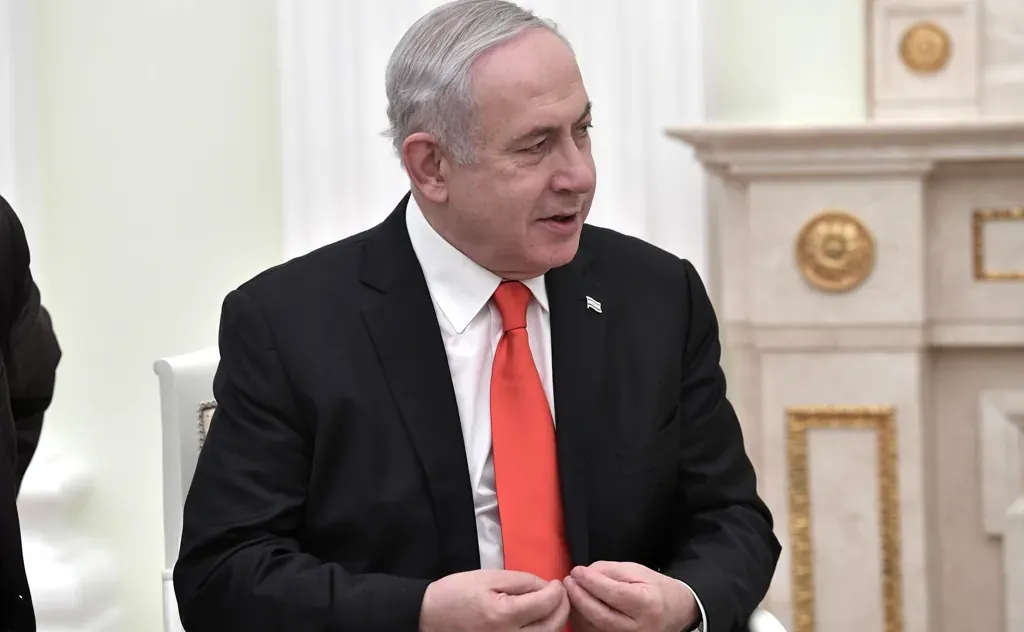
JERUSALEM, Israel – Prime Minister Benjamin Netanyahu faces difficult coalition negotiations after his governing bloc lost its parliamentary majority in Israel’s October 27 election. The Central Elections Committee’s published final allocation gives his bloc 53 seats in the 120-member Knesset, against 48 for the main opposition grouping and 19 for the Arab-led parties.
No grouping has the 61 seats needed for a conventional parliamentary majority. The result leaves Netanyahu short of the support required to form a government with his existing allies. It also gives the opposition no automatic route to replace him.
The committee published the final seat allocation on October 30. It reported turnout of 77.9%, with 5,716,665 votes cast. The results are due to be submitted to President Isaac Herzog on November 4 after the committee completes its remaining checks and inquiries. The new Knesset is scheduled to convene on November 10.

The election produced three distinct parliamentary groupings. Netanyahu’s Likud-led bloc finished with 53 seats. Gadi Eisenkot’s opposition grouping won 48. The Joint List and Ra’am, the two Arab-led parties, secured 19 seats combined.
Those figures describe political groupings, not signed coalition agreements. The negotiations will depend on whether parties are willing to cooperate across ideological and political divisions.
Netanyahu’s Bloc Loses 15 Seats
The pro-Netanyahu bloc fell from 68 seats in the outgoing Knesset to 53 in the new parliament. That is a loss of 15 seats and leaves the governing camp eight short of a majority.
Likud remains the largest party, with 27 seats. But the party’s result does not give Netanyahu enough parliamentary support to continue with the same coalition arrangement.
The other parties in his governing bloc also delivered weaker or unchanged results. Shas fell from 11 seats in the outgoing Knesset to six. Religious Zionism declined from seven to six. United Torah Judaism retained seven, while Otzma Yehudit increased from six to seven.


The combined result reflects a loss of support across several parties that had sustained Netanyahu’s government. It does not mean that every voter who left those parties supported the opposition. Israel’s multiparty system distributes parliamentary seats among parties that may have sharply different political priorities.
The opposition also gained seats without becoming a unified political force. Its 48-seat grouping consists of Yashar, B’Yachad, The Democrats and Yisrael Beytenu. These parties share opposition to Netanyahu remaining prime minister, but disagree over the role of Arab parties, religious parties and other major policy questions.
The Arab-led parties increased their combined representation from 10 seats in the outgoing Knesset to 19. Their result gives them greater parliamentary leverage than in the previous parliament. It does not, however, guarantee that they will enter a government or support the same candidate.
The election therefore changed the balance of power without settling who will govern.
The Opposition’s 48 Seats Do Not Guarantee a Government
Eisenkot’s opposition grouping has 48 seats, leaving it 13 short of a majority. Adding the 19 Arab-led lawmakers would produce 67 seats on paper.
That arithmetic makes Arab-party cooperation central to the negotiations. But it assumes that all four opposition parties would accept an arrangement involving the Joint List or Ra’am. They have not made that commitment.
The clearest obstacle is Avigdor Lieberman, leader of Yisrael Beytenu, which holds seven seats. Lieberman has repeatedly ruled out joining or supporting a government that relies on Arab-led parties. He has also rejected a government led by Netanyahu.
Lieberman says he wants a coalition of Zionist parties and has excluded Ra’am, the Joint List and the ultra-Orthodox parties from his preferred arrangement. He has also called for a state commission of inquiry and a universal military draft law as priorities for the next government.
His position creates a difficult calculation for Eisenkot. If Yisrael Beytenu withdraws its seven seats from the opposition grouping, the remaining three parties would hold 41. Adding all 19 Arab-led lawmakers would bring that total to 60, still one short of 61.
That leaves several possible paths, none straightforward. Eisenkot could try to persuade Lieberman to change his position, seek support from lawmakers outside the existing opposition grouping, or negotiate an arrangement with Arab parties that could include abstentions or outside parliamentary backing.
The parties would also have to agree on a governing programme. Their opposition to Netanyahu does not mean they share the same positions on security, religion, the Palestinian issue, military service or the future of Israel’s settlements.
Yair Golan Backs Cooperation With Arab Parties
Yair Golan, leader of The Democrats, has been more open than his opposition partners to cooperation with Arab-led parties.
Golan called for a government of change that would work with Israel’s Arab citizens. He argued that Arab voters should be treated as equal participants in the country’s political system and that the opposition had a responsibility to pursue a change of government.
His position gives the opposition one potential route to using the 19 Arab-led seats. But The Democrats have only eight lawmakers. Golan cannot deliver an agreement without Eisenkot, Bennett and Lieberman.
Eisenkot’s Yashar party and Naftali Bennett’s B’Yachad have previously ruled out forming a government with Arab parties. Their campaign positions now collide with the parliamentary arithmetic.
The distinction between a coalition partner and outside parliamentary support could become decisive. A party may agree to support a government in a confidence vote or abstain on selected votes without accepting ministerial positions or joining the governing coalition.
That arrangement could allow an opposition-led government to take office without all Arab lawmakers becoming coalition members. But it would require agreement on the terms of support, including policy commitments and the limits of cooperation.
Golan’s public call for cooperation does not establish that the other opposition leaders have accepted it. The parties must still decide whether they are prepared to negotiate with Arab representatives and what concessions they would accept.
Joint List Offers Outside Support With Conditions
Joint List chairman Yousef Jabareen has said his party is prepared to provide a parliamentary safety net for a government that replaces Netanyahu. That means supporting an alternative administration from outside the coalition rather than necessarily joining it.
Jabareen has rejected the idea of giving a potential government a blank cheque. He has identified demands including a funded plan to combat violent crime in Arab communities, action on housing and home demolitions, greater equality for Arab citizens and a diplomatic path toward Palestinian statehood.
The Joint List’s position could give an opposition-led government a route to parliamentary support without requiring the party to take ministerial positions. But the conditions would be politically difficult for some of the Jewish-led opposition parties, particularly those with more conservative positions on the Palestinian issue and national security.
Ra’am, led by Mansour Abbas, has a different political approach. The party has sought a role in negotiations over government formation and has previously shown greater willingness than the Joint List to consider participation in a governing coalition.
That distinction matters. The Joint List’s offer of outside support is not the same as Ra’am joining a government. The two parties have separate leaderships and political strategies, even though they share an Arab-led parliamentary grouping.
Together, the parties have 19 seats: 11 for the Joint List and eight for Ra’am. Their combined strength could make them decisive in negotiations, but they do not necessarily have identical conditions or preferences.
Any agreement would need to specify whether the parties would join the government, support it from outside, or abstain on particular votes. Without that clarity, the 19 seats cannot be treated as a guaranteed governing majority.
Lieberman’s Position Narrows the Opposition’s Options
Lieberman’s refusal to rely on Arab-led parties is not simply a disagreement over ministerial appointments. He has rejected both direct participation and indirect parliamentary dependence.
He has cited statements and actions by Arab lawmakers that he considers unacceptable, including positions on the war, Hamas and proceedings against Israel at the International Court of Justice. Those are Lieberman’s political allegations and interpretations, not neutral findings about every member of the Joint List or Ra’am.
His position also reflects a broader political divide. Yisrael Beytenu is a secular right-wing party. It opposes Netanyahu but also rejects cooperation with parties it regards as outside its preferred Zionist coalition framework.
Lieberman has left open the possibility of working with Likud without Netanyahu. That could provide one route toward a government that brings together parties currently divided over the prime minister’s future.
But such an arrangement would require major political changes. Likud would have to consider replacing its leader or accepting a different coalition structure. Other opposition parties would also have to decide whether they could govern with Likud lawmakers.
A unity government could theoretically reduce dependence on Arab-party support. It could also bring together parties with conflicting positions on judicial reform, military service, security policy and the conduct of the war.
No agreement on such an arrangement has been established. It remains a possible negotiating scenario, not a confirmed plan.
Netanyahu Could Seek a Unity Arrangement
Netanyahu remains prime minister while the government-formation process proceeds. The election result does not automatically remove him from office.
His bloc’s 53 seats leave him short of a majority, but he may still attempt to recruit lawmakers or negotiate with parties outside his existing alliance.
A unity arrangement involving opposition parties could offer another route. Some opposition leaders have rejected serving in a government led by Netanyahu, while Lieberman has said he could consider Likud as a partner if Netanyahu were no longer leading it.
That leaves a potential distinction between joining Netanyahu personally and joining a government that includes Likud. The latter could become a subject of negotiation if parties decide that another election would be worse than compromise.
The difficulty is that the opposition parties have campaigned against Netanyahu and have different ideas about the government’s future direction. A unity government could also require agreement on the distribution of senior ministries and major policy priorities.
Netanyahu’s political position is therefore weakened, but not resolved. He remains one of the central figures in the negotiations, and the final outcome will depend on the recommendations parties submit to Herzog and the agreements they reach afterward.
Neither Netanyahu nor Eisenkot can claim a parliamentary majority based on the election results alone.
President Herzog’s Role in Government Formation
President Isaac Herzog will oversee the next formal stage of the process. Under Israel’s Basic Law: The Government, the president consults representatives of the elected parliamentary groups before assigning a member of the Knesset the task of forming a government.
The president is not required to appoint the leader of the largest party automatically. The central consideration is which lawmaker appears most likely to secure the Knesset’s confidence.
Herzog said on October 29 that he would meet representatives of all parliamentary factions after receiving the official election results. He urged political leaders to consider what would be best for the country as they approach the consultations.
The Central Elections Committee has said it will submit the results to Herzog on November 4 after completing its review of complaints and possible errors. The consultations are expected to follow that formal submission.
Once Herzog assigns the task, the designated lawmaker has 28 days to form a government. The president may grant an extension of up to 14 additional days.
If the first candidate fails, the law allows the president to assign the task to another member of the Knesset. The outgoing government remains in office until a new government receives the Knesset’s confidence.
The new parliament is scheduled to be sworn in on November 10. That date does not depend on whether coalition negotiations have already produced a government.
Another Election Is Possible but Not Inevitable
If the first candidate fails to form a government, the process can move to another candidate. The law also provides a further route through which 61 members of the Knesset can ask the president to give a named lawmaker the opportunity to form a government.
That candidate would receive 14 days. If no candidate succeeds through the available procedures, the Knesset can be dissolved and another election called.
The possibility of another election is real, but it is not automatic. Parties have several opportunities to negotiate before the process reaches that point.
The legal timetable also means that Israel could spend weeks or months with the outgoing government still carrying out its duties. The new Knesset can convene and begin parliamentary work even if a new coalition has not yet been established.
A prolonged deadlock could increase pressure on parties to reconsider their campaign promises. It could also encourage lawmakers to explore arrangements that they previously rejected, particularly if another election appears likely.
The immediate challenge is to find a government that can win parliamentary confidence and maintain enough support to pass budgets and legislation. A narrow agreement that cannot survive major policy disputes may not provide lasting stability.
Election Interference Allegations and the Committee’s Response
The election also produced allegations of irregularities and possible foreign interference.
Netanyahu and Likud raised claims that Arab-majority parties had benefited from improper activity and alleged that foreign money had influenced the vote. These accusations became politically sensitive after the Arab-led parties won a record 19 seats.
The Central Elections Committee initially said it had found no evidence of systematic ballot tampering. It said individual complaints about missing or defaced ballot papers were being examined.
The committee later confirmed that an investigation had been opened following classified intelligence presented by the head of the Shin Bet to the committee chairman. Acting committee director-general Dean Livne said the investigation would not affect the results submitted to Herzog and did not concern any particular community.
President Herzog also called for evidence and allegations to be investigated. He warned against tarnishing an entire community that had exercised its right to vote.
The committee’s statements do not establish that the allegations against Arab parties are true. Nor do they mean that every individual complaint has been resolved. The investigation and the published election results must be treated as separate matters.
The committee’s position is that the investigation will not change the final results being submitted to the president. The allegations should therefore not be presented as proof that the election was stolen or that Arab voters acted unlawfully.
The Next Government’s Direction Remains Uncertain
The election has weakened Netanyahu’s parliamentary position and given Arab-led parties an unprecedented level of representation. But it has not produced a clear governing alternative.
An opposition government supported by Arab parties would require political concessions and a decision by parties that previously rejected such cooperation. A unity arrangement could avoid some of those difficulties, but it would demand compromises over Netanyahu’s leadership and major policy questions.
The Joint List’s preference for conditional outside support differs from Ra’am’s more flexible approach to coalition participation. Lieberman’s refusal to rely on Arab parties further narrows the opposition’s options.
The negotiations will also shape Israel’s domestic and regional policy. Disputes over military service, relations with Arab citizens, settlement policy, the Palestinian issue, judicial reform and security priorities could determine whether a coalition can remain together.
For now, Netanyahu remains prime minister, Herzog is preparing to consult the elected parties, and the new Knesset is scheduled to convene on November 10.
The central question is no longer which party won the most seats. It is whether any combination of parties can agree on a government that commands parliamentary confidence and can govern beyond the immediate negotiations.
Reporting Credit
Reporting Credit: Journos News reviewed the Central Elections Committee’s published election information and timetable, Israel’s Basic Law: The Government, the President of Israel’s statements on election integrity and government formation, and public statements attributed to leaders of Likud, Yashar, The Democrats, Yisrael Beytenu and the Arab-led parties. The report also examined the published positions of Joint List chairman Yousef Jabareen and Yisrael Beytenu chairman Avigdor Lieberman on coalition participation and outside parliamentary support. The final seat allocation has been published by the committee, but formal submission and publication in the Official Gazette are scheduled for November 4. The article distinguishes party groupings from confirmed coalition agreements and attributes unresolved political allegations to those making them.