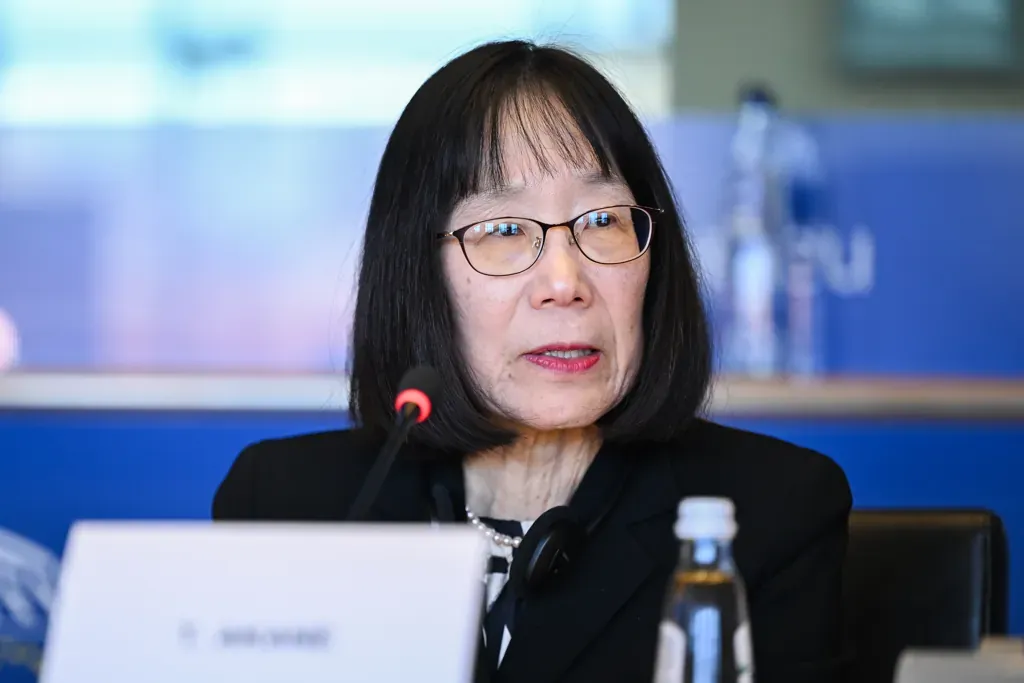
TOKYO, Japan – Japan has condemned Russia’s requests to extradite International Criminal Court (ICC) President Tomoko Akane and eight other current and former court officials. Tokyo called the requests unjust and unacceptable.
Russia’s Prosecutor General’s Office announced on October 8 that it had asked the Netherlands to detain and extradite all nine officials. It also sent requests to several other countries but did not identify them publicly.
The Netherlands is home to the ICC headquarters in The Hague. However, the available announcement does not establish which other governments received Russia’s requests.

Deputy Chief Cabinet Secretary Masanao Ozaki said on October 9 that Japan had protested to Moscow. He added that Tokyo could lodge further protests and would continue coordinating with the ICC and other member states.
The requests followed Russian court proceedings against the officials over the ICC’s 2023 arrest warrant for Russian President Vladimir Putin. However, a request does not mean that the Netherlands or any other country has agreed to extradite them.
Who Russia Wants to Extradite
Russia’s requests target Akane and eight other current or former ICC officials. They include judges, former court leaders and a former prosecutor.
The nine officials are:
- Tomoko Akane – ICC president and a Japanese national.
- Rosario Salvatore Aitala – ICC judge and former first vice-president.
- Reine Alapini-Gansou – ICC judge and former second vice-president.
- Sergio Gerardo Ugalde Godínez – ICC judge.
- Haikel Ben Mahfoudh – ICC judge.
- Luz del Carmen Ibáñez Carranza – ICC judge.
- Piotr Hofmański – former ICC president.
- Bertram Schmitt – former ICC judge.
- Karim Khan – former ICC prosecutor.
Their roles differ, and not all of them currently hold the same positions. The list includes both serving and former officials.

Russia’s request followed a Moscow City Court ruling in December 2025. According to reports on the proceedings, the court convicted the nine officials in absentia and sentenced them to prison terms ranging from three and a half years to 15 years.
These were Russian domestic convictions, not rulings by the ICC. They do not represent findings by an international court that the officials committed crimes.
Why Russia Is Targeting ICC Officials
The dispute began in March 2023. On March 17, ICC judges issued arrest warrants for Putin and Maria Lvova-Belova, Russia’s presidential commissioner for children’s rights.
The court found reasonable grounds to believe that both bore criminal responsibility for the alleged war crimes of unlawfully deporting and transferring children from occupied areas of Ukraine to Russia.
An arrest warrant is not a conviction. Instead, it allows authorities to arrest a person suspected of a crime so that the case can proceed through the legal system.
Russia rejected the ICC’s actions against its citizens. Russian authorities argued that the court’s measures violated fundamental principles and norms of international law.
That argument represents Russia’s position. It is not an established international court ruling on the legality of the warrants.
Russia later pursued criminal proceedings against ICC officials. The extradition requests extend that dispute by asking other countries to act on the Russian proceedings.
Japan Defends the International Court
Japan’s protest reflects its support for international justice and the rule of law. The country joined the Rome Statute, the treaty that established the ICC, in 2007.
Tokyo has supported the court’s work to hold individuals accountable for serious international crimes. Akane’s nationality also gives the dispute a direct connection to Japan.
The Japanese government said it would continue working with the ICC and other member states. It also left open the possibility of further diplomatic protests.
However, Japan has not publicly committed to a specific additional measure against Russia in the statements cited here.
Relations between Japan and Russia were already strained by Russia’s full-scale invasion of Ukraine. The two countries also have a longstanding territorial dispute over islands controlled by Russia but claimed by Japan.
These tensions form part of the wider diplomatic background. Nevertheless, the immediate dispute concerns Russia’s actions against ICC officials.
Eight Countries Reaffirm Support for the ICC
On October 10, Japan joined Canada, Denmark, Germany, France, Italy, the Netherlands and the United Kingdom in issuing a joint statement on the ICC.
The statement addressed a separate issue: U.S. sanctions against the court. The eight governments opposed the measures and warned that they could seriously affect the ICC’s work, staff and their families.
They also pledged to continue supporting the court and the international legal system. Their statement came ahead of the ICC Assembly of States Parties meeting scheduled for December 2026.
The declaration shows that these eight governments support the court. However, it does not establish that every ICC member state shares their position. Nor does it announce a joint response to Russia’s extradition requests.
Japan also took direct diplomatic action over the U.S. sanctions. On October 10, Foreign Minister Toshimitsu Motegi spoke by telephone with Akane about the situation surrounding the court.
A day earlier, Motegi had expressed opposition to the U.S. measures. He said they conflicted with Japan’s longstanding support for international courts. He also stressed the need to address challenges facing the ICC.
The two disputes involve different legal measures. Russia is seeking the transfer of officials convicted under Russian law. By contrast, the United States has announced sanctions against the court and its personnel.
What the Extradition Requests Mean
Russia’s requests place legal and diplomatic pressure on the countries that received them. However, those countries are not automatically required to hand over the officials simply because Moscow has asked.
Each government would need to consider its domestic laws, international obligations and the facts of the case. So far, the public information reviewed for this report does not confirm that any country has agreed to extradite the nine officials.
The ICC is a permanent international court established under the Rome Statute. It prosecutes individuals accused of genocide, crimes against humanity, war crimes and the crime of aggression, subject to its jurisdiction.
The court relies on cooperation from countries to carry out key parts of its work. For example, national authorities play an important role in executing arrest warrants.
As a result, pressure on judges, prosecutors and other court personnel can raise concerns about the ICC’s ability to operate independently.
Japan’s protest and the October 10 joint statement show support for the court among the governments involved. However, neither development settles the legal dispute or determines what will happen to Russia’s requests.
The next important developments will be the responses from the countries that received the requests. Their decisions will depend on their legal obligations and the assessments of their authorities. Russia could also take further action against the ICC or its officials, although the outcome remains uncertain.
Reporting Credit: Japan Ministry of Foreign Affairs; International Criminal Court; Russian Prosecutor General’s Office; Office of the Deputy Chief Cabinet Secretary of Japan.