NEW YORK, United States – Global stocks fell Wednesday as investors pulled back from the record-setting rally on Wall Street.
U.S. stocks reached new highs Tuesday on hopes that strong company profits will support further gains. However, that optimism did not spread across global markets.
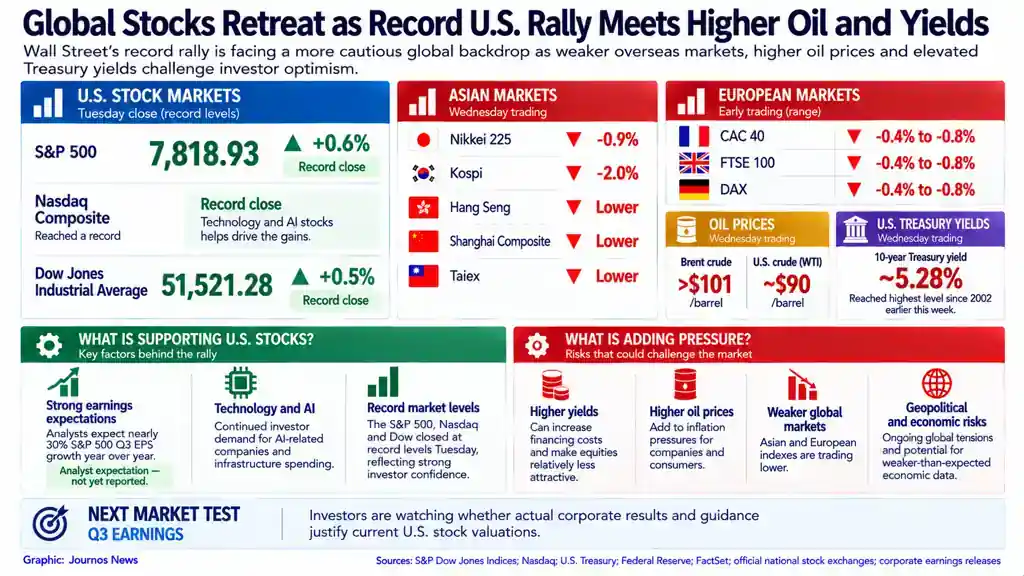
Asian stocks fell in Wednesday trading. Japan’s Nikkei 225 dropped about 0.9%, while South Korea’s Kospi fell 2%. Hong Kong’s Hang Seng also declined.

European markets moved lower as well. France’s CAC 40, Britain’s FTSE 100 and Germany’s DAX all fell between 0.4% and 0.8% in early trading.
Wall Street Hits More Records
The pullback came one day after another strong session in the United States.
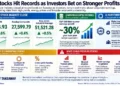
The S&P 500 rose 0.6% Tuesday to close at a record 7,818.93. The Nasdaq also reached a record, while the Dow Jones Industrial Average gained 0.5%.
Technology and artificial intelligence stocks helped drive the gains.
Investors are now turning their attention to the third-quarter earnings season. Analysts expect S&P 500 companies to report earnings-per-share growth of nearly 30% from a year earlier.

That figure is an expectation, not a result. Companies must still report their actual earnings in the weeks ahead.
Major U.S. banks and other large companies are among those due to report soon. Their results could show whether current stock prices are supported by stronger profits.
Oil Adds Pressure
At the same time, higher oil prices are adding another risk for investors.
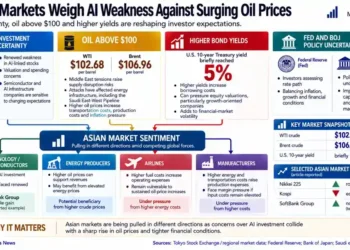
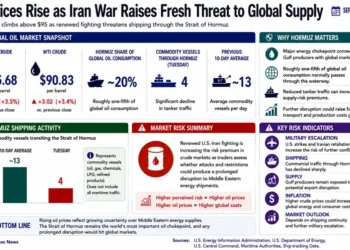
Brent crude moved back above $101 a barrel in Wednesday trading, while U.S. crude remained around $90 a barrel.
Higher oil prices can push up costs for businesses and consumers. They can also make it harder for central banks to reduce interest rates.
That matters because borrowing costs remain high.
The U.S. 10-year Treasury yield was around 5.28% after reaching its highest level since 2002 earlier in the week.
Higher bond yields can make stocks less attractive. They can also increase the cost of borrowing for companies and households.
Investors Await More Earnings
For now, investors are weighing two competing forces.
On one side, strong earnings expectations and continued demand for technology and AI companies are supporting U.S. stocks.
On the other, higher oil prices and elevated bond yields are creating pressure across global markets.
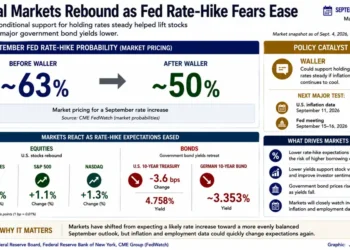
The Federal Reserve is also back in focus. Investors are watching the central bank for clues about its next interest-rate moves.
The minutes from the Fed’s September meeting are due Wednesday. Investors will look for signs of how officials view inflation, economic growth and future rate increases.
The global market decline therefore does not yet signal the end of the U.S. stock rally.
Instead, it shows a growing gap between Wall Street’s strong performance and more cautious trading elsewhere.
Investors now face a key test: whether corporate earnings can justify high U.S. stock valuations while oil prices and borrowing costs remain elevated.
Reporting Credit: S&P Dow Jones Indices; Nasdaq; U.S. Treasury; Federal Reserve; FactSet; official national stock exchanges; corporate earnings releases.