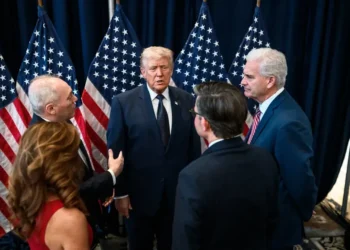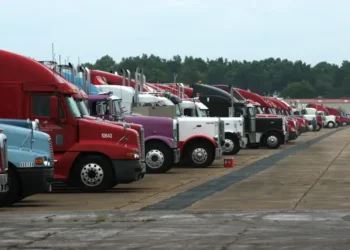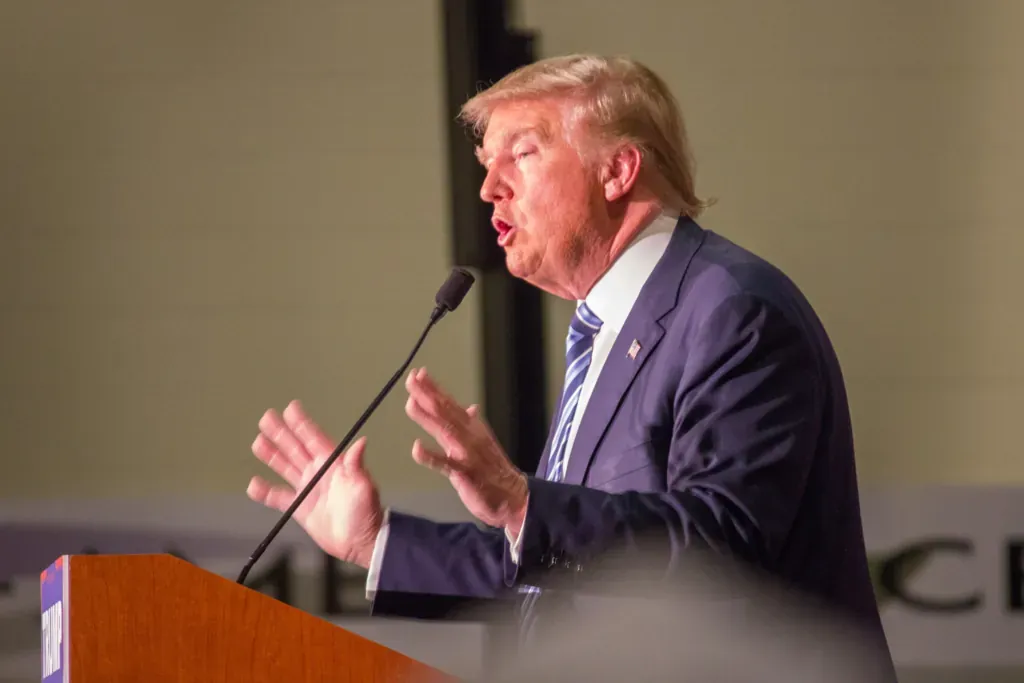
GRAND ISLAND, United States – President Donald Trump signed an executive order Monday temporarily expanding highway access to red-dyed diesel, a fuel normally reserved for tax-exempt off-road uses, as the administration seeks to ease pressure from elevated diesel prices.
The order, signed during Trump’s campaign rally in Grand Island, directs the Treasury Department to defer the federal excise tax applicable to on-road use of dyed diesel through the end of 2026 without interest or penalties. It also directs Treasury to explore ways to eliminate the obligation to pay the deferred tax.
The federal diesel excise tax is 24.4 cents per gallon. The White House said the measure could save truckers about $60 on a 250-gallon fill from the federal component alone, while savings could exceed $100 where states adopt corresponding measures.

The order also directs the Transportation Department to coordinate with states, industry and labor organizations on access to dyed diesel. The Agriculture Department is instructed to help ensure farmers can obtain the fuel in high-demand areas and encourage states to take similar action.
The policy concerns diesel commonly known as red-dyed or dyed diesel because a federal dye requirement distinguishes fuel intended for tax-exempt uses such as agriculture, construction and heating from diesel subject to highway taxes.
Trump said the order would allow broader use of the fuel and reduce costs for truckers and farmers. The White House has attributed the recent increase in diesel prices to constrained global supply and reduced refining capacity.
But the tax change does not by itself resolve the underlying supply pressures affecting fuel markets. Analysts cited in current reporting have questioned how much the measure will reduce prices because the principal pressure on diesel markets is supply rather than the federal fuel tax.
Nebraska had already moved to provide temporary relief before the federal action. Gov. Jim Pillen issued executive orders in September allowing highway-registered vehicles in the state to hold, sell or use untaxed dyed diesel without state fines or penalties. The state measures were intended to provide relief during the agricultural harvest season and remain temporary.



The federal action therefore expands a policy approach that several states had already begun using as diesel prices climbed. Other states have also taken steps to ease restrictions or provide temporary fuel-tax relief.
The timing of Trump’s announcement adds a significant political dimension. He signed the order in Nebraska during a campaign stop for Republican candidates, less than a month before the Nov. 3 midterm elections. The administration has increasingly focused on fuel and grocery costs as economic issues affecting voters.
Trump was campaigning alongside Nebraska Republican leaders, including Sen. Pete Ricketts, as part of a broader series of rallies before the election. His administration has presented the diesel action as an affordability measure rather than as an election-related policy.
The distinction between a tax deferral and a permanent tax repeal remains important. The executive order does not itself permanently eliminate the federal diesel excise tax. Instead, it directs Treasury to defer collection through the end of the year and examine possible pathways for eliminating the deferred liability.
The order also does not automatically eliminate state fuel taxes. State governments must take their own action for state-level taxes or restrictions to change, which is why the White House is encouraging states to adopt policies corresponding to the federal action.
For farmers, the practical effect may be less significant than for highway users because qualifying agricultural and other off-road uses of dyed diesel were already generally exempt from the federal highway fuel tax. The new policy primarily changes access to that fuel for uses that would ordinarily require taxed on-road diesel.
The immediate question for the fuel market is whether broader access to dyed diesel can provide meaningful relief while supplies remain constrained. The administration has presented the policy as temporary assistance for farmers, truckers and other diesel users, while the broader market remains dependent on fuel availability, refining capacity and global energy conditions.
The next developments will include how Treasury implements the tax deferral, how states respond to the federal request and whether expanded access produces measurable savings for highway diesel users before the end of 2026.
Reporting Credit: White House; U.S. Department of Agriculture; Nebraska Governor’s Office.