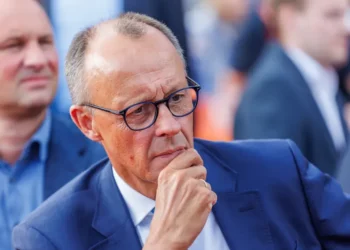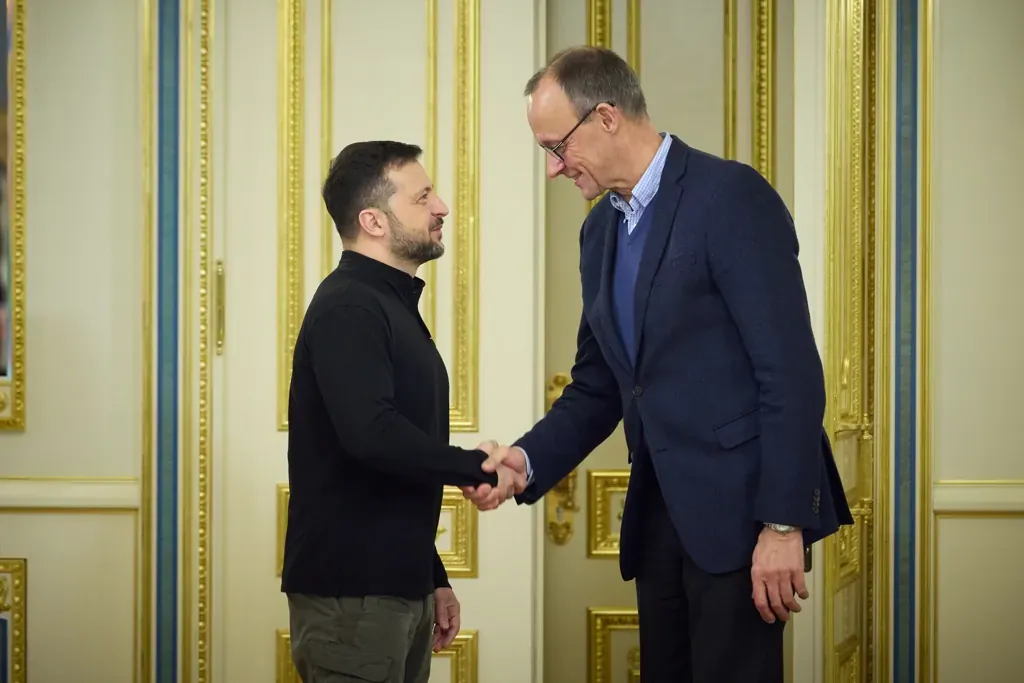
KYIV, Ukraine – German Chancellor Friedrich Merz announced a new assistance package worth about €1.35 billion for Ukraine during his October 4 visit to Kyiv, combining additional military support with funding to repair energy infrastructure ahead of winter.
The package includes roughly €1 billion in military assistance and about €350 million for energy-related needs, according to Merz and the Ukrainian government. The military component includes support for air defense, interceptor systems, long-range weapons, combat drones and satellite communications.
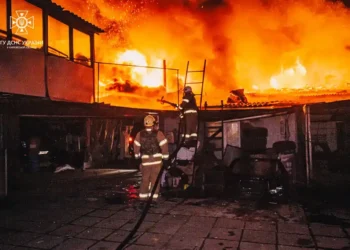
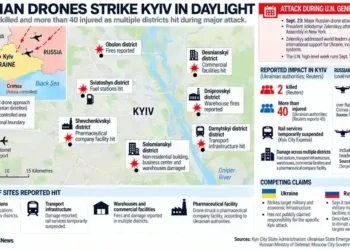
The announcement came as Russian drone attacks continued over Kyiv during Merz’s visit, underscoring the immediate security and infrastructure pressures facing Ukraine as winter approaches.

Germany Expands Military Support
Merz said Germany would provide about €1 billion in additional military assistance, while withholding some operational details.
He identified two central priorities: strengthening Ukrainian air defense and improving communications, including access to satellite-based systems. Germany will also provide stand-off weapons and combat drones to support Ukraine’s ability to defend itself and strike Russian launch positions.
A separate part of the package will support the joint production of interceptor drones designed to counter Russia’s increasingly used jet-powered attack drones. Merz said recent technical progress had helped accelerate work on the systems.
The Ukrainian Defense Ministry said its discussions with Merz also covered Russia’s use of jet-powered drones and ballistic missiles, with Ukrainian officials pressing for stronger air-defense capabilities.
The assistance represents announced support rather than equipment arriving in Ukraine immediately. The military package includes funding, procurement and production arrangements, meaning delivery schedules will vary by system.
€350 Million for Energy Infrastructure
Germany is also allocating about €350 million for Ukraine’s energy sector before winter.
Merz said the funding will support generators, substations and repair work needed to restore and protect damaged energy infrastructure. The aim is to help maintain essential services as Ukraine faces continued Russian attacks on energy facilities.
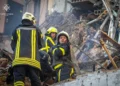
Kyiv authorities reported infrastructure damage during the attacks accompanying Merz’s visit. The city’s administration said the roadway of the Northern Bridge was hit on October 4, while a damaged heating main temporarily disrupted hot-water service in the Desnianskyi district. Transport routes were also changed.
The bridge damage and energy disruptions illustrate the infrastructure pressures that Germany’s new assistance is intended to address, although the German aid announcement itself should not be presented as a response to any single strike.
Defense Production Moves Beyond Equipment Transfers
The visit also highlighted a deeper shift in German-Ukrainian defense cooperation.
Ukraine’s presidential office said 15 agreements and other documents were signed with the German side during the visit, with a combined value of more than €8.5 billion. The arrangements cover security cooperation, procurement, production and joint projects involving Ukrainian and German companies.
The agreements include work involving air defense, interceptor drones, radar systems, artillery, ground robotic systems and energy infrastructure. Ukraine said the two countries are already jointly producing drones and intend to expand cooperation in countering unmanned systems.
This industrial cooperation is separate from the €1.35 billion assistance package. The larger €8.5 billion figure refers to agreements and projects reported during the visit, rather than €8.5 billion in new German government aid.
Germany and Ukraine had already established a strategic partnership earlier in 2026 that included cooperation on defense industry, air defense, drones and energy security.
Merz Pledges Continued Support
Merz said Germany would continue supporting Ukraine until the war ends and linked the assistance to European security.
He also said Germany would continue working with Ukraine, European partners and the United States toward negotiations with Russia. At the same time, he argued that additional assistance was necessary while the war continued.
Merz characterized Russia’s attacks on energy and other infrastructure as an effort to break Ukrainian morale. That is the German chancellor’s assessment and is not presented here as an independently established Russian objective.
The German government has separately described Ukraine’s security as important to Germany and Europe and has continued to expand military and energy assistance during the fifth year of the full-scale war.
A Visit Under Russian Attack
Merz arrived in Kyiv despite warnings from Moscow and attacks taking place during his visit.
The German government said the chancellor heard several air-raid alerts after arriving but did not have to enter a bunker. Ukraine’s presidential office said Russian drone attacks were occurring frequently during the visit.
The attacks were not publicly established as having been launched because of Merz’s presence. The timing instead provided a direct backdrop to the announcement of additional German military and energy assistance.
For Ukraine, the immediate issue is the ability to maintain air defenses, energy supplies and critical infrastructure through another winter of war. For Germany, the visit demonstrated that its support will increasingly involve not only transfers of equipment but also joint production and defense-industrial cooperation with Ukraine.
Reporting Credit: German Federal Government / Federal Chancellor’s Office; Ukrainian Presidential Office; Ukrainian Ministry of Defense; Kyiv City Administration; official German-Ukrainian agreements and government records.