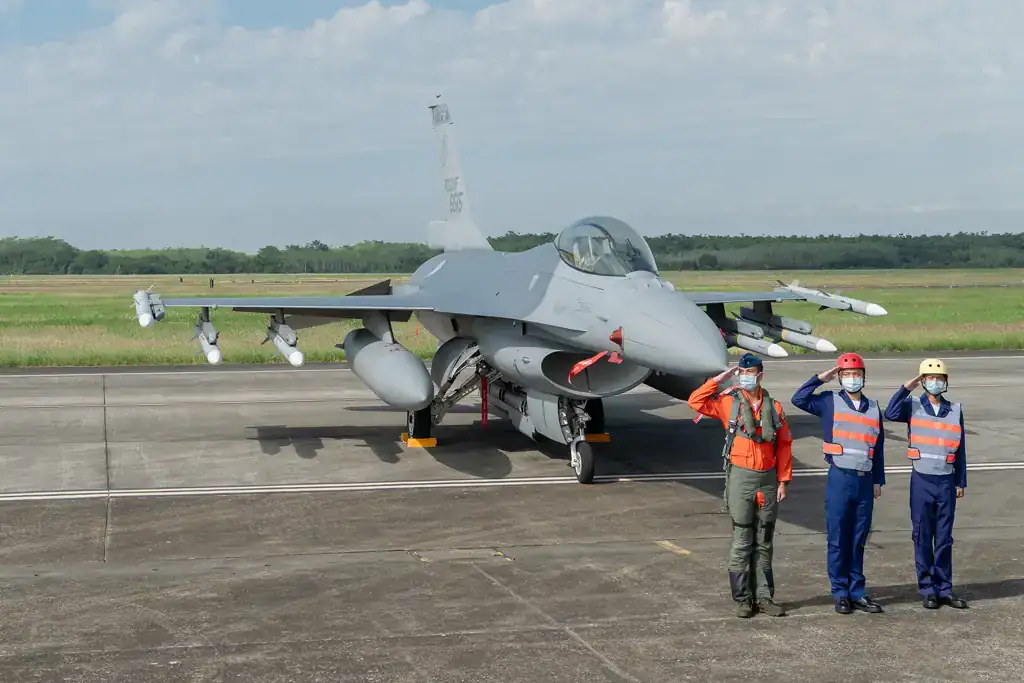
TAITUNG, Taiwan – Taiwan received the first two newly built F-16V Block 70 fighter jets from its long-delayed U.S. procurement program on October 2, beginning deliveries of a 66-aircraft order approved by Washington in 2019.
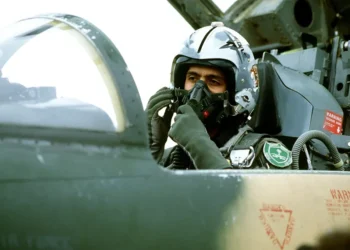
The two single-seat fighters, tail numbers 6727 and 6728, arrived at Chihhang Air Base in Taitung after flying from Hawaii with a stop in Guam. Taiwan’s Air Force subsequently released images of the aircraft being escorted by an existing F-16V Block 20 and Brave Eagle advanced jet trainers.
The delivery marks the first physical arrival in Taiwan of the new Block 70 aircraft after the program fell behind its original timetable.

First aircraft arrive after repeated delays
Taiwan’s Ministry of National Defense said the two aircraft are the first deliveries under the Air Force’s Peace Phoenix Soaring project, which covers 66 newly built F-16C/D Block 70 aircraft.
The United States approved the possible Foreign Military Sale in August 2019 at an estimated value of $8 billion. The U.S. Defense Security Cooperation Agency’s original notification covered 66 F-16C/D Block 70 aircraft along with associated equipment, engines, support and training.
Taiwan originally expected deliveries to begin in 2023 and the complete order to be delivered by the end of 2026. Technical and production-related problems subsequently pushed the program behind schedule.
Taiwan’s Defense Ministry said in March that the Block 70 configuration required additional flight testing and system calibration because it was a new configuration specifically developed for Taiwan. Feedback from flight testing had to be incorporated into the production process.
The ministry also said production had not been halted by shortages of materials or personnel. Lockheed Martin was operating two shifts on the program as Taiwan sought to accelerate deliveries.




64 aircraft remain outside Taiwan
With two aircraft now delivered, 64 of the 66 aircraft have yet to arrive in Taiwan.
Taiwan’s Air Force said on October 2 that 63 F-16 Block 70 aircraft remained on the U.S. production line, with some already reaching the delivery stage. The Air Force said it would continue coordinating with the U.S. program office on the timing of further deliveries.
That distinction is important: 64 aircraft remain to be delivered to Taiwan, while 63 were specifically described by the Air Force as being on the U.S. production line.
Defense Minister Wellington Koo said on October 2 that more than two additional aircraft would be delivered during 2026, but he did not provide a detailed schedule for the remaining aircraft. Subsequent delivery dates will be coordinated with the United States.
The original target of completing the entire order by the end of 2026 is therefore no longer achievable. Taiwan’s Defense Ministry had already acknowledged that the program was delayed before the first aircraft arrived.
A new-build fleet, separate from Taiwan’s older upgraded F-16s
The aircraft delivered this week should be distinguished from Taiwan’s existing F-16 fleet that has undergone modernization.
The new aircraft are factory-built F-16C/D Block 70s, also referred to as F-16V Block 70s. They are part of the separate 66-aircraft procurement approved in 2019.
Taiwan has also upgraded older F-16A/B aircraft to the F-16V configuration. The new delivery therefore represents an expansion of Taiwan’s modernized F-16 inventory rather than simply another batch of previously operated aircraft being upgraded.
The Block 70 program includes newer avionics and systems compared with Taiwan’s original F-16 fleet, but the arrival of two aircraft does not by itself establish how the new fleet will alter the overall military balance across the Taiwan Strait.
Delivery adds to Taiwan’s broader defense modernization
The F-16 purchase is one component of Taiwan’s wider effort to strengthen its air-defense capabilities.
Taiwan’s Defense Ministry has described the acquisition as intended to strengthen the Air Force’s combat capabilities and joint operational effectiveness. The ministry has also established personnel and training arrangements in the United States so pilots and maintenance personnel can transition to the new aircraft as deliveries proceed.
The location of the first delivery is also significant for Taiwan’s force posture. Koo said eastern Taiwan would be an important area for preserving combat power, although he did not provide additional details about the aircraft’s eventual deployment.
Taiwan has simultaneously been discussing other previously approved U.S. weapons deliveries and future arms sales with Washington. The F-16 program should therefore be viewed as one part of a broader defense relationship rather than as an isolated procurement.
U.S. policy remains unchanged, State Department says
Following the arrival of the aircraft, a U.S. State Department spokesperson told CNA that Washington’s policy toward Taiwan had not changed and that the United States remained committed to its stated Taiwan policy framework.
The spokesperson also said Washington continued to stand with partners across the Indo-Pacific, including Taiwan.
The statement came amid continued discussions between Taipei and Washington over defense procurement and the delivery of previously approved weapons.
The F-16 delivery itself does not establish a change in the U.S. strategic position or indicate that military conflict is imminent.
What remains unresolved
The immediate question is how quickly the remaining 64 aircraft can be delivered.
Taiwan has confirmed that additional aircraft are expected this year, but it has not published a complete aircraft-by-aircraft delivery timetable. The Air Force says some aircraft have reached the delivery stage, while the broader production effort continues in the United States.
The program’s original delivery schedule has already been overtaken by technical testing, production-line changes and supply-chain disruptions. Taiwan’s Defense Ministry has said it will continue working with the U.S. side to accelerate the return of the aircraft.
For now, the clearest development is straightforward: Taiwan has received the first two aircraft from its 66-jet F-16V Block 70 order, but the overwhelming majority of the fleet has yet to reach the island.
The delivery turns a long-delayed procurement program into an active aircraft-delivery process, while leaving the pace and final completion of the remaining fleet as the next major issue to watch.
Reporting Credit: Taiwan Ministry of National Defense / Republic of China Air Force; U.S. Department of State; U.S. Department of Defense / Defense Security Cooperation Agency; and Lockheed Martin production information cited by Taiwan’s Ministry of National Defense.