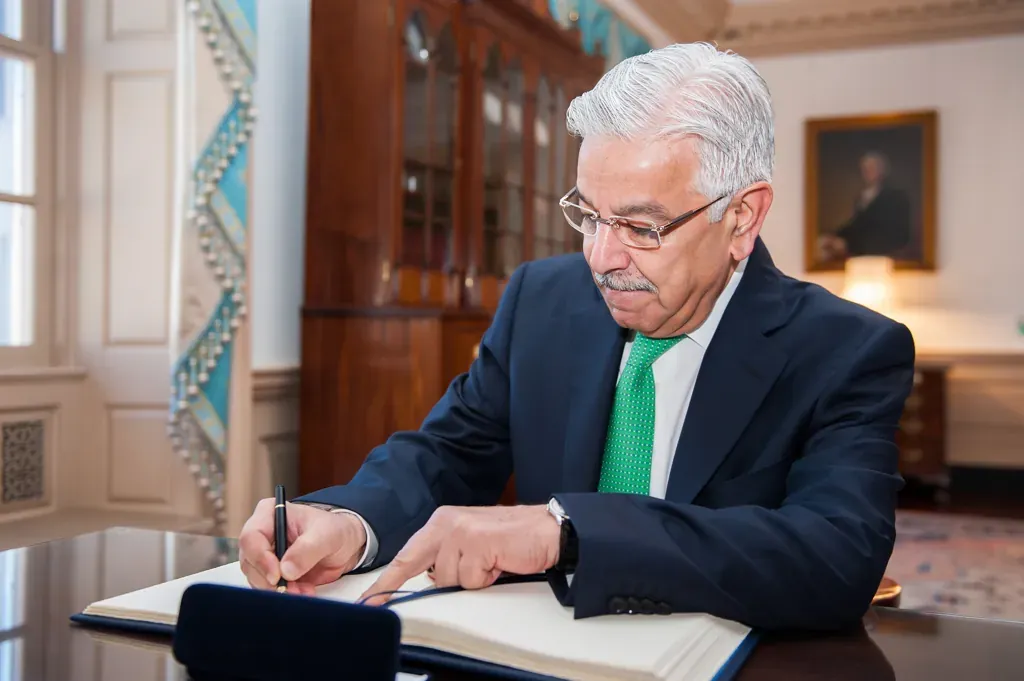
ISLAMABAD, Pakistan – Pakistan has pledged to defend Saudi Arabia against Houthi attacks using its available military capabilities, with Defense Minister Khawaja Muhammad Asif saying Islamabad is bound by a new mutual-defense arrangement with Saudi Arabia and Türkiye.
Asif said Tuesday that Pakistan would make whatever military means it has available to Saudi Arabia under the Makkah Joint Defence Agreement. He did not confirm whether Pakistani forces had already taken part in airstrikes against Houthi targets or whether Saudi Arabia had formally requested Pakistani military assistance.
The statement marks a stronger indication of potential Pakistani military involvement than Islamabad’s earlier public position, which emphasized support for Saudi Arabia while saying that specific military action was not yet under discussion.

Makkah pact establishes mutual-defense commitment
Pakistan, Saudi Arabia and Türkiye signed the Makkah Joint Defence Agreement on Aug. 7. Pakistan’s Foreign Ministry said the agreement provides that an armed attack against any one of the three countries will be regarded as an attack against all three.
Islamabad has described the accord as defensive in nature and said it is intended to strengthen collective deterrence and the countries’ ability to defend their sovereignty and territorial integrity. Pakistan also said the agreement is not directed against any particular country.
The three governments were still establishing the agreement’s institutional structure in late September. Their foreign ministers met on the sidelines of the U.N. General Assembly on Sept. 25 and discussed establishing the agreement’s general secretariat, committees and working groups. They also discussed an urgent meeting of the three countries’ military chiefs to consider ways of assisting Saudi Arabia under the pact.
Houthi attacks test the new alliance
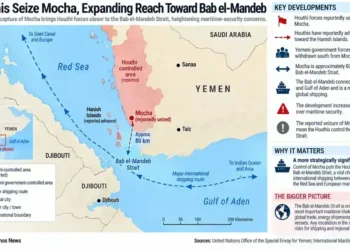
The defense commitment comes after a series of Houthi missile and drone attacks against Saudi Arabia.
Pakistan’s Foreign Ministry has condemned attacks on civilian and economic targets in Saudi cities including Abha, Khamis Mushait, Jazan and Najran, and has reaffirmed Islamabad’s support for Saudi sovereignty and territorial integrity.
■ Related News
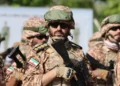

Pakistan also condemned an attempted drone attack targeting the holy city of Makkah and said it stood with Saudi Arabia in protecting its sovereignty and the security of the two Islamic holy sites in Makkah and Madinah.
The Saudi government has attributed the attacks to the Houthis, while the Houthis have disputed some Saudi claims concerning the targets of their attacks. The precise circumstances of individual incidents therefore remain subject to the respective parties’ accounts.
Pakistan’s military commitment remains undefined
Asif’s statement did not specify what form Pakistani military assistance would take.
The minister declined to say whether Pakistan had already participated in airstrikes against Houthi positions. He also did not say whether Saudi Arabia had requested Pakistani forces, aircraft, air-defense systems or other military assets.
That distinction is significant because Pakistan has previously emphasized diplomacy alongside its defense commitments.
In a Sept. 10 briefing, Pakistan’s Foreign Office said the Makkah agreement was a defensive alliance and said there were no discussions at that point about military action in response to Houthi attacks.
By Sept. 17, Pakistan’s military spokesman, Lt. Gen. Ahmed Sharif Chaudhry, said Islamabad stood with Saudi Arabia both diplomatically and physically and would go to any extent to defend the kingdom against aggression. He also said Pakistan continued to pursue a negotiated and peaceful outcome to the wider regional crisis.
Military chiefs coordinate response
The defense commitment comes as senior military officials from the three countries have increased consultations.
The chiefs of staff of Pakistan, Saudi Arabia and Türkiye met in Riyadh on Sept. 25 to discuss strengthening military cooperation and responding to regional security threats, including attacks attributed to the Houthis.
Pakistan’s Foreign Ministry subsequently said the three countries had reaffirmed their commitment to joint efforts to confront attacks targeting Makkah as well as Saudi civilian and economic facilities under the Makkah agreement.
The agreement’s full operational provisions have not been publicly released, leaving unresolved questions about the precise military obligations triggered by an attack on a member.
Islamabad maintains diplomatic channels
Pakistan’s pledge to defend Saudi Arabia is being made alongside continued diplomatic engagement with Iran.
Asif said Pakistan retains open channels with Tehran and supports negotiations aimed at resolving the broader regional conflict. He also suggested that some armed groups aligned with Iran could act independently of Tehran.
Pakistan has repeatedly said that it wants the conflict to be resolved through dialogue and diplomacy. Its Foreign Ministry has described the security situation around the Bab el-Mandeb as a serious regional concern and has called for an end to escalation.
The combination of a formal defense commitment to Saudi Arabia and continued diplomatic engagement with Iran leaves the precise scope of Pakistan’s future military role unresolved.
Direct Pakistani intervention has not been confirmed
Pakistan’s latest pledge does not establish that Pakistani forces are currently conducting operations against the Houthis.
Asif explicitly declined to confirm whether Pakistani forces had participated in airstrikes, while the Pakistani government has continued to emphasize the defensive character of the Makkah agreement and its preference for diplomatic efforts to contain the wider conflict.
The immediate question is therefore whether the new defense commitment will remain a deterrent and political guarantee or develop into direct Pakistani military participation if attacks against Saudi Arabia continue.
Reporting Credit: Pakistan Ministry of Foreign Affairs; Pakistan Ministry of Defence; Pakistan military spokesman Lt. Gen. Ahmed Sharif Chaudhry; Makkah Joint Defence Agreement statements.