SEOUL, South Korea – South Korea has demanded an explanation and apology from Ukraine after President Volodymyr Zelenskyy publicly disclosed that two North Korean prisoners of war captured while fighting for Russia had been transferred to South Korea.
The dispute centers on whether Seoul and Kyiv had agreed to keep the transfer confidential.
South Korea says they had.

The Ukrainian side has disputed that characterization, creating an unusual diplomatic dispute between two countries that had been cooperating on the fate of the North Korean soldiers.
The South Korean presidential office said Sunday that it strongly regretted Ukraine’s disclosure and its subsequent denial that a nondisclosure agreement existed. It said Seoul was considering additional measures if necessary.
Zelenskyy revealed the transfer at the United Nations
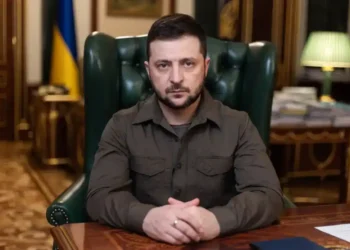
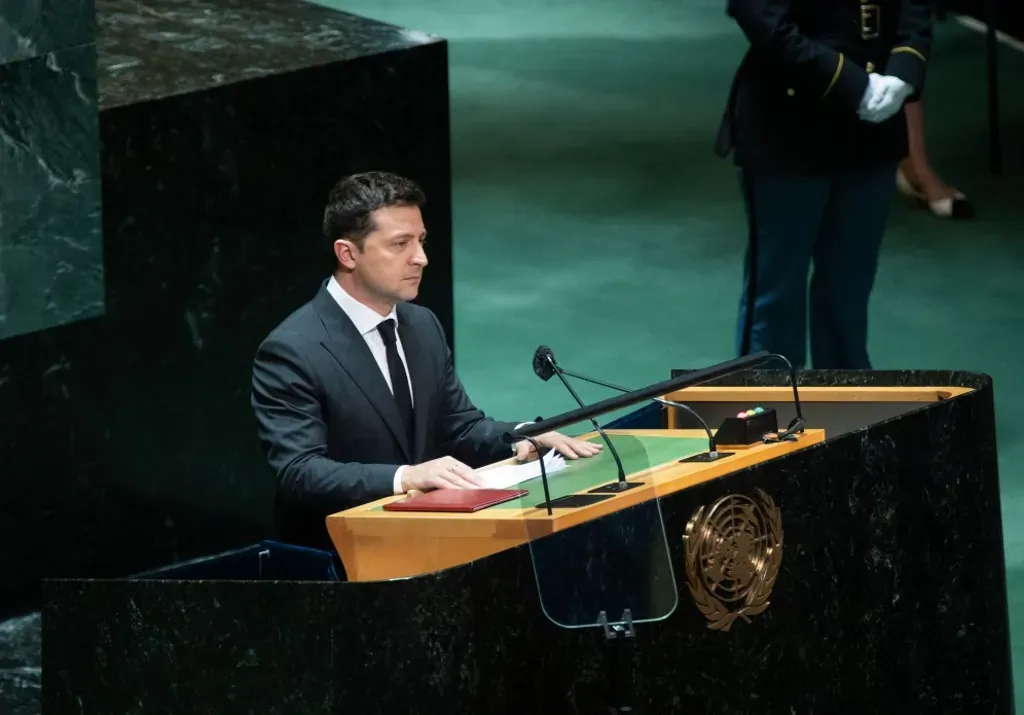
Zelenskyy disclosed the transfer during his address to the United Nations General Assembly on September 23.
He said Ukraine had recently sent two North Korean prisoners of war to the Republic of Korea. The soldiers had been captured in Russia’s Kursk region after North Korea deployed troops to support Russia’s war against Ukraine.
Zelenskyy did not provide operational details about the transfer.
■ Related News

He said one of the soldiers had attempted suicide after realizing he had been captured and used the case to criticize North Korea’s deployment of its citizens to fight in Russia’s war.
Ukraine had captured the two North Korean soldiers in January 2025. They were among North Korean personnel sent to Russia after Pyongyang began providing military support for Moscow’s war.
The South Korean government had previously avoided confirming that the soldiers had arrived in the country, citing concerns about their safety and that of relatives who remain in North Korea.
Seoul says confidentiality was agreed
South Korean President Lee Jae Myung said the disclosure violated an agreement between Seoul and Kyiv.
In a September 24 statement, Lee said both governments had agreed that the transfer should not be made public because of the diplomatic, security and humanitarian consequences that could follow.
He described the disclosure as regrettable and said the issue was particularly sensitive because it could affect the security situation on the Korean Peninsula.
The presidential office expanded on that position Sunday.
Senior presidential secretary for public relations Seong Ghi-hong said Ukraine had requested secrecy during discussions over the transfer. Seoul agreed, according to the South Korean account, because of concerns about the safety of the two prisoners, their families and wider diplomatic and security issues.
Seoul also said Kyiv had been concerned that publicly confirming the transfer could generate criticism in Ukraine over giving up an opportunity to exchange the soldiers for Ukrainian prisoners held by Russia.
The presidential office said Zelenskyy’s disclosure occurred without prior explanation or consultation and that Ukraine’s subsequent denial of a confidentiality agreement had further damaged trust between the two governments.
Ukraine disputes Seoul’s account
The Ukrainian side has not accepted South Korea’s description of the arrangement.
Ukrainian presidential communications adviser Dmytro Lytvyn said Ukraine had not violated an agreement by announcing that the two prisoners had been transferred.
According to Ukrainian reporting cited by international media, Lytvyn argued that Ukraine had simply disclosed the fact of the transfer rather than sensitive operational details.
That leaves a central issue unresolved.
South Korea says there was a confidentiality agreement covering the transfer.
Ukraine disputes that an agreement existed in the form Seoul describes.
Neither side has publicly released the alleged agreement, leaving the precise terms of the bilateral understanding unclear.
The two soldiers had asked to go to South Korea
The dispute follows a longer process over what would happen to the North Korean soldiers after their capture.
South Korean officials had said the two men should be given the opportunity to come to South Korea if they wished to do so.
Seoul’s position is partly based on its constitutional treatment of North Koreans as citizens of the Republic of Korea. South Korea’s foreign ministry previously told Ukraine that North Korean POWs who wished to come to the South would be welcomed and provided protection and support under South Korean law.
The two prisoners reportedly expressed a desire to settle in South Korea.
Their status became especially sensitive because returning them to North Korea could expose them to retaliation, while their transfer to South Korea could have diplomatic consequences for Seoul’s relations with Pyongyang.
South Korea had therefore declined to publicly confirm the men’s arrival even after the transfer discussions became known.
Seoul and Kyiv had already been cooperating on the POW issue
The transfer was not an entirely new subject between the two governments.
South Korea’s foreign ministry said in March that Foreign Minister Cho Hyun and Ukrainian Foreign Minister Andrii Sybiha had agreed to continue cooperating over the North Korean POW issue in accordance with international law and humanitarian principles.
That cooperation followed earlier discussions about the fate of North Korean soldiers captured in Ukraine.
The diplomatic framework also reflected a broader South Korean policy of supporting humanitarian treatment for the prisoners while considering the potential consequences for the Korean Peninsula.
The issue therefore involved more than the two soldiers themselves.
It touched on the relationship between Seoul and Kyiv, South Korea’s policy toward North Korea and the wider consequences of Pyongyang’s military cooperation with Moscow.
North Korean troops have become part of Russia’s war effort
North Korea’s involvement in the war has expanded the geographic scope of the conflict.
Pyongyang has provided Russia with military personnel and other forms of support. South Korean and Ukrainian estimates have put the number of North Korean troops deployed to Russia since 2024 at roughly 15,000, although estimates vary.
The two soldiers captured in Kursk became particularly significant because they provided direct evidence of North Korean personnel being taken prisoner alive.
Their subsequent transfer to South Korea created a separate humanitarian and diplomatic question: whether they should remain in Ukraine, return to North Korea, be exchanged for Ukrainian prisoners or resettle in South Korea.
South Korean officials had previously said the men should be protected and that their wishes should be respected.
The dispute now extends beyond the prisoners
Seoul’s demand for an apology has shifted the immediate focus from the soldiers’ fate to the handling of sensitive information between the two governments.
The South Korean presidential office said Sunday that Ukraine’s alleged denial of the confidentiality agreement had seriously affected bilateral trust.
It also warned against what it called the politicization of the sensitive issue inside South Korea.
Ukraine has not publicly accepted Seoul’s demand for an apology.
The Ukrainian Embassy in Seoul did not immediately respond to Reuters’ request for comment on the South Korean statement, according to reporting published Monday.
For now, the two governments agree on the basic fact that the two North Korean soldiers were transferred to South Korea.
They disagree over whether that transfer was subject to a binding or mutually recognized nondisclosure agreement.
That distinction is at the center of the diplomatic dispute.
Reporting Credit: South Korean Presidential Office — statements concerning the alleged nondisclosure agreement, Ukraine’s disclosure and Seoul’s demand for an explanation and apology; Republic of Korea Ministry of Foreign Affairs — bilateral cooperation concerning North Korean POWs and their humanitarian treatment; Office of the President of Ukraine — Zelenskyy’s September 23 UN General Assembly statement concerning the transfer.