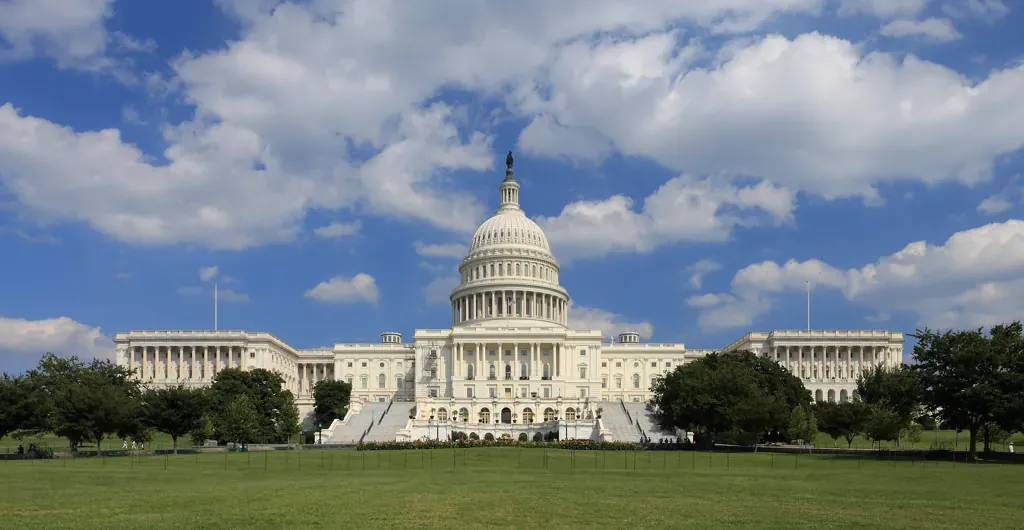
WASHINGTON, United States – The U.S. House of Representatives has voted for a third time to direct President Donald Trump to end U.S. military involvement in hostilities with Iran, renewing a congressional challenge over the limits of presidential war powers.
The House passed House Concurrent Resolution 93 by a 220-204 vote on Sept. 15, with all Democrats and seven Republicans supporting the measure. The resolution was introduced by Rep. Seth Moulton, a Massachusetts Democrat.
The vote does not itself end the U.S. military campaign. The measure would have to advance through the Senate and overcome the administration’s opposition before it could produce a change in military policy.

House renews challenge to presidential authority
The resolution directs Trump to remove U.S. armed forces from hostilities with Iran unless Congress provides authorization for continued military action. It also contains an exception for forces needed to protect U.S. or allied personnel and facilities in the region.
The vote is the third House attempt this year to use the War Powers Resolution to restrict Trump’s military authority over Iran. Earlier measures were approved in June and July but did not result in the termination of U.S. military operations.
The latest measure attracted seven Republican votes, more than the previous House efforts.
The seven Republicans were Thomas Massie, Tom Barrett, Warren Davidson, Brian Fitzpatrick, Nancy Mace, Mariannette Miller-Meeks and Zach Nunn.
War Powers Resolution provides the legal framework
The congressional action relies on the War Powers Resolution of 1973, which requires the president to consult with Congress when U.S. forces are introduced into hostilities or circumstances in which imminent involvement is clearly indicated.
■ Related News



Federal law states that the president must continue consulting Congress while American forces remain engaged in hostilities or have not been removed from the situation.
The broader dispute concerns whether the president can continue military operations without specific congressional authorization and how the statutory requirements apply to the current conflict.
The Trump administration has defended the military campaign and disputed congressional efforts to use the War Powers Resolution to compel an end to the operation. Previous resolutions have not reached the president.
Senate action remains uncertain
House passage alone does not change the status of U.S. forces in the conflict.
The Senate previously approved a separate war powers resolution concerning Iran, but Republican senators reversed course after Trump intervened, according to congressional reporting. A House resolution passed in July also remained without Senate action.
The latest House measure therefore faces another test in the upper chamber.
The timing is significant because Congress has only a limited number of legislative weeks remaining before the November midterm elections, while lawmakers are preparing to return to their districts for campaigning.
War carries growing financial costs
The congressional dispute is also unfolding as the financial cost of the conflict becomes clearer.
The Congressional Budget Office estimated that the war had cost the Department of Defense approximately $38 billion between Feb. 28 and Aug. 1. It projected that continuing operations could cost an additional $2 billion to $3 billion per month, depending on the intensity and duration of the conflict.
The CBO estimate does not represent the total long-term economic cost of the conflict. It focuses on federal defense spending and excludes some future expenses and broader economic effects.
The financial figures have nevertheless become part of the congressional debate over whether the United States should continue military operations without a new authorization from Congress.
Administration continues to defend the campaign
Trump has continued to defend the military operation against Iran.
The administration has argued that the campaign serves U.S. national-security objectives and has rejected congressional efforts to characterize the military action as unauthorized. Republicans supporting the administration have also argued that Iran continues to pose a security threat.
The disagreement is therefore not simply over whether U.S. forces should remain in Iran-related hostilities. It also concerns the constitutional and statutory division of military authority between Congress and the president.
Congress has the constitutional power to declare war and control federal funding, while the president serves as commander in chief. The War Powers Resolution was enacted to establish additional procedures governing the use of American forces.
A continuing test of congressional war powers
The House vote leaves the immediate military situation unchanged, but it records another formal attempt by lawmakers to assert congressional authority over the conflict.
Whether the effort advances will depend largely on the Senate and the administration’s response. Previous congressional resolutions have not resulted in an end to U.S. military operations.
For now, American forces remain involved in the conflict while Congress continues to debate whether the president has sufficient authority to maintain those operations without a new authorization.
Reporting Credit: U.S. House of Representatives — House Concurrent Resolution 93 and Sept. 15 vote; U.S. Senate — prior consideration of Iran war powers measures; U.S. Code — War Powers Resolution and congressional consultation requirements; Congressional Budget Office — estimated federal costs of the Iran conflict; U.S. executive branch — administration position on the military campaign and presidential authority.