RIYADH, Saudi Arabia – Saudi Arabia is facing growing pressure to move crude to international markets after damage forced the shutdown of a major oil pipeline just as Houthi forces expanded their control over key positions along Yemen’s Red Sea coast.
The two developments affect different parts of the region’s energy network but create a common problem: fewer reliable routes for transporting oil around the Arabian Peninsula.
Saudi Arabia shut its East-West Pipeline after attacks in the Riyadh and Medina regions. The Ministry of Energy said the pipeline was stopped as a precaution while emergency and technical teams assessed the damage and secured the system.

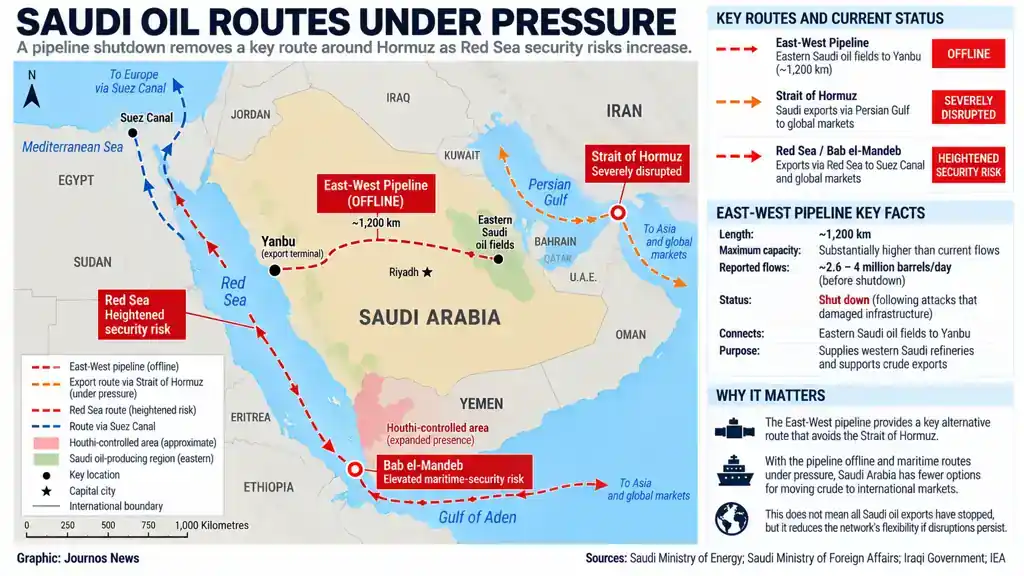
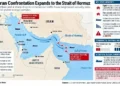
The pipeline links Saudi oil-producing areas in the east with Yanbu on the Red Sea. Its strategic importance has increased during the disruption of shipping through the Strait of Hormuz because it provides a land route that allows Saudi crude to reach the Red Sea without passing through the Gulf chokepoint.
At the same time, Houthi forces have made significant advances along Yemen’s western coast, including taking control of strategically important territory and positions near the Bab el-Mandeb Strait. The Houthis have also captured islands in the southern Red Sea, according to recent reports.
A key Saudi export route is offline
The East-West Pipeline stretches roughly 1,200 kilometers across Saudi Arabia from the Gulf region to Yanbu.
Saudi officials said the latest attacks caused injuries and material damage but did not initially provide a timetable for restoring the pipeline. Iraq confirmed that the drone attacks originated from its territory and said it was taking measures in response. Saudi Arabia said it would refrain from immediate retaliation following an appeal from Baghdad.
The pipeline had become particularly important because normal tanker movements through the Strait of Hormuz have been severely disrupted by the wider regional conflict.
■ Related News
Recent reporting indicates the pipeline had been carrying between roughly 2.6 million and 4 million barrels of crude a day before the shutdown, although its maximum designed capacity is substantially higher. Repairs are expected to take weeks rather than days, according to reporting based on the damage assessment.
That distinction matters. The shutdown does not mean an equivalent amount of global oil supply has immediately disappeared. Saudi Arabia has storage and other transportation options. But the loss of the pipeline removes a major route at a time when other routes are already under pressure.
Houthi gains add pressure at the Red Sea entrance
The situation is becoming more difficult farther west.
Houthi forces have advanced along Yemen’s Red Sea coastline and seized strategic positions, including areas around the Bab el-Mandeb Strait. The group has also captured Greater and Lesser Hanish islands, according to recent reporting.
Bab el-Mandeb connects the Red Sea with the Gulf of Aden and is an important route for ships traveling between the Indian Ocean and the Suez Canal.
The Houthi advances do not automatically mean the waterway is closed. Commercial vessels can still assess whether to use the route, and shipping patterns can change in response to security conditions. But the group’s growing territorial presence gives it greater proximity to a major maritime chokepoint and increases the security risk for vessels using the corridor.
That is particularly significant for Saudi Arabia because Yanbu’s position on the Red Sea makes the port an important alternative to exports through the Persian Gulf.
The East-West Pipeline and the Red Sea route therefore depend on more than the pipeline itself. Once crude reaches Yanbu, it still has to move through maritime routes that face their own security risks.
Fewer alternatives for global oil markets
Saudi Arabia can continue using crude already stored at western facilities and can use other transportation arrangements where available. But those options cannot necessarily replace the pipeline indefinitely.
The longer the East-West system remains offline, the greater the pressure on storage, tanker availability and alternative export routes.
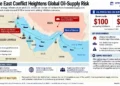
The disruption comes as global oil markets are already reacting to restricted flows through the Strait of Hormuz. Brent crude has risen above $100 a barrel during the latest escalation, reflecting concern about the cumulative effect of supply disruptions.
The immediate risk is not that all Saudi oil exports stop. It is that the margin for rerouting crude becomes smaller.
If Hormuz remains heavily restricted while the East-West Pipeline is being repaired and security risks increase around Bab el-Mandeb, Saudi Arabia and other Gulf producers have fewer ways to compensate for disruptions.
That could keep upward pressure on crude prices and increase costs for refiners, shipping companies and economies dependent on imported energy.
For now, the duration of the Saudi pipeline outage and the extent of Houthi control around the Red Sea will be closely watched. A prolonged shutdown would make the Red Sea route more important at precisely the moment when the security environment around it is deteriorating.
Reporting Credit: Saudi Arabia Ministry of Energy — East-West Pipeline shutdown and emergency response; Saudi Arabia Ministry of Foreign Affairs — attribution of the pipeline attacks to drones originating from Iraq and Saudi response; Iraqi government — response to the attacks originating from Iraqi territory; international energy-market data and shipping assessments — oil flows, prices and transportation conditions.