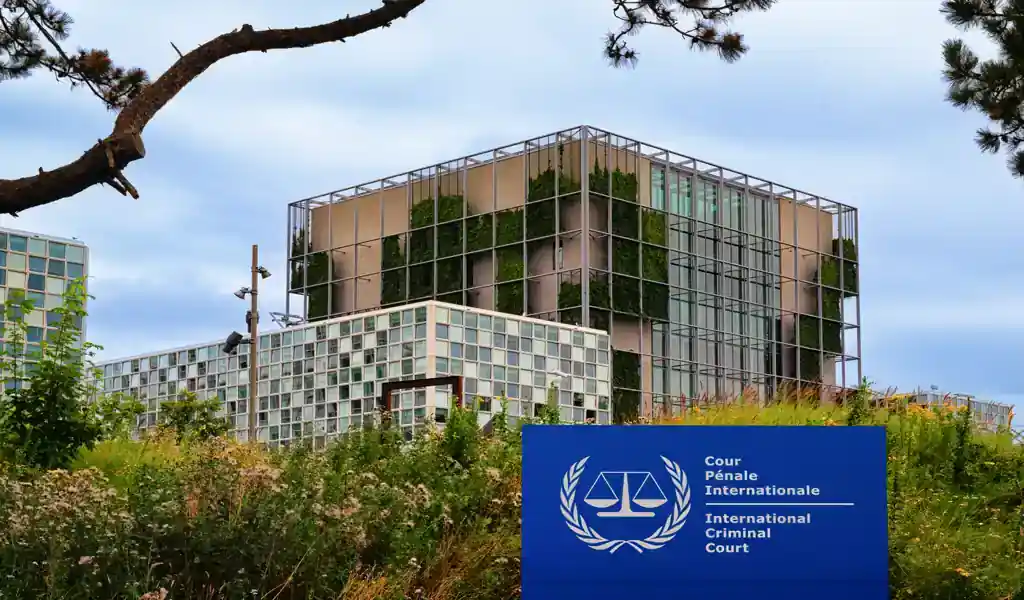
THE HAGUE, Netherlands — Five countries are moving to withdraw from the International Criminal Court as the tribunal faces mounting political pressure from the United States and growing criticism from governments in Africa and elsewhere.
Venezuela, Chad, Burkina Faso, Mali and Niger have announced or initiated withdrawal processes in recent months, according to information compiled on the court and its member states. Chad became the fifth country to begin the process in July, following the four earlier withdrawals.
The departures represent a new challenge for an institution established to prosecute individuals accused of genocide, crimes against humanity, war crimes and aggression when national courts are unable or unwilling to act.

The United States is not a member of the Rome Statute, the treaty that established the ICC, but the Trump administration has sharply increased pressure on the court over its investigations involving U.S. and Israeli personnel. Washington has imposed sanctions on ICC officials and criticized the court’s jurisdiction.
Five governments move toward withdrawal
The latest wave began with withdrawals by three West African states governed by military juntas: Burkina Faso, Mali and Niger.
The governments have criticized the ICC’s record in Africa and accused the institution of applying international justice selectively. Human Rights Watch said the three Sahel governments’ decisions would weaken accountability for serious crimes and noted that their withdrawals do not erase obligations arising while they remained parties to the Rome Statute.
Venezuela also formally moved to leave the court in July. Its withdrawal process does not take immediate effect under the Rome Statute. Venezuela remains subject to the court’s jurisdiction during the period covered by the treaty’s withdrawal provisions.
Chad became the fifth country in the latest wave when it began its own formal withdrawal process in July.




The governments have offered different explanations for their decisions, meaning the five departures should not be treated as a single coordinated withdrawal campaign.
U.S. pressure adds to the court’s challenges
The withdrawals come as the Trump administration has intensified its campaign against the ICC.
Washington has targeted court officials with sanctions over investigations involving alleged crimes by Israeli and U.S. personnel. The measures have included restrictions on officials’ access to the United States and financial sanctions.
ICC President Tomoko Akane, a Japanese national, was among officials targeted by U.S. sanctions. Japan’s government called the action “very unfortunate” and reaffirmed its support for the court.
The United States has never ratified the Rome Statute and has historically opposed the ICC’s ability to exercise jurisdiction over American nationals without U.S. consent.
The current pressure is nevertheless significant because it comes as the court is handling cases involving several major geopolitical conflicts.
Withdrawals do not immediately end ICC jurisdiction
Leaving the ICC does not automatically erase the court’s authority over conduct that occurred while a country was a member.
Article 127 of the Rome Statute provides for a one-year period between notification of withdrawal and its effect. Obligations arising while a country was a party remain in force.
The court has therefore continued proceedings connected to situations involving countries that have withdrawn.
The Philippines, which left the Rome Statute in 2019, provides an important example. The ICC says it retains jurisdiction over alleged crimes committed during the period when the Philippines was a state party. Its investigation into the country’s situation remains active.
The legal consequences mean that the latest withdrawals will not immediately remove the court’s jurisdiction over conduct covered by the treaty.
Court’s membership remains broad
Despite the departures, the ICC continues to have a large membership.
The court said in June that 125 countries were parties to the Rome Statute. Hungary’s withdrawal took effect in June 2026, but the court continues to operate across its remaining membership.
The recent withdrawals therefore do not threaten the immediate existence of the court. They do, however, raise questions about political support for international criminal justice, particularly in countries where governments accuse the institution of selective enforcement.
The criticism has been especially strong among governments in the Sahel, where military-led administrations have sought to distance themselves from Western institutions and deepen ties with other international partners.
Pressure tests the court’s authority
The combination of withdrawals and U.S. sanctions has placed the ICC under unusual political pressure.
The court’s supporters argue that international criminal justice is most important when domestic institutions cannot independently investigate or prosecute serious crimes. Critics contend that the ICC has disproportionately targeted African states and lacks sufficient authority over major powers that are outside the Rome Statute.
The dispute has become more consequential as the ICC pursues cases connected to conflicts involving powerful states and senior political figures.
For the court, the immediate challenge is to maintain its investigations and cooperation with member states while governments reassess their relationship with the institution.
The five withdrawal processes add to that pressure, but they do not by themselves dismantle the ICC’s legal framework or end its existing jurisdiction.
Reporting Credit: International Criminal Court — official information on membership, the Rome Statute and country situations; United Nations Treaty Collection — Rome Statute treaty records; governments and official institutions of Venezuela, Chad, Burkina Faso, Mali and Niger — withdrawal notifications and official positions.