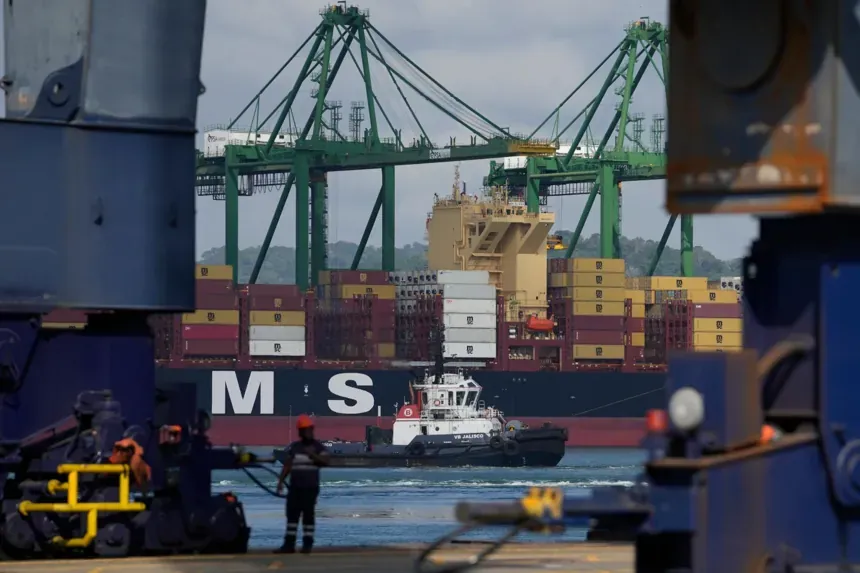
A sharp diplomatic confrontation between the United States and China has intensified over Panama’s sovereignty, with both powers trading accusations linked to control and influence around the Panama Canal. The dispute, centered on maritime trade disruptions and port control, underscores rising geopolitical competition over one of the world’s most strategic shipping corridors.
Diplomatic Tensions Deepen Over Panama Sovereignty
The latest escalation follows US claims that China interfered with Panama’s sovereignty by delaying or detaining Panama-flagged vessels after the Central American nation moved to reclaim control of key canal ports. According to reporting from The Associated Press, US officials characterized the actions as attempts to pressure Panama and disrupt maritime trade.
In response, China rejected the allegations, with Foreign Ministry officials accusing Washington of hypocrisy and distorting facts. Chinese authorities pointed to the United States’ historical role in Panama, arguing that it has long exerted influence over the canal while now presenting itself as a defender of sovereignty.

Strategic Waterway Becomes Arena for Global Rivalry
The Panama Canal, a critical artery for global trade, has increasingly become a focal point in the broader strategic rivalry between Washington and Beijing. Analysts note that control over infrastructure surrounding the canal carries both economic and military significance, amplifying tensions between the two powers.
Reuters reporting indicates that the dispute intensified after Panama annulled a long-standing port concession held by a Hong Kong-linked company, a move that altered the balance of influence around the canal and triggered legal and diplomatic fallout.
Regional and International Pressure Builds
The United States, alongside several Latin American partners, issued a joint statement expressing support for Panama and condemning what it described as efforts to politicize maritime trade. The statement reflects a broader effort by Washington to rally regional backing amid concerns about China’s growing presence in Latin America.
China, however, has pushed back strongly, warning against what it sees as external interference and urging countries in the region to resist geopolitical pressure. The exchange highlights the increasing polarization among global powers over influence in key trade regions.
Economic and Trade Implications Expand
Disruptions involving Panama-flagged vessels have raised concerns among shipping and logistics sectors, with potential ripple effects on global supply chains. Industry observers note that even short-term delays in a high-volume trade route like the Panama Canal can increase costs and uncertainty for international commerce.


The dispute also coincides with broader shifts in global trade patterns, where control over infrastructure nodes such as ports and canals is becoming central to economic security strategies. Experts warn that prolonged tensions could affect investor confidence and maritime operations in the region.
Strategic Stakes Rise for Hemisphere Influence
The confrontation reflects a wider contest for influence in Latin America, where the United States has sought to counter China’s expanding economic footprint. Recent US policy moves in the region have been more assertive, reinforcing concerns among analysts about intensifying great-power competition.
Panama’s government has sought to de-escalate the situation, emphasizing its intention to maintain balanced relations with both countries while preserving sovereignty. Officials have reiterated a preference for diplomacy, even as external pressures mount.
Conclusion
As tensions continue, the dispute over Panama’s sovereignty is likely to remain a focal point in US-China relations, with implications extending into global trade stability and regional geopolitics. The handling of the crisis may shape future norms around infrastructure control and influence in strategically vital regions.