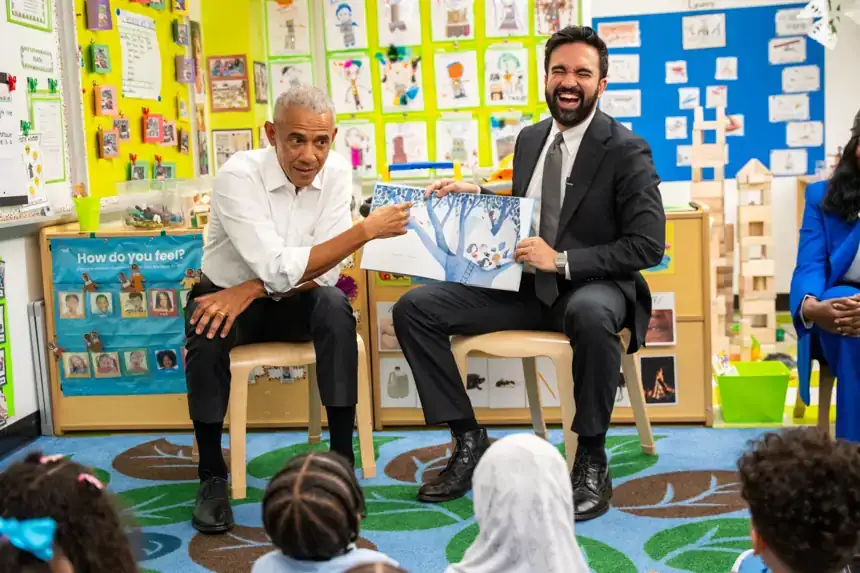
NEW YORK — Former U.S. President Barack Obama met New York state lawmaker Zohran Mamdani in New York City, a brief but symbolically notable interaction that underscores shifting political dynamics within the United States with broader international resonance.
The meeting took place ahead of Obama’s scheduled visit to read to preschool children, but it drew attention due to Mamdani’s rising profile as a progressive political figure and the potential implications for U.S. domestic politics, which continue to influence global policy direction.
While details of the discussion were not publicly disclosed, the encounter reflects ongoing engagement between established political figures and a newer generation of leaders advocating policy shifts on economic inequality, climate action, and social justice.

Progressive Momentum Draws International Interest
Mamdani, a member of New York’s State Assembly and affiliated with progressive political movements, has gained recognition for his positions on housing, labor rights, and public services. Analysts say such figures are increasingly shaping policy debates that resonate beyond U.S. borders, particularly in areas such as climate cooperation and economic reform.
Observers note that the evolution of progressive politics in the United States is being closely watched internationally, especially by governments and institutions assessing future U.S. policy directions. Shifts in domestic priorities often influence Washington’s stance on global economic frameworks and multilateral agreements.
Symbolism of Political Bridging
Obama’s interaction with Mamdani may signal a broader willingness among established political leaders to engage with emerging voices within their party. While largely symbolic, such engagements can reflect attempts to bridge ideological divides and maintain cohesion within political movements.
According to reporting from The Associated Press, the meeting occurred informally and without a formal agenda. However, even brief encounters between prominent figures can carry political weight, particularly as parties navigate internal debates over policy direction and electoral strategy.
Domestic Developments With Global Implications
Political developments in the United States often have cascading effects internationally, given the country’s role in global governance, economic systems, and security alliances. Analysts suggest that the rise of progressive policymakers could influence future U.S. positions on international taxation, climate commitments, and social policy frameworks.



The interaction also comes at a time when global observers are closely monitoring political trends in major democracies, where generational shifts and ideological realignments are reshaping traditional party structures.
Public Engagement Remains Central
Obama’s visit to read to preschoolers highlights the continued emphasis on community engagement and education, even as political symbolism surrounding his public appearances remains significant. Such events reinforce soft-power narratives tied to leadership, civic responsibility, and public service.
While the meeting itself was brief, its visibility reflects the broader interplay between domestic political evolution and international perception.
Strategic Stakes for Future Policy Direction
As progressive figures gain influence within U.S. political institutions, their policy priorities may increasingly shape the country’s global engagement. From climate diplomacy to economic inequality, these shifts could redefine how the United States interacts with allies and international organizations.
The encounter between Obama and Mamdani, though limited in scope, illustrates a transitional moment within American politics—one that continues to carry implications far beyond national borders.