Journos News - Breaking News, World News, Top Stories, Todays Headlines and Flash Reports
Wednesday, September 2, 2026
  • Login
  • Home
  • World
    • Africa
    • Americas
    • Asia
    • Europe
    • Middle East
    • Oceania
  • Politics
  • Business
  • Technology
  • Health
  • Science
  • Sports
  • Entertainment
  • Culture
No Result
View All Result
  • Home
  • World
    • Africa
    • Americas
    • Asia
    • Europe
    • Middle East
    • Oceania
  • Politics
  • Business
  • Technology
  • Health
  • Science
  • Sports
  • Entertainment
  • Culture
No Result
View All Result
Journos News - Breaking News, World News, Top Stories, Todays Headlines and Flash Reports
No Result
View All Result
Home World News Middle East

Islamabad Talks Face Diplomatic Fallout as Iran Adds New Ceasefire Conditions

Fresh demands from Tehran and renewed Israel-Hezbollah strikes raise the risk that fragile U.S.-Iran diplomacy in Pakistan could fracture before formal negotiations begin.

The Daily Desk by The Daily Desk
April 11, 2026
in Middle East, World News
0
U.S. and Iranian delegations arrive in Islamabad for ceasefire negotiations - AP Photo/Anjum Naveed

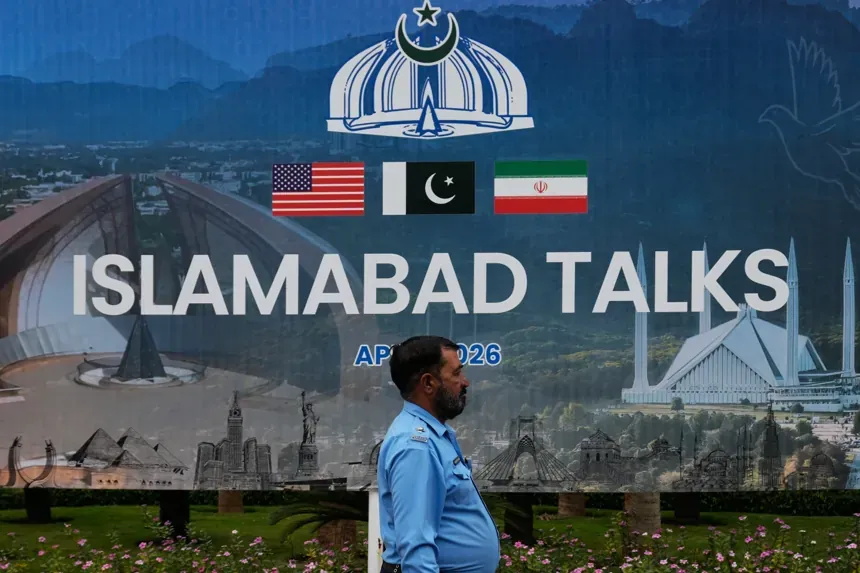
Security tightens in Islamabad as U.S.-Iran talks begin - AP Photo/Anjum Naveed

As high-level U.S. and Iranian delegations converged on Islamabad on Saturday, the diplomatic push to convert a shaky ceasefire into a durable settlement entered a more precarious phase, with Tehran signaling new preconditions even before formal talks opened.

The negotiations, led by U.S. Vice President JD Vance and Iranian Parliament Speaker Mohammad Bagher Qalibaf, are widely seen as the most consequential diplomatic test since fighting between Iran, Israel and allied forces triggered weeks of regional instability. Yet the atmosphere surrounding the talks was immediately darkened by simultaneous Israeli strikes in southern Lebanon and Hezbollah rocket fire into northern Israel, underscoring how battlefield developments are now directly shaping the diplomatic track.

As first reported by the Associated Press, Iranian officials indicated discussions would proceed only if Israel observes a ceasefire in Lebanon and blocked Iranian assets are released, adding a new layer of leverage that could complicate Washington’s negotiating calculus.

Pakistan, positioning itself as the key intermediary, has moved to elevate the talks into a regional diplomatic summit, with Prime Minister Shehbaz Sharif expected to meet Iranian negotiators ahead of the U.S.-Iran session.

New Preconditions Shift the Diplomatic Center of Gravity

What had been framed as ceasefire consolidation talks now risks evolving into a broader negotiation over regional conflict architecture.

By linking U.S.-Iran discussions to parallel violence involving Hezbollah and Israel, Tehran appears to be widening the scope of diplomacy beyond the original ceasefire terms. The move increases pressure on Washington to manage multiple fronts simultaneously: maritime security in the Strait of Hormuz, de-escalation in Lebanon, and the political optics of sanctions-linked financial concessions.

This diplomatic broadening may strengthen Iran’s bargaining position, particularly after its recent use of Hormuz shipping access as strategic leverage over global energy markets.

The risk for U.S. negotiators is that talks designed to stabilize one conflict theater become tied to escalation cycles elsewhere.

â–  Related News

Amuay oil refinery complex in Venezuela, showing industrial processing facilities and infrastructure at the major petroleum refining site.

What We Know About Trump’s Deal Giving U.S. Access to Vast Venezuelan Oil Reserves

August 31, 2026
Graphic explaining Iran war economic impacts, showing costs for consumers and farmers, beneficiaries, oil prices, markets, and global trade pressures.

Investors Prosper as Consumers Pay the Price of Six Months of Iran War

August 31, 2026
U.S. Navy sailor mans a .50-caliber machine gun aboard USS Kitty Hawk while transiting the Strait of Hormuz toward the Arabian Gulf.

U.S. Strikes Iranian Rocket Launchers Near Strait of Hormuz, Breaking Month-Long Lull

August 31, 2026
Iranian leader pictured in an official image associated with a message marking Workers’ Day and Teachers’ Day in May 2026.

Iran’s Leaders Defy the U.S. Six Months Into War, Signaling Little Tolerance for Dissent

August 29, 2026

Regional Violence Tests the Credibility of the Islamabad Channel

The diplomatic symbolism of Islamabad was overshadowed within hours by reports from Lebanon’s state media that Israeli airstrikes killed three people in Nabatiyeh province after hitting a residential structure.

Hezbollah responded with a rocket barrage aimed at a military installation in northern Israel, a reminder that local escalation could rapidly erode whatever political space negotiators are trying to create in Pakistan.

This creates a dangerous sequencing problem: the success of talks may now depend less on the negotiating table itself and more on whether military actors outside Pakistan refrain from altering realities on the ground.

The diplomatic fallout is particularly acute because Tehran’s new conditions effectively make Lebanon violence part of the negotiation framework, whether Washington intended it or not.

Pakistan’s Mediator Role Gains Strategic Weight

Islamabad’s unusually heavy security posture and the creation of a dedicated international media center point to Pakistan’s effort to institutionalize its role as a credible intermediary rather than a one-off host.

Road closures, movement restrictions and high-level receptions involving Foreign Minister Ishaq Dar and Army Chief Field Marshal Asim Munir signaled that Pakistan’s military and civilian leadership are jointly invested in the talks’ success.

That matters geopolitically.

Pakistan’s emergence as the venue for U.S.-Iran engagement suggests regional powers are increasingly seeking diplomatic buffers outside Gulf channels traditionally dominated by Oman, Qatar or European intermediaries.

If the talks hold, Islamabad could strengthen its standing as a crisis-management capital in South Asian and Middle Eastern diplomacy.

Energy Markets and Global Confidence Remain Exposed

Financial markets reflected how closely diplomacy is now tied to economic confidence.

Oil prices eased slightly ahead of the talks, but volatility remains elevated because Iran’s leverage over the Strait of Hormuz continues to shadow every diplomatic move. Even the suggestion that maritime tolls, access controls or renewed disruptions could re-emerge is enough to unsettle shipping insurers, commodity traders and central banks.

With U.S. inflation already pressured by higher fuel prices, the diplomatic stakes now extend well beyond regional security.

A failed Islamabad round would likely have immediate spillover effects on crude benchmarks, inflation expectations and broader global risk sentiment.

Diplomacy Now Faces a Narrower Margin for Error

The Islamabad talks were meant to move the conflict from temporary pause to structured settlement.

Instead, they open under the weight of new Iranian conditions, active Israel-Hezbollah exchanges, and unresolved disputes over maritime leverage.

That leaves diplomacy operating inside a shrinking window where military developments can outpace negotiators.

The immediate question is no longer whether talks begin, but whether diplomacy can stay ahead of the conflict’s expanding list of political demands.

Tags: #GlobalOilMarkets#Hezbollah#IranCeasefire#IslamabadTalks#JDVance#LebanonStrikes#MiddleEastSecurity#PakistanDiplomacy#RegionalTension#SecurityNews#StraitOfHormuz#USIranRelations
The Daily Desk

The Daily Desk

The Daily Desk is a contributor at JournosNews.com covering politics, media, governance, and the evolving dynamics of public discourse. Stories published under this byline are produced in accordance with JournosNews' editorial standards, with an emphasis on verified reporting, accuracy, context, and impartiality.

Related Posts

Donald Trump speaks at the Conservative Political Action Conference in Washington, D.C., in 2011 during a political address.

After Six Months of Iran War, U.S. Goals Have Shifted. Strait of Hormuz Is Now a Top Concern

August 27, 2026
Asian stock markets rise as oil prices fall, with market indexes, crude prices, Nvidia shares and key investor risks highlighted. - Journos News, File

Asian Shares Rise as Lower Oil Prices and AI Optimism Support Markets

August 26, 2026
Iranian fuel tankers arrive in Lebanon as Hezbollah-linked fuel shipments enter the country amid a severe energy crisis.

Iran’s Fuel Lines Grow as U.S. Sanctions Deepen Economic Pressure

August 26, 2026
Strait of Hormuz connecting the Gulf of Oman and Persian Gulf, photographed from the International Space Station.

LIVE: Middle East Conflict — Ongoing Coverage

August 12, 2026
Map showing reported Houthi attack near Bab el-Mandeb and U.S. maritime operations across the Gulf of Oman and Strait of Hormuz

Houthi Attack Kills Six as U.S. Forces Strike Ship Near Iranian Blockade

August 12, 2026
USCGC Aquidneck transits the Strait of Hormuz during U.S. naval operations on December 2, 2020.

LIVE: Middle East Conflict — Ongoing Coverage

August 11, 2026
Houthi supporters protest against Saudi-led coalition airstrikes in Sana’a, Yemen, in September 2015.

Houthi Attacks Raise Risk of Wider Conflict and Red Sea Shipping Disruption

August 9, 2026
Saudi Crown Prince, Turkish President and Pakistani Prime Minister attend the signing of a joint defense agreement in Makkah.

Turkey, Pakistan and Saudi Arabia Sign Mutual Defense Pact as Regional Security Tensions Rise

August 8, 2026
Load More
Next Post
Samay Raina performs in comeback special Still Alive - Samay Raina via YouTube/BBC

Samay Raina Returns With Still Alive as Career Reset After Comedy Backlash

Traditional British pub crowd following unspoken bar etiquette rules - P. Batchelder/Alamy/BBC

How to Navigate a British Pub Without Social Missteps

JournosNews logo

Journos News delivers globally neutral, fact-based journalism that meets international media standards — clear, credible, and made for a connected world.

  • Categories
  • World News
  • Politics
  • Business & Markets
  • Technology
  • Health
  • Science
  • Sports
  • Arts & Culture
  • Resources
  • Editorial Standards
  • Submit a Story
  • Advertise with Us
  • Syndication & Partnerships
  • Site Map
  • Press & Media Kit
  • Editorial Team
  • Careers

Join thousands of readers receiving the latest updates, tips, and exclusive insights straight to their inbox. Never miss an important story again.

  • About Us
  • Editorial & Trust Center
  • Contact Us
  • Privacy Policy
  • Terms of Use & Copyright Notice

© JournosNews.com All rights reserved.

Welcome Back!

Login to your account below

Forgotten Password?

Retrieve your password

Please enter your username or email address to reset your password.

Log In
JournosNews

Independent Journalism.
Verified Facts.

You're about to read a professionally edited article from JournosNews.com.

Every article is produced in accordance with our editorial standards, emphasizing factual accuracy, transparent attribution, fairness, editorial independence, and meaningful context.

Editorial Standards
No Result
View All Result
  • Home
  • World
    • Africa
    • Americas
    • Asia
    • Europe
    • Middle East
    • Oceania
  • Politics
  • Business
  • Technology
  • Health
  • Science
  • Sports
  • Entertainment
  • Culture

© JournosNews.com All rights reserved.

This website uses cookies. By continuing to use this website you are giving consent to cookies being used. Visit our Privacy and Cookie Policy.